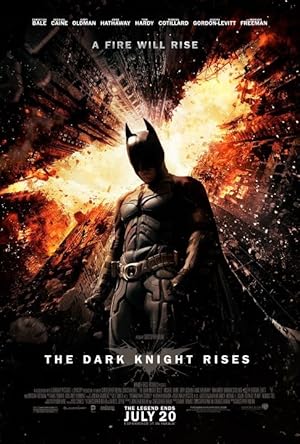
The Dark Knight Rises
Despite his tarnished reputation after the events of The Dark Knight (2008), in which he took the rap for Dent's crimes, Batman feels compelled to intervene to assist the city and its Police force, which is struggling to cope with Bane's plans to destroy the city.
Despite a massive budget of $250.0M, The Dark Knight Rises became a commercial success, earning $1081.0M worldwide—a 332% return. This commercial performance validated the ambitious narrative scope, confirming that audiences embrace unique voice even at blockbuster scale.
Nominated for 1 BAFTA Award45 wins & 103 nominations


Plot Structure
Story beats plotted across runtime


Narrative Arc
Emotional journey through the story's key moments
Story Circle
Blueprint 15-beat structure
Arcplot Score Breakdown
Weighted: Precision (70%) + Arc (15%) + Theme (15%)
The Dark Knight Rises (2012) showcases meticulously timed narrative architecture, characteristic of Christopher Nolan's storytelling approach. This structural analysis examines how the film's 15-point plot structure maps to proven narrative frameworks across 2 hours and 44 minutes. With an Arcplot score of 8.0, the film showcases strong structural fundamentals.
Characters
Cast & narrative archetypes

Bruce Wayne / Batman
Bane
Selina Kyle / Catwoman
John Blake
Alfred Pennyworth
Commissioner James Gordon
Miranda Tate
Lucius Fox
Main Cast & Characters
Bruce Wayne / Batman
Played by Christian Bale
Gotham's protector who has retired after taking the fall for Harvey Dent's crimes, must rise again to face a new threat.
Bane
Played by Tom Hardy
A masked terrorist who aims to destroy Gotham and fulfill Ra's al Ghul's destiny by breaking Batman both physically and spiritually.
Selina Kyle / Catwoman
Played by Anne Hathaway
A cunning cat burglar with her own moral code who becomes an unlikely ally to Batman in Gotham's darkest hour.
John Blake
Played by Joseph Gordon-Levitt
An idealistic young police officer who believes in Batman and becomes a key figure in Gotham's resistance against Bane.
Alfred Pennyworth
Played by Michael Caine
Bruce Wayne's loyal butler and father figure who struggles between protecting Bruce and supporting his mission as Batman.
Commissioner James Gordon
Played by Gary Oldman
Gotham's police commissioner burdened by the lie about Harvey Dent, leading the resistance against Bane's occupation.
Miranda Tate
Played by Marion Cotillard
A wealthy businesswoman and board member of Wayne Enterprises who becomes close to Bruce Wayne.
Lucius Fox
Played by Morgan Freeman
Wayne Enterprises' applied sciences expert who provides Batman with technological support and gadgets.
Structural Analysis
The Status Quo at 1 minutes (1% through the runtime) establishes Commissioner Gordon delivers Harvey Dent's eulogy at a memorial event, establishing that eight years have passed since The Dark Knight. Gotham is at peace under the Dent Act, but this peace is built on a lie.. Structural examination shows that this early placement immediately immerses viewers in the story world.
The inciting incident occurs at 19 minutes when Selina Kyle steals Bruce's fingerprints along with his mother's pearls, warning him: "There's a storm coming, Mr. Wayne. You and your friends better batten down the hatches." This theft will later enable Bane's attack on Wayne Enterprises.. At 12% through the film, this Disruption aligns precisely with traditional story structure. This beat shifts the emotional landscape, launching the protagonist into the central conflict.
The First Threshold at 37 minutes marks the transition into Act II, occurring at 23% of the runtime. This shows the protagonist's commitment to Batman returns to Gotham after eight years, dramatically appearing to save Gordon's officers during Bane's stock exchange heist. He chooses to don the cape and cowl again despite Alfred's warnings, actively re-entering the world of heroism., moving from reaction to action.
At 74 minutes, the Midpoint arrives at 45% of the runtime—arriving early, accelerating into Act IIb complications. Of particular interest, this crucial beat Catwoman leads Batman into Bane's trap in the sewers. Bane brutally defeats Batman in hand-to-hand combat, breaking his back over his knee. "I was wondering what would break first—your spirit, or your body." Batman is destroyed both physically and symbolically., fundamentally raising what's at risk. The emotional intensity shifts, dividing the narrative into clear before-and-after phases.
The Collapse moment at 110 minutes (67% through) represents the emotional nadir. Here, Bruce's second failed escape attempt from the Pit. He falls and nearly dies, his back re-injured. The prisoner doctor tells him he fears death too much—he must make the climb without the rope, as the child did. Bruce confronts his mortality and his fear, reaching his absolute lowest point., shows the protagonist at their lowest point. This beat's placement in the final quarter sets up the climactic reversal.
The Second Threshold at 119 minutes initiates the final act resolution at 72% of the runtime. Bruce makes the climb without the rope, embracing his fear of death rather than fighting it. He leaps to freedom as the prisoners chant "Rise!" He has synthesized his lessons—fear of death gives life meaning, and he must be willing to sacrifice everything. The Dark Knight rises., demonstrating the transformation achieved throughout the journey.
Emotional Journey
The Dark Knight Rises's emotional architecture traces a deliberate progression across 15 carefully calibrated beats.
Narrative Framework
This structural analysis employs proven narrative structure principles that track dramatic progression. By mapping The Dark Knight Rises against these established plot points, we can identify how Christopher Nolan utilizes or subverts traditional narrative conventions. The plot point approach reveals not only adherence to structural principles but also creative choices that distinguish The Dark Knight Rises within the action genre.
Christopher Nolan's Structural Approach
Among the 11 Christopher Nolan films analyzed on Arcplot, the average structural score is 7.3, reflecting strong command of classical structure. The Dark Knight Rises represents one of the director's most structurally precise works. For comparative analysis, explore the complete Christopher Nolan filmography.
Comparative Analysis
Additional action films include The Bad Guys, Puss in Boots and Venom: The Last Dance. For more Christopher Nolan analyses, see Oppenheimer, Interstellar and Dunkirk.
Plot Points by Act
Act I
SetupStatus Quo
Commissioner Gordon delivers Harvey Dent's eulogy at a memorial event, establishing that eight years have passed since The Dark Knight. Gotham is at peace under the Dent Act, but this peace is built on a lie.
Theme
Alfred tells Bruce about the legend of the Pit prison: "There's a reason why this prison is the worst hell on earth... Hope. Every man who has rotted here over the centuries has looked up to the light and imagined climbing to freedom." The theme of rising from despair through hope is established.
Worldbuilding
We see Bruce Wayne as a recluse in Wayne Manor, Gotham thriving under the Dent Act, the introduction of Bane in a spectacular plane heist, Selina Kyle infiltrating Wayne Manor, and the crumbling state of Wayne Enterprises under Miranda Tate's watch.
Disruption
Selina Kyle steals Bruce's fingerprints along with his mother's pearls, warning him: "There's a storm coming, Mr. Wayne. You and your friends better batten down the hatches." This theft will later enable Bane's attack on Wayne Enterprises.
Resistance
Bruce investigates Bane and Selina, repairs his body with a mechanical leg brace, and debates returning as Batman. Alfred pleads with him not to return, revealing Rachel's letter choosing Harvey over Bruce. Gordon is shot investigating the sewers. Bruce must decide if Gotham still needs Batman.
Act II
ConfrontationFirst Threshold
Batman returns to Gotham after eight years, dramatically appearing to save Gordon's officers during Bane's stock exchange heist. He chooses to don the cape and cowl again despite Alfred's warnings, actively re-entering the world of heroism.
Mirror World
Bruce and Selina's rooftop encounter after he tracks her down. She represents his thematic mirror—someone who could choose redemption or continue running. Their relationship will embody the film's themes of second chances and the choice between self-preservation and sacrifice.
Premise
Batman is back and investigating Bane. He allies with Catwoman despite her betrayal, pursues leads in the sewers, entrusts the fusion reactor to Miranda Tate, and prepares to confront Bane. Alfred leaves after Bruce refuses to stop. Batman gains new allies in John Blake and demonstrates the Bat aircraft.
Midpoint
Catwoman leads Batman into Bane's trap in the sewers. Bane brutally defeats Batman in hand-to-hand combat, breaking his back over his knee. "I was wondering what would break first—your spirit, or your body." Batman is destroyed both physically and symbolically.
Opposition
Bane executes his plan: detonating explosives to trap police underground, seizing control of the fusion reactor as a bomb, and establishing a reign of terror over Gotham. Bruce is imprisoned in the Pit, forced to watch Gotham's destruction on TV. He attempts to escape twice and fails. The city descends into chaos under Bane's rule.
Collapse
Bruce's second failed escape attempt from the Pit. He falls and nearly dies, his back re-injured. The prisoner doctor tells him he fears death too much—he must make the climb without the rope, as the child did. Bruce confronts his mortality and his fear, reaching his absolute lowest point.
Crisis
Bruce processes his failure and mortality in the Pit. He trains to repair his body and mind. The blind prisoner challenges him to embrace his fear of death rather than suppress it. Bruce meditates on what he's fighting for—not to die, but to save Gotham. He prepares for one final attempt.
Act III
ResolutionSecond Threshold
Bruce makes the climb without the rope, embracing his fear of death rather than fighting it. He leaps to freedom as the prisoners chant "Rise!" He has synthesized his lessons—fear of death gives life meaning, and he must be willing to sacrifice everything. The Dark Knight rises.
Synthesis
Batman returns to Gotham, frees the trapped police, rallies them against Bane's army, and confronts Bane in the final battle. Miranda Tate is revealed as Talia al Ghul. Catwoman kills Bane. Batman pursues the bomb truck and ultimately flies the nuclear device out over the bay, apparently sacrificing himself to save the city.
Transformation
Alfred sees Bruce and Selina alive together at a Florence café—Bruce has finally found peace and a life beyond Batman. John Blake, revealed as "Robin," discovers the Batcave. The Batman symbol is repaired on the Gotham building. Bruce has risen, transformed from a man seeking death into one embracing life, while his legacy lives on.