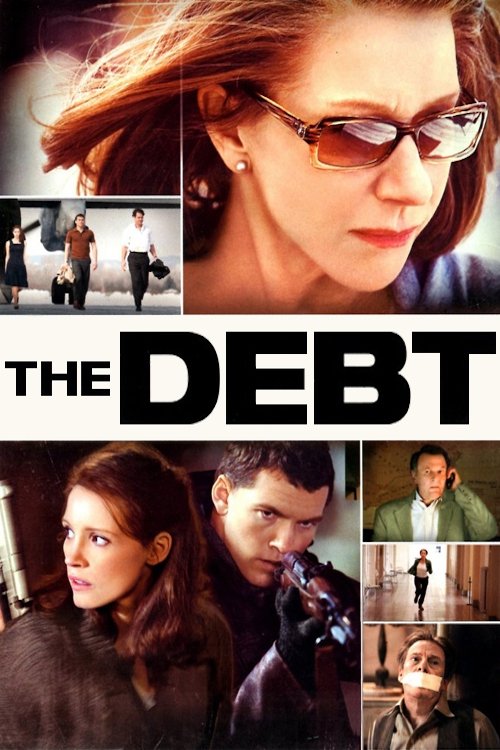
The Debt
Rachel Singer is a former Mossad agent who tried to capture a notorious Nazi war criminal – the Surgeon of Birkenau – in a secret Israeli mission that ended with his death on the streets of East Berlin. Now, 30 years later, a man claiming to be the doctor has surfaced, and Rachel must return to Eastern Europe to uncover the truth. Overwhelmed by haunting memories of her younger self and her two fellow agents, the still-celebrated heroine must relive the trauma of those events and confront the debt she has incurred.
Despite a mid-range budget of $20.0M, The Debt became a box office success, earning $45.6M worldwide—a 128% return.
13 wins & 5 nominations


Plot Structure
Story beats plotted across runtime


Narrative Arc
Emotional journey through the story's key moments
Story Circle
Blueprint 15-beat structure
Arcplot Score Breakdown
Weighted: Precision (70%) + Arc (15%) + Theme (15%)
The Debt (2010) exhibits deliberately positioned story structure, characteristic of John Madden's storytelling approach. This structural analysis examines how the film's 15-point plot structure maps to proven narrative frameworks across 1 hour and 53 minutes. With an Arcplot score of 7.1, the film balances conventional beats with creative variation.
Characters
Cast & narrative archetypes

Rachel Singer (Older)
Rachel Singer (Young)
Stephan Gold (Older)
Stephan Gold (Young)
David Peretz (Older)
David Peretz (Young)
Dieter Vogel / The Surgeon of Birkenau
Main Cast & Characters
Rachel Singer (Older)
Played by Helen Mirren
Former Mossad agent haunted by a mission from 1966, struggling with the burden of a decades-old lie about capturing a Nazi war criminal.
Rachel Singer (Young)
Played by Jessica Chastain
Young Mossad agent in 1966 East Berlin on a mission to capture Dieter Vogel, caught between duty and an impossible moral choice.
Stephan Gold (Older)
Played by Tom Wilkinson
Former Mossad agent and Rachel's ex-husband, now living with the weight of their shared deception about the 1966 mission.
Stephan Gold (Young)
Played by Marton Csokas
Charismatic and confident young Mossad agent, team leader of the 1966 mission and romantically involved with Rachel.
David Peretz (Older)
Played by Ciarán Hinds
Former Mossad agent and Rachel's current husband, who has lived with the consequences of their failed mission for decades.
David Peretz (Young)
Played by Sam Worthington
Methodical and reserved young Mossad agent on the 1966 mission, deeply in love with Rachel despite her involvement with Stephan.
Dieter Vogel / The Surgeon of Birkenau
Played by Jesper Christensen
Nazi war criminal known as the Surgeon of Birkenau, the target of the 1966 Mossad mission who performed horrific experiments in concentration camps.
Structural Analysis
The Status Quo at 1 minutes (1% through the runtime) establishes 1997 Tel Aviv: Rachel Singer is celebrated at her daughter Sarah's book launch about the heroic Mossad mission. Rachel is honored as a national hero for killing the Surgeon of Birkenau.. Significantly, this early placement immediately immerses viewers in the story world.
The inciting incident occurs at 14 minutes when David calls Rachel with devastating news: a man in a Ukrainian psychiatric hospital claims to be Dr. Vogel—the Nazi they told the world they killed 30 years ago. Their lie is about to be exposed.. At 12% through the film, this Disruption aligns precisely with traditional story structure. This beat shifts the emotional landscape, launching the protagonist into the central conflict.
The First Threshold at 28 minutes marks the transition into Act II, occurring at 25% of the runtime. This demonstrates the protagonist's commitment to The three agents execute their kidnapping plan: Rachel sedates Vogel during an examination, and they successfully capture him. They cross into the dangerous territory of holding a Nazi war criminal in their East Berlin safe house., moving from reaction to action.
At 57 minutes, the Midpoint arrives at 50% of the runtime—precisely centered, creating perfect narrative symmetry. Structural examination shows that this crucial beat False defeat: The extraction plan fails catastrophically when Vogel escapes during the border crossing attempt. He slashes Rachel's face and flees into the night. The mission is a complete failure., fundamentally raising what's at risk. The emotional intensity shifts, dividing the narrative into clear before-and-after phases.
The Collapse moment at 85 minutes (75% through) represents the emotional nadir. Here, David's suicide devastates Rachel. His death is the whiff of death—a life consumed by the lie they told. Stefan wants to maintain the cover-up, but Rachel realizes the debt must finally be paid., shows the protagonist at their lowest point. This beat's placement in the final quarter sets up the climactic reversal.
The Second Threshold at 90 minutes initiates the final act resolution at 80% of the runtime. Rachel makes her choice: she will travel to Ukraine herself to confront and kill Vogel, finally completing the mission and paying the debt. She chooses truth and justice over comfortable lies., demonstrating the transformation achieved throughout the journey.
Emotional Journey
The Debt's emotional architecture traces a deliberate progression across 15 carefully calibrated beats.
Narrative Framework
This structural analysis employs structural analysis methodology used to understand storytelling architecture. By mapping The Debt against these established plot points, we can identify how John Madden utilizes or subverts traditional narrative conventions. The plot point approach reveals not only adherence to structural principles but also creative choices that distinguish The Debt within the drama genre.
John Madden's Structural Approach
Among the 7 John Madden films analyzed on Arcplot, the average structural score is 6.8, demonstrating varied approaches to story architecture. The Debt represents one of the director's most structurally precise works. For comparative analysis, explore the complete John Madden filmography.
Comparative Analysis
Additional drama films include After Thomas, South Pacific and Dirty Dancing: Havana Nights. For more John Madden analyses, see Shakespeare in Love, The Best Exotic Marigold Hotel and Miss Sloane.
Plot Points by Act
Act I
SetupStatus Quo
1997 Tel Aviv: Rachel Singer is celebrated at her daughter Sarah's book launch about the heroic Mossad mission. Rachel is honored as a national hero for killing the Surgeon of Birkenau.
Theme
Stefan tells Rachel at the celebration: "We did what we had to do." The theme of living with lies and the weight of buried truth is established—the debt of deception that must eventually be paid.
Worldbuilding
The dual timeline is established: 1997 shows the celebrated heroes haunted by their past; 1966 flashbacks introduce young Rachel, David, and Stefan as Mossad agents preparing for their mission in East Berlin to capture Nazi war criminal Dr. Dieter Vogel.
Disruption
David calls Rachel with devastating news: a man in a Ukrainian psychiatric hospital claims to be Dr. Vogel—the Nazi they told the world they killed 30 years ago. Their lie is about to be exposed.
Resistance
The 1966 storyline deepens: young Rachel poses as a patient to infiltrate Vogel's gynecology clinic. The agents debate their approach and prepare their extraction plan. Rachel endures degrading examinations by Vogel to gather intelligence.
Act II
ConfrontationFirst Threshold
The three agents execute their kidnapping plan: Rachel sedates Vogel during an examination, and they successfully capture him. They cross into the dangerous territory of holding a Nazi war criminal in their East Berlin safe house.
Mirror World
The complicated love triangle emerges: Rachel is torn between sensitive David and commanding Stefan. This personal conflict mirrors the larger moral tensions—duty versus desire, truth versus expedience.
Premise
The agents hold Vogel captive while awaiting extraction. Vogel psychologically manipulates them, exploiting tensions between the three. Rachel and David grow closer. The border crossing keeps getting delayed, testing their resolve and unity.
Midpoint
False defeat: The extraction plan fails catastrophically when Vogel escapes during the border crossing attempt. He slashes Rachel's face and flees into the night. The mission is a complete failure.
Opposition
Desperate aftermath: Unable to admit failure, the agents concoct a lie—they claim Rachel shot Vogel at the border. In 1997, David cannot live with the deception and commits suicide rather than face exposure. The weight of their lie destroys relationships.
Collapse
David's suicide devastates Rachel. His death is the whiff of death—a life consumed by the lie they told. Stefan wants to maintain the cover-up, but Rachel realizes the debt must finally be paid.
Crisis
Rachel grieves David and confronts the full weight of 30 years of deception. She must choose between protecting the heroic lie or honoring David's memory by finally telling the truth and finishing what they started.
Act III
ResolutionSecond Threshold
Rachel makes her choice: she will travel to Ukraine herself to confront and kill Vogel, finally completing the mission and paying the debt. She chooses truth and justice over comfortable lies.
Synthesis
Rachel travels to Ukraine and infiltrates the psychiatric hospital. She confronts the elderly Vogel, who remains unrepentant and manipulative. In a brutal final struggle, Rachel kills Vogel, completing the mission 30 years late.
Transformation
Rachel walks away from the hospital, wounded but finally free. Unlike the celebrated hero at the book launch, she is now truly worthy of honor—having paid the debt with courage and truth rather than living a lie.