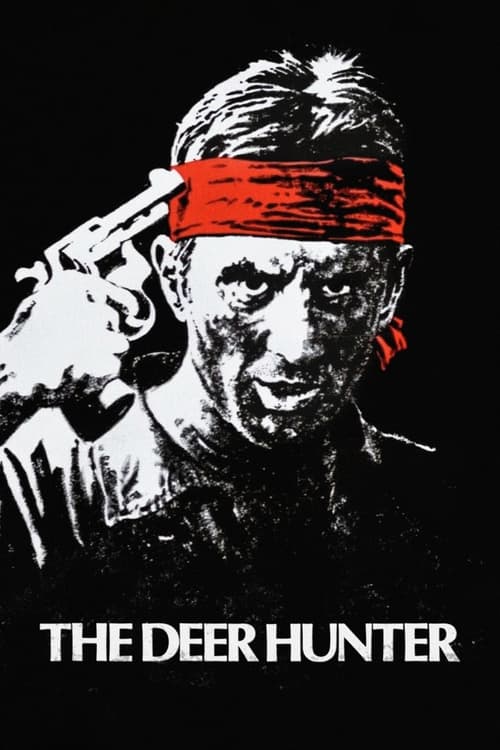
The Deer Hunter
A group of working-class friends decide to enlist in the Army during the Vietnam War and finds it to be hellish chaos -- not the noble venture they imagined. Before they left, Steven married his pregnant girlfriend -- and Michael and Nick were in love with the same woman. But all three are different men upon their return.
Despite a moderate budget of $15.0M, The Deer Hunter became a financial success, earning $49.0M worldwide—a 227% return.
5 Oscars. 24 wins & 27 nominations


Plot Structure
Story beats plotted across runtime


Narrative Arc
Emotional journey through the story's key moments
Story Circle
Blueprint 15-beat structure
Arcplot Score Breakdown
Weighted: Precision (70%) + Arc (15%) + Theme (15%)
The Deer Hunter (1978) showcases strategically placed dramatic framework, characteristic of Michael Cimino's storytelling approach. This structural analysis examines how the film's 15-point plot structure maps to proven narrative frameworks across 3 hours and 3 minutes. With an Arcplot score of 5.2, the film takes an unconventional approach to traditional narrative frameworks.
Characters
Cast & narrative archetypes

Michael Vronsky
Nick Chevotarevich
Steven Pushkov
Linda
Stan
John Welsh
Axel
Main Cast & Characters
Michael Vronsky
Played by Robert De Niro
A disciplined steelworker and skilled hunter who becomes the emotional anchor for his friends after their traumatic Vietnam experience.
Nick Chevotarevich
Played by Christopher Walken
A sensitive young steelworker engaged to Linda, whose mental breakdown in Vietnam leads to tragic consequences.
Steven Pushkov
Played by John Savage
A groom-to-be and steelworker whose wedding precedes deployment to Vietnam, where he suffers devastating physical and psychological wounds.
Linda
Played by Meryl Streep
Nick's fiancée who waits faithfully at home and forms a deep bond with Michael as they cope with loss.
Stan
Played by John Cazale
A volatile and aggressive member of the friend group whose recklessness and drinking cause constant tension.
John Welsh
Played by George Dzundza
A bar owner and father figure to the group of friends, providing stability and community in their working-class Pennsylvania town.
Axel
Played by Chuck Aspegren
A gentle, good-natured member of the hunting group who serves as a bridge between the more volatile personalities.
Structural Analysis
The Status Quo at 1 minutes (1% through the runtime) establishes The steel mill furnaces blaze in Clairton, Pennsylvania as workers emerge from their shift. Michael, Nick, Steven, Stan, John, and Axel are introduced as working-class steelworkers, their camaraderie forged in the heat of the foundry—a world of manual labor, community bonds, and simple routines about to be shattered.. Of particular interest, this early placement immediately immerses viewers in the story world.
The inciting incident occurs at 62 minutes when Abrupt cut from the peaceful Pennsylvania mountains to the hellish chaos of Vietnam. A helicopter attack on a village erupts in fire and violence. Michael, now a soldier, witnesses atrocities and uses his flamethrower. The transition is jarring and total—their ordered world has been obliterated by war.. At 34% through the film, this Disruption is delayed, allowing extended setup of the story world. This beat shifts the emotional landscape, launching the protagonist into the central conflict.
The First Threshold at 78 minutes marks the transition into Act II, occurring at 43% of the runtime. This demonstrates the protagonist's commitment to Michael convinces his captors to load three bullets instead of one, then orchestrates a violent escape. He shoots their torturers, grabs weapons, and leads Nick and the wounded Steven to freedom down the river. This desperate gamble—using the roulette game against their captors—marks his irreversible passage through chaos., moving from reaction to action.
At 103 minutes, the Midpoint arrives at 56% of the runtime—slightly delayed, extending Act IIa tension. Notably, this crucial beat Michael returns to deer hunting with his friends but cannot pull the trigger. Facing a magnificent buck—the perfect "one shot" opportunity—he deliberately fires into the air. His hunting philosophy, his identity, his sense of control has been destroyed. The man who believed in precision now knows that chaos rules., fundamentally raising what's at risk. The emotional intensity shifts, dividing the narrative into clear before-and-after phases.
The Collapse moment at 144 minutes (79% through) represents the emotional nadir. Here, Michael finds Nick in a Saigon gambling den, now a hollow-eyed professional roulette player. Nick doesn't recognize him—or pretends not to. The warm, romantic friend from Clairton has been replaced by an empty shell addicted to the game. Michael realizes Nick has been spiritually destroyed, choosing to remain in the hell that broke him., illustrates the protagonist at their lowest point. This beat's placement in the final quarter sets up the climactic reversal.
The Second Threshold at 154 minutes initiates the final act resolution at 84% of the runtime. Michael sits down at the roulette table across from Nick, paying to become his opponent. He will enter the game itself—the very horror they survived together—to reach his friend. He invokes their shared memories: "Nicky, I love you. One shot. Remember the trees? The mountains?"., demonstrating the transformation achieved throughout the journey.
Emotional Journey
The Deer Hunter's emotional architecture traces a deliberate progression across 15 carefully calibrated beats.
Narrative Framework
This structural analysis employs structural analysis methodology used to understand storytelling architecture. By mapping The Deer Hunter against these established plot points, we can identify how Michael Cimino utilizes or subverts traditional narrative conventions. The plot point approach reveals not only adherence to structural principles but also creative choices that distinguish The Deer Hunter within the drama genre.
Michael Cimino's Structural Approach
Among the 3 Michael Cimino films analyzed on Arcplot, the average structural score is 6.3, demonstrating varied approaches to story architecture. The Deer Hunter takes a more unconventional approach compared to the director's typical style. For comparative analysis, explore the complete Michael Cimino filmography.
Comparative Analysis
Additional drama films include After Thomas, South Pacific and Dirty Dancing: Havana Nights. For more Michael Cimino analyses, see Thunderbolt and Lightfoot, The Sicilian.
Plot Points by Act
Act I
SetupStatus Quo
The steel mill furnaces blaze in Clairton, Pennsylvania as workers emerge from their shift. Michael, Nick, Steven, Stan, John, and Axel are introduced as working-class steelworkers, their camaraderie forged in the heat of the foundry—a world of manual labor, community bonds, and simple routines about to be shattered.
Theme
During preparations for Steven's wedding, the Russian Orthodox community's emphasis on tradition and ritual foreshadows the theme: "One shot is what it's all about." Michael's hunting philosophy—one shot, one kill—becomes the film's meditation on precision, control, and the impossibility of maintaining such discipline when facing chaos.
Worldbuilding
An extended portrait of Clairton's Russian-American working class community. Steven's elaborate Orthodox wedding unfolds with traditional rituals, singing, and celebration. The men drink, dance, and bond. A Green Beret soldier at the bar foreshadows Vietnam's impact. The group goes deer hunting in the mountains—Michael's domain where his "one shot" philosophy defines him.
Disruption
Abrupt cut from the peaceful Pennsylvania mountains to the hellish chaos of Vietnam. A helicopter attack on a village erupts in fire and violence. Michael, now a soldier, witnesses atrocities and uses his flamethrower. The transition is jarring and total—their ordered world has been obliterated by war.
Resistance
Michael, Nick, and Steven are reunited as POWs in a Viet Cong river camp. They discover the horror awaiting them—prisoners forced to play Russian roulette for their captors' gambling entertainment. The friends must find a way to survive this nightmare that inverts Michael's philosophy of controlled violence.
Act II
ConfrontationFirst Threshold
Michael convinces his captors to load three bullets instead of one, then orchestrates a violent escape. He shoots their torturers, grabs weapons, and leads Nick and the wounded Steven to freedom down the river. This desperate gamble—using the roulette game against their captors—marks his irreversible passage through chaos.
Mirror World
Nick, separated from Michael in Saigon, wanders into a French gambling den where men play Russian roulette for money. He's drawn to the table, hypnotized by the game. A mysterious man (Julien Grinda) recruits him. Nick begins his descent into addiction to the very horror that traumatized him—becoming the dark mirror of Michael's controlled philosophy.
Premise
The aftermath of escape: Michael recovers in a military hospital, haunted but physically whole. Steven lies in a VA hospital, having lost both legs. Nick has vanished into Saigon's underworld. Michael returns to Clairton, unable to face the welcome party Linda and the others have prepared, hiding in a motel room—a man who can no longer fit into the world he left.
Midpoint
Michael returns to deer hunting with his friends but cannot pull the trigger. Facing a magnificent buck—the perfect "one shot" opportunity—he deliberately fires into the air. His hunting philosophy, his identity, his sense of control has been destroyed. The man who believed in precision now knows that chaos rules.
Opposition
Michael visits Steven in the VA hospital and learns that large sums of money are being wired from Saigon—Nick is alive and sending his roulette winnings. Michael confronts the broken Steven, tends to his wounds, and realizes he must return to Vietnam to find Nick. He grows closer to Linda, forming a tentative romantic connection amid shared grief.
Collapse
Michael finds Nick in a Saigon gambling den, now a hollow-eyed professional roulette player. Nick doesn't recognize him—or pretends not to. The warm, romantic friend from Clairton has been replaced by an empty shell addicted to the game. Michael realizes Nick has been spiritually destroyed, choosing to remain in the hell that broke him.
Crisis
As Saigon falls to the North Vietnamese, Michael desperately searches for Nick through chaotic streets. Helicopters evacuate the embassy. The city descends into panic. Michael finds Nick's roulette arena one final time, the endgame approaching as the world collapses around them.
Act III
ResolutionSecond Threshold
Michael sits down at the roulette table across from Nick, paying to become his opponent. He will enter the game itself—the very horror they survived together—to reach his friend. He invokes their shared memories: "Nicky, I love you. One shot. Remember the trees? The mountains?"
Synthesis
The final roulette game. Michael and Nick take turns with the revolver, Michael desperately trying to break through Nick's dissociation. For a moment, recognition flickers in Nick's eyes—"One shot," he whispers, smiling. Then he pulls the trigger and the gun fires. Nick dies in Michael's arms. Michael brings his body home to Clairton.
Transformation
After Nick's funeral, the surviving friends gather at John's bar. In stunned grief, someone begins singing "God Bless America." One by one, they all join in—tentatively, then with conviction. The song becomes both ironic and sincere, a community's attempt to rebuild meaning from devastation. Michael and Linda share a look. Life, somehow, continues.