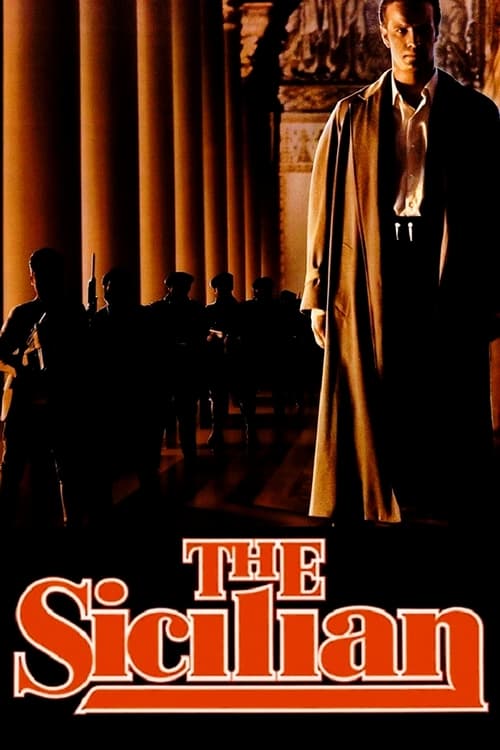
The Sicilian
Egocentric bandit Salvatore Giuliano fights the Church, the Mafia, and the landed gentry while leading a populist movement for Sicilian independence.
The film struggled financially against its limited budget of $9.0M, earning $5.4M globally (-40% loss). While initial box office returns were modest, the film has gained appreciation for its unique voice within the drama genre.
Plot Structure
Story beats plotted across runtime


Narrative Arc
Emotional journey through the story's key moments
Story Circle
Blueprint 15-beat structure
Arcplot Score Breakdown
Weighted: Precision (70%) + Arc (15%) + Theme (15%)
The Sicilian (1987) demonstrates carefully calibrated narrative architecture, characteristic of Michael Cimino's storytelling approach. This structural analysis examines how the film's 15-point plot structure maps to proven narrative frameworks across 1 hour and 56 minutes. With an Arcplot score of 7.1, the film balances conventional beats with creative variation.
Structural Analysis
The Status Quo at 1 minutes (1% through the runtime) establishes Sicily, 1950. Salvatore Giuliano returns from hiding to his mountain stronghold, a celebrated bandit-hero among the oppressed Sicilian people, living as an outlaw but revered as a champion of the poor.. Notably, this early placement immediately immerses viewers in the story world.
The inciting incident occurs at 15 minutes when Giuliano kills two carabinieri in self-defense after being stopped at a checkpoint. This act transforms him from an ordinary citizen into an outlaw, forcing him into the mountains and onto a path he cannot escape.. At 13% through the film, this Disruption is delayed, allowing extended setup of the story world. This beat shifts the emotional landscape, launching the protagonist into the central conflict.
The First Threshold at 30 minutes marks the transition into Act II, occurring at 26% of the runtime. This demonstrates the protagonist's commitment to Giuliano makes the conscious choice to become a revolutionary bandit fighting for Sicilian independence and social justice. He declares himself leader of a separatist army and begins raiding the wealthy to give to the poor, fully embracing his new identity., moving from reaction to action.
At 58 minutes, the Midpoint arrives at 50% of the runtime—precisely centered, creating perfect narrative symmetry. Notably, this crucial beat The Portella della Ginestra massacre: Giuliano's band opens fire on a May Day celebration of leftist peasants, killing innocent people including women and children. This false defeat reveals that Giuliano has been manipulated by the Mafia and corrupt politicians. His moral authority is shattered., fundamentally raising what's at risk. The emotional intensity shifts, dividing the narrative into clear before-and-after phases.
The Collapse moment at 87 minutes (75% through) represents the emotional nadir. Here, Giuliano's most trusted lieutenant and cousin, Pisciotta, agrees to betray him to authorities in exchange for leniency. The dream of Sicilian independence is dead, his movement has failed, and Giuliano is completely alone. The whiff of death: his cause and his hopes are extinguished., demonstrates the protagonist at their lowest point. This beat's placement in the final quarter sets up the climactic reversal.
The Second Threshold at 93 minutes initiates the final act resolution at 80% of the runtime. Giuliano attempts one final desperate act: trying to negotiate passage to America or documenting the truth about who ordered the massacre. He synthesizes his understanding that he cannot win militarily, but perhaps he can expose the corruption that destroyed him., demonstrating the transformation achieved throughout the journey.
Emotional Journey
The Sicilian's emotional architecture traces a deliberate progression across 15 carefully calibrated beats.
Narrative Framework
This structural analysis employs structural analysis methodology used to understand storytelling architecture. By mapping The Sicilian against these established plot points, we can identify how Michael Cimino utilizes or subverts traditional narrative conventions. The plot point approach reveals not only adherence to structural principles but also creative choices that distinguish The Sicilian within the drama genre.
Michael Cimino's Structural Approach
Among the 3 Michael Cimino films analyzed on Arcplot, the average structural score is 6.3, demonstrating varied approaches to story architecture. The Sicilian represents one of the director's most structurally precise works. For comparative analysis, explore the complete Michael Cimino filmography.
Comparative Analysis
Additional drama films include After Thomas, South Pacific and Dirty Dancing: Havana Nights. For more Michael Cimino analyses, see The Deer Hunter, Thunderbolt and Lightfoot.
Plot Points by Act
Act I
SetupStatus Quo
Sicily, 1950. Salvatore Giuliano returns from hiding to his mountain stronghold, a celebrated bandit-hero among the oppressed Sicilian people, living as an outlaw but revered as a champion of the poor.
Theme
A villager tells Giuliano: "A man who fights for his people can never be free himself." The theme of sacrifice and the cost of revolutionary heroism is established.
Worldbuilding
Flashback to 1943: Post-war Sicily under allied occupation. Young Salvatore is shown as an idealistic man who dreams of Sicilian independence. We see the poverty, political corruption, and the complex web of Mafia, Church, and landowners that control the island.
Disruption
Giuliano kills two carabinieri in self-defense after being stopped at a checkpoint. This act transforms him from an ordinary citizen into an outlaw, forcing him into the mountains and onto a path he cannot escape.
Resistance
Giuliano debates whether to surrender or fight. His cousin Gaspare Pisciotta and other young men join him. He receives guidance from Professor Adonis, who plants revolutionary ideals. The Mafia also approaches, offering protection in exchange for cooperation.
Act II
ConfrontationFirst Threshold
Giuliano makes the conscious choice to become a revolutionary bandit fighting for Sicilian independence and social justice. He declares himself leader of a separatist army and begins raiding the wealthy to give to the poor, fully embracing his new identity.
Mirror World
Giuliano meets Camilla, a noblewoman who becomes his lover and represents the educated, cultured world he aspires to. Their relationship embodies the tension between his outlaw life and his desire for legitimacy and a normal existence.
Premise
The promise of the premise: Giuliano as Robin Hood of Sicily. He leads daring raids, redistributes wealth, evades authorities, builds a legend. He negotiates with politicians, outsmarts the Mafia, and becomes a folk hero whose exploits captivate Sicily and the world.
Midpoint
The Portella della Ginestra massacre: Giuliano's band opens fire on a May Day celebration of leftist peasants, killing innocent people including women and children. This false defeat reveals that Giuliano has been manipulated by the Mafia and corrupt politicians. His moral authority is shattered.
Opposition
The government intensifies its manhunt. The Mafia turns against Giuliano, seeing him as a liability. Former allies betray him. His band fractures. Paranoia and isolation grow. Pisciotta becomes increasingly unreliable. Giuliano realizes he's been used as a pawn in political games beyond his control.
Collapse
Giuliano's most trusted lieutenant and cousin, Pisciotta, agrees to betray him to authorities in exchange for leniency. The dream of Sicilian independence is dead, his movement has failed, and Giuliano is completely alone. The whiff of death: his cause and his hopes are extinguished.
Crisis
Giuliano, isolated and hunted, reflects on how his idealistic dream became corrupted. He recognizes the web of manipulation that destroyed him. In his dark night, he accepts his fate but seeks to understand how he lost control of his own revolution.
Act III
ResolutionSecond Threshold
Giuliano attempts one final desperate act: trying to negotiate passage to America or documenting the truth about who ordered the massacre. He synthesizes his understanding that he cannot win militarily, but perhaps he can expose the corruption that destroyed him.
Synthesis
The finale: Giuliano's final days as he tries to escape Sicily. The betrayal is completed when Pisciotta lures him to a safe house. Giuliano is killed in a courtyard, shot by carabinieri (though officially by Pisciotta). The aftermath shows the conspiracy continues as Pisciotta is later poisoned in prison to silence him.
Transformation
Giuliano's bullet-riddled body lies in the courtyard, photographed by authorities as proof. The idealistic young man who dreamed of freeing Sicily is now a corpse displayed as a warning. The legend is dead, but the corruption that killed him remains in power. Sicily has not changed.