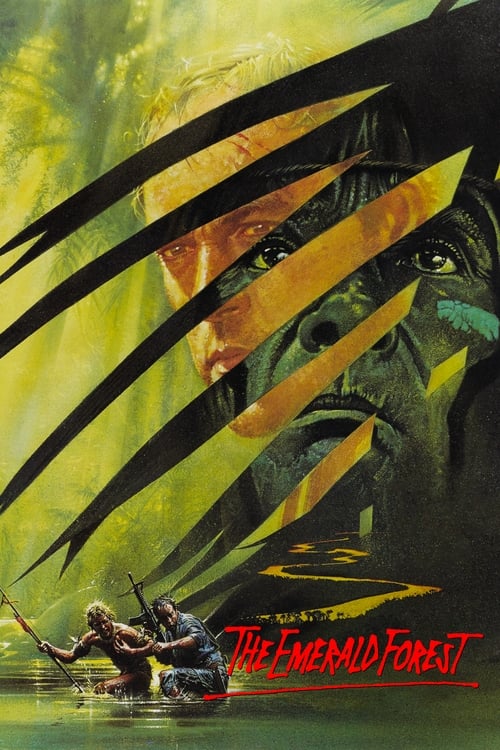
The Emerald Forest
For ten years, engineer Bill Markham has searched tirelessly for his son Tommy who disappeared from the edge of the Brazilian rainforest. Miraculously, he finds the boy living among the reclusive Amazon tribe who adopted him. And that's when Bill's adventure truly begins. For his son is now a grown tribesman who moves skillfully through this beautiful-but-dangerous terrain, fearful only of those who would exploit it. And as Bill attempts to "rescue" him from the savagery of the untamed jungle, Tommy challenges Bill's idea of true civilization and his notions about who needs rescuing.
The film earned $24.5M at the global box office.
Nominated for 3 BAFTA 5 nominations


Plot Structure
Story beats plotted across runtime


Narrative Arc
Emotional journey through the story's key moments
Story Circle
Blueprint 15-beat structure
Arcplot Score Breakdown
Weighted: Precision (70%) + Arc (15%) + Theme (15%)
The Emerald Forest (1985) exemplifies precise plot construction, characteristic of John Boorman's storytelling approach. This structural analysis examines how the film's 15-point plot structure maps to proven narrative frameworks across 1 hour and 54 minutes. With an Arcplot score of 6.8, the film balances conventional beats with creative variation.
Characters
Cast & narrative archetypes

Bill Markham
Tommy/Tomme
Jean Markham
Wanadi
Kachiri
Perreira
Main Cast & Characters
Bill Markham
Played by Powers Boothe
American engineer whose son is abducted by an Amazonian tribe. Spends ten years searching for him while building a dam that threatens the rainforest.
Tommy/Tomme
Played by Charley Boorman
Bill's son, taken at age 7 by the Invisible People tribe and raised as one of them. Becomes a warrior who straddles two worlds.
Jean Markham
Played by Meg Foster
Bill's wife and Tommy's mother. Struggles with the loss of her son and the reality of his transformation into a tribal warrior.
Wanadi
Played by Rui Polonah
Shaman and chief of the Invisible People tribe. Adopts Tommy and becomes his spiritual father and guide in tribal ways.
Kachiri
Played by Dira Paes
Young woman from the Invisible People who becomes Tommy's love interest and wife. Represents the connection to tribal life.
Perreira
Played by Estee Chandler
Ruthless leader of a group that enslaves indigenous people. Represents the destructive forces of so-called civilization.
Structural Analysis
The Status Quo at 1 minutes (1% through the runtime) establishes The Markham family arrives at the dam construction site in Brazil—young Tommy gazes in wonder at the vast rainforest as his father Bill oversees the massive engineering project, establishing a family united but on the edge of wilderness.. The analysis reveals that this early placement immediately immerses viewers in the story world.
The inciting incident occurs at 14 minutes when Young Tommy wanders to the forest edge and is abducted by the Invisible People. Bill chases desperately but can only watch helplessly as his son vanishes into the green darkness—the family is shattered in an instant.. At 12% through the film, this Disruption aligns precisely with traditional story structure. This beat shifts the emotional landscape, launching the protagonist into the central conflict.
The First Threshold at 29 minutes marks the transition into Act II, occurring at 25% of the runtime. This illustrates the protagonist's commitment to Bill finally locates the Invisible People's territory and makes contact with Tomme—now a young warrior who barely remembers his former life. Bill chooses to enter their world rather than force his son to leave, crossing into a realm where his engineering knowledge means nothing., moving from reaction to action.
At 57 minutes, the Midpoint arrives at 50% of the runtime—precisely centered, creating perfect narrative symmetry. Structural examination shows that this crucial beat The Fierce People—a rival tribe corrupted by contact with civilization—raid the village and kidnap the young women, including Tomme's beloved. The false peace is shattered; the outside world's violence has penetrated even this remote sanctuary., fundamentally raising what's at risk. The emotional intensity shifts, dividing the narrative into clear before-and-after phases.
The Collapse moment at 86 minutes (75% through) represents the emotional nadir. Here, Tomme is captured and nearly killed in the city; Bill finds his son brutalized, the innocent warrior broken by civilization's cruelty. The whiff of death is palpable—everything the Invisible People represent seems doomed to extinction., shows the protagonist at their lowest point. This beat's placement in the final quarter sets up the climactic reversal.
The Second Threshold at 91 minutes initiates the final act resolution at 80% of the runtime. Tomme invokes the power of the frogs—a spiritual ritual to call the rains. Bill realizes he must help his son use the very forces of nature against the dam he built. He synthesizes his engineering knowledge with indigenous wisdom., demonstrating the transformation achieved throughout the journey.
Emotional Journey
The Emerald Forest's emotional architecture traces a deliberate progression across 15 carefully calibrated beats.
Narrative Framework
This structural analysis employs structural analysis methodology used to understand storytelling architecture. By mapping The Emerald Forest against these established plot points, we can identify how John Boorman utilizes or subverts traditional narrative conventions. The plot point approach reveals not only adherence to structural principles but also creative choices that distinguish The Emerald Forest within the action genre.
John Boorman's Structural Approach
Among the 5 John Boorman films analyzed on Arcplot, the average structural score is 7.1, reflecting strong command of classical structure. The Emerald Forest takes a more unconventional approach compared to the director's typical style. For comparative analysis, explore the complete John Boorman filmography.
Comparative Analysis
Additional action films include The Bad Guys, Puss in Boots and Venom: The Last Dance. For more John Boorman analyses, see Exorcist II: The Heretic, Beyond Rangoon and Deliverance.
Plot Points by Act
Act I
SetupStatus Quo
The Markham family arrives at the dam construction site in Brazil—young Tommy gazes in wonder at the vast rainforest as his father Bill oversees the massive engineering project, establishing a family united but on the edge of wilderness.
Theme
A worker warns Bill about the forest: "The jungle has eyes... the Invisible People." The theme is stated—there are ways of seeing and knowing that Western civilization cannot perceive or understand.
Worldbuilding
We see the dam construction eating into the rainforest, the Markham family's domestic life at the edge of civilization, and Tommy's innocent fascination with the jungle. The contrast between industrial progress and pristine nature is established.
Disruption
Young Tommy wanders to the forest edge and is abducted by the Invisible People. Bill chases desperately but can only watch helplessly as his son vanishes into the green darkness—the family is shattered in an instant.
Resistance
Ten years pass as Bill obsessively searches for Tommy, traveling deep into the Amazon, consulting with authorities and indigenous trackers. His wife Jean struggles with grief while Bill cannot let go, driven by guilt and determination.
Act II
ConfrontationFirst Threshold
Bill finally locates the Invisible People's territory and makes contact with Tomme—now a young warrior who barely remembers his former life. Bill chooses to enter their world rather than force his son to leave, crossing into a realm where his engineering knowledge means nothing.
Mirror World
Bill meets Wanadi, the tribal chief who raised Tomme as his own son. Through Wanadi, Bill begins to see the forest not as obstacle but as living world—the Mirror World represents indigenous wisdom that challenges everything Bill believed about progress.
Premise
Bill lives among the Invisible People, witnessing Tomme's coming-of-age rituals, the tribe's spiritual connection to nature, and their sustainable way of life. The "promise of the premise" delivers the clash between Western and indigenous worldviews.
Midpoint
The Fierce People—a rival tribe corrupted by contact with civilization—raid the village and kidnap the young women, including Tomme's beloved. The false peace is shattered; the outside world's violence has penetrated even this remote sanctuary.
Opposition
Tomme must rescue the women from the Fierce People, who sell captives to brothels in the city. Bill follows his son into ever-greater danger as they discover how deep the corruption runs—miners, loggers, and traffickers all destroying the forest and its people.
Collapse
Tomme is captured and nearly killed in the city; Bill finds his son brutalized, the innocent warrior broken by civilization's cruelty. The whiff of death is palpable—everything the Invisible People represent seems doomed to extinction.
Crisis
Bill rescues Tomme and the women, but faces the reality that his dam project will eventually flood the Invisible People's homeland. Father and son share their grief—Bill for the world he's helped destroy, Tomme for a way of life that cannot survive.
Act III
ResolutionSecond Threshold
Tomme invokes the power of the frogs—a spiritual ritual to call the rains. Bill realizes he must help his son use the very forces of nature against the dam he built. He synthesizes his engineering knowledge with indigenous wisdom.
Synthesis
The ritual succeeds—torrential rains come, and the dam breaks. Bill watches his life's work destroyed, but the forest and its people are saved. The finale shows the transformative power of choosing nature over progress.
Transformation
Bill says goodbye to Tomme, who remains with his true people. Father and son embrace—Bill no longer sees the forest as enemy but as sacred. He leaves transformed, having learned to truly see through his son's eyes.