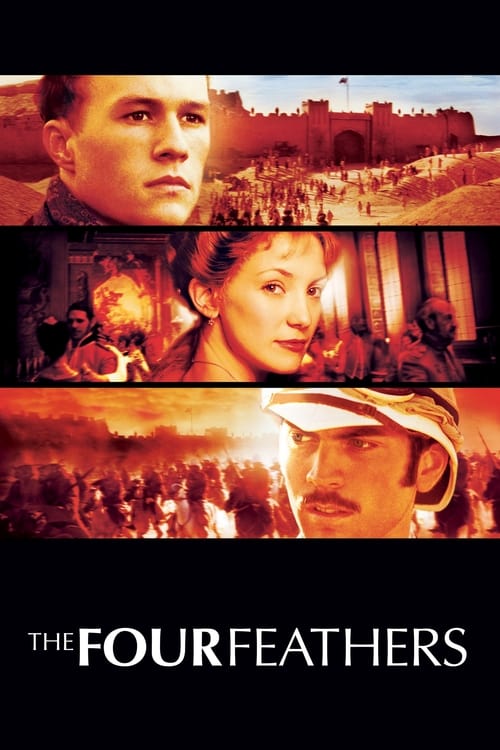
The Four Feathers
A young British officer resigns his post when he learns of his regiment's plan to ship out to the Sudan for the conflict with the Mahdi. His friends and fiancée send him four white feathers as symbols of what they view as his cowardice. To redeem his honor, he disguises himself as an Arab and secretly saves their lives.
The film underperformed commercially against its moderate budget of $35.0M, earning $29.9M globally (-15% loss).


Plot Structure
Story beats plotted across runtime


Narrative Arc
Emotional journey through the story's key moments
Story Circle
Blueprint 15-beat structure
Arcplot Score Breakdown
Weighted: Precision (70%) + Arc (15%) + Theme (15%)
The Four Feathers (2002) exemplifies precise plot construction, characteristic of Shekhar Kapur's storytelling approach. This structural analysis examines how the film's 15-point plot structure maps to proven narrative frameworks across 2 hours and 12 minutes. With an Arcplot score of 6.8, the film balances conventional beats with creative variation.
Characters
Cast & narrative archetypes

Harry Faversham
Jack Durrance
Ethne Eustace
Abou Fatma
Tom Willoughby
Edward Castleton
Main Cast & Characters
Harry Faversham
Played by Heath Ledger
A British officer who resigns his commission on the eve of his regiment's deployment to Sudan, receiving four white feathers as symbols of cowardice
Jack Durrance
Played by Wes Bentley
Harry's best friend and fellow officer who leads the regiment in Sudan and becomes blind during battle
Ethne Eustace
Played by Kate Hudson
Harry's fiancée who gives him a white feather when he resigns, torn between love and honor
Abou Fatma
Played by Djimon Hounsou
A Sudanese guide who befriends Harry and helps him survive in the desert while seeking redemption
Tom Willoughby
Played by Michael Sheen
One of Harry's fellow officers who gives him a white feather and fights in Sudan
Edward Castleton
Played by Kris Marshall
Another officer and friend who gives Harry a white feather before deployment
Structural Analysis
The Status Quo at 1 minutes (1% through the runtime) establishes Harry Faversham as a young British officer at a grand ball, celebrating his engagement to Ethne and surrounded by his regiment comrades. He appears to have everything: love, honor, and a promising military career in Victorian England.. Notably, this early placement immediately immerses viewers in the story world.
The inciting incident occurs at 16 minutes when The regiment receives orders to deploy to Sudan to fight the Mahdi uprising. Harry, conflicted about the morality of the colonial war and his own readiness, resigns his commission. His decision to withdraw from military service shatters his world.. At 12% through the film, this Disruption aligns precisely with traditional story structure. This beat shifts the emotional landscape, launching the protagonist into the central conflict.
The First Threshold at 33 minutes marks the transition into Act II, occurring at 25% of the runtime. This indicates the protagonist's commitment to Harry makes the active choice to travel to Sudan alone, disguising himself as an Arab. He leaves behind everything familiar to pursue redemption in the desert, crossing into a world of danger and self-discovery., moving from reaction to action.
At 66 minutes, the Midpoint arrives at 50% of the runtime—precisely centered, creating perfect narrative symmetry. Significantly, this crucial beat The British forces are ambushed and devastated at the Battle of Abu Klea. Harry witnesses Jack Durrance being blinded by a head wound in the chaos. The stakes escalate dramatically as Harry's friends face death, and his mission becomes about genuine salvation rather than personal redemption., fundamentally raising what's at risk. The emotional intensity shifts, dividing the narrative into clear before-and-after phases.
The Collapse moment at 99 minutes (75% through) represents the emotional nadir. Here, Harry is captured and imprisoned in the Mahdi fortress alongside the men he came to save. Beaten and chained, he appears to have failed completely. Abou Fatma has seemingly abandoned him. Everything Harry sacrificed for seems lost, and death appears certain., demonstrates the protagonist at their lowest point. This beat's placement in the final quarter sets up the climactic reversal.
The Second Threshold at 106 minutes initiates the final act resolution at 80% of the runtime. Abou Fatma returns with reinforcements to stage a rescue. Harry realizes that the courage he sought was demonstrated through his actions all along. Armed with this understanding and Abou's help, Harry leads the desperate escape from the fortress., demonstrating the transformation achieved throughout the journey.
Emotional Journey
The Four Feathers's emotional architecture traces a deliberate progression across 15 carefully calibrated beats.
Narrative Framework
This structural analysis employs proven narrative structure principles that track dramatic progression. By mapping The Four Feathers against these established plot points, we can identify how Shekhar Kapur utilizes or subverts traditional narrative conventions. The plot point approach reveals not only adherence to structural principles but also creative choices that distinguish The Four Feathers within the action genre.
Shekhar Kapur's Structural Approach
Among the 4 Shekhar Kapur films analyzed on Arcplot, the average structural score is 7.0, reflecting strong command of classical structure. The Four Feathers takes a more unconventional approach compared to the director's typical style. For comparative analysis, explore the complete Shekhar Kapur filmography.
Comparative Analysis
Additional action films include The Bad Guys, Puss in Boots and Venom: The Last Dance. For more Shekhar Kapur analyses, see Elizabeth, Elizabeth: The Golden Age and What's Love Got to Do with It?.
Plot Points by Act
Act I
SetupStatus Quo
Harry Faversham as a young British officer at a grand ball, celebrating his engagement to Ethne and surrounded by his regiment comrades. He appears to have everything: love, honor, and a promising military career in Victorian England.
Theme
Harry's father speaks about duty, honor, and the Faversham legacy of military service, stating that a man's courage is not measured by the absence of fear but by what he does in spite of it. This establishes the central question: what is true courage?
Worldbuilding
The rigid world of Victorian British military society is established. Harry's relationships with Jack Durrance, Trench, Castleton, and his fiancée Ethne are developed. The expectations of duty, family honor, and imperial service create the framework Harry will challenge.
Disruption
The regiment receives orders to deploy to Sudan to fight the Mahdi uprising. Harry, conflicted about the morality of the colonial war and his own readiness, resigns his commission. His decision to withdraw from military service shatters his world.
Resistance
Harry receives four white feathers - three from his friends Durrance, Trench, and Castleton, and one from Ethne - branding him a coward. His engagement is broken. Harry wrestles with shame and the question of how to redeem himself, ultimately deciding he must prove his courage in Sudan.
Act II
ConfrontationFirst Threshold
Harry makes the active choice to travel to Sudan alone, disguising himself as an Arab. He leaves behind everything familiar to pursue redemption in the desert, crossing into a world of danger and self-discovery.
Mirror World
Harry encounters Abou Fatma, a Sudanese warrior who saves his life in the desert. Abou becomes Harry's guide and mirror, teaching him survival and representing a different kind of honor - one based on genuine brotherhood rather than social expectation.
Premise
Harry navigates the harsh Sudanese landscape, learning to survive as an outsider. He shadows his former regiment, witnessing the brutal realities of colonial warfare. He saves Trench during a skirmish, beginning his quest to return the feathers and prove his courage through action rather than uniform.
Midpoint
The British forces are ambushed and devastated at the Battle of Abu Klea. Harry witnesses Jack Durrance being blinded by a head wound in the chaos. The stakes escalate dramatically as Harry's friends face death, and his mission becomes about genuine salvation rather than personal redemption.
Opposition
Harry struggles to rescue his captured friends from the Mahdi prison fortress. Jack, now blind and delirious, is lost in the desert. Harry must evade Mahdi forces while attempting increasingly dangerous rescue missions. The environment, enemy forces, and Harry's own limitations close in.
Collapse
Harry is captured and imprisoned in the Mahdi fortress alongside the men he came to save. Beaten and chained, he appears to have failed completely. Abou Fatma has seemingly abandoned him. Everything Harry sacrificed for seems lost, and death appears certain.
Crisis
In the darkness of the prison, Harry confronts his deepest fears. He connects with Jack and the other prisoners, finding purpose not in proving himself but in genuine care for his friends. The theme crystallizes: true courage is not about reputation but about doing what is right regardless of recognition.
Act III
ResolutionSecond Threshold
Abou Fatma returns with reinforcements to stage a rescue. Harry realizes that the courage he sought was demonstrated through his actions all along. Armed with this understanding and Abou's help, Harry leads the desperate escape from the fortress.
Synthesis
Harry leads the prisoners to freedom in a harrowing escape. He guides the blinded Jack through the desert to safety, demonstrating the selfless courage that defines true heroism. Returning to England, Harry confronts his past. Jack, now understanding who saved him, reconciles with Harry.
Transformation
Harry returns the four feathers to those who gave them, but not for vindication - for closure. He has found peace with himself. The final image shows Harry as a man transformed: no longer defined by others' judgment but by his own understanding of honor. He has earned his own respect.