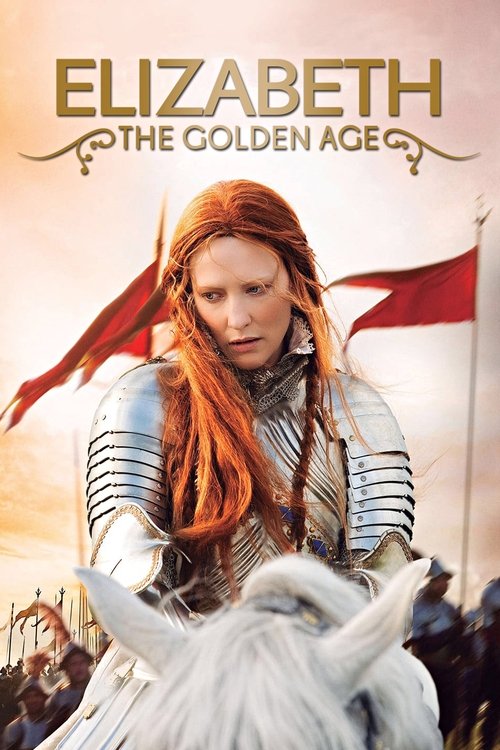
Elizabeth: The Golden Age
When Queen Elizabeth's reign is threatened by ruthless familial betrayal and Spain's invading army, she and her shrewd adviser must act to safeguard the lives of her people.
Working with a mid-range budget of $55.0M, the film achieved a respectable showing with $74.2M in global revenue (+35% profit margin).
1 Oscar. 8 wins & 33 nominations


Plot Structure
Story beats plotted across runtime


Narrative Arc
Emotional journey through the story's key moments
Story Circle
Blueprint 15-beat structure
Arcplot Score Breakdown
Weighted: Precision (70%) + Arc (15%) + Theme (15%)
Elizabeth: The Golden Age (2007) demonstrates carefully calibrated story structure, characteristic of Shekhar Kapur's storytelling approach. This structural analysis examines how the film's 15-point plot structure maps to proven narrative frameworks across 1 hour and 54 minutes. With an Arcplot score of 7.7, the film showcases strong structural fundamentals.
Characters
Cast & narrative archetypes

Queen Elizabeth I
Sir Walter Raleigh
Bess Throckmorton
King Philip II of Spain
Sir Francis Walsingham
Mary, Queen of Scots
Main Cast & Characters
Queen Elizabeth I
Played by Cate Blanchett
The aging Virgin Queen of England facing threats from Spain and navigating personal desires versus duty to her kingdom.
Sir Walter Raleigh
Played by Clive Owen
A charismatic explorer and adventurer who captures Elizabeth's heart and brings exotic tales from the New World.
Bess Throckmorton
Played by Abbie Cornish
Elizabeth's lady-in-waiting who becomes romantically involved with Raleigh, creating a love triangle.
King Philip II of Spain
Played by Jordi Mollà
The Catholic monarch plotting to overthrow Elizabeth and restore Catholic rule to England through military invasion.
Sir Francis Walsingham
Played by Geoffrey Rush
Elizabeth's spymaster and chief advisor, fiercely loyal and protective of the Queen and England's security.
Mary, Queen of Scots
Played by Samantha Morton
Elizabeth's Catholic cousin and rival claimant to the throne, imprisoned but still a political threat.
Structural Analysis
The Status Quo at 1 minutes (1% through the runtime) establishes Elizabeth rides through the countryside with her entourage, displaying her power and confidence as England's Virgin Queen. She is established as strong, isolated, and devoted to her country above all else.. Of particular interest, this early placement immediately immerses viewers in the story world.
The inciting incident occurs at 14 minutes when Walter Raleigh is introduced at court. His boldness, charisma, and tales of the New World immediately captivate Elizabeth, disrupting her carefully controlled emotional world. Simultaneously, news of Mary Queen of Scots' plotting intensifies the external threat.. At 12% through the film, this Disruption aligns precisely with traditional story structure. This beat shifts the emotional landscape, launching the protagonist into the central conflict.
The First Threshold at 30 minutes marks the transition into Act II, occurring at 26% of the runtime. This reveals the protagonist's commitment to Elizabeth makes the agonizing decision to sign Mary Queen of Scots' death warrant. This active choice commits her to a path of war with Spain and represents her choosing duty over mercy. The execution is carried out, making Philip II's invasion inevitable., moving from reaction to action.
At 57 minutes, the Midpoint arrives at 50% of the runtime—precisely centered, creating perfect narrative symmetry. Of particular interest, this crucial beat Elizabeth discovers that Raleigh and Bess Throckmorton have secretly married and Bess is pregnant. This devastating betrayal represents a false defeat—the one man who made her feel like a woman has chosen another. Simultaneously, intelligence confirms the Spanish Armada is sailing toward England., fundamentally raising what's at risk. The emotional intensity shifts, dividing the narrative into clear before-and-after phases.
The Collapse moment at 84 minutes (74% through) represents the emotional nadir. Here, An assassination attempt nearly succeeds—a Catholic conspirator attacks Elizabeth in her chamber. She narrowly escapes death. This "whiff of death" moment is both literal and metaphorical: her vulnerability as a woman nearly costs her life, and England faces annihilation from the approaching Armada., reveals the protagonist at their lowest point. This beat's placement in the final quarter sets up the climactic reversal.
The Second Threshold at 91 minutes initiates the final act resolution at 80% of the runtime. Elizabeth has a realization: her power comes not from being loved as a woman but from being England itself. She transforms her appearance, dons armor, and rides to Tilbury to address her troops. "I have the heart and stomach of a king," she declares, synthesizing her feminine and masculine power into complete sovereignty., demonstrating the transformation achieved throughout the journey.
Emotional Journey
Elizabeth: The Golden Age's emotional architecture traces a deliberate progression across 15 carefully calibrated beats.
Narrative Framework
This structural analysis employs proven narrative structure principles that track dramatic progression. By mapping Elizabeth: The Golden Age against these established plot points, we can identify how Shekhar Kapur utilizes or subverts traditional narrative conventions. The plot point approach reveals not only adherence to structural principles but also creative choices that distinguish Elizabeth: The Golden Age within the drama genre.
Shekhar Kapur's Structural Approach
Among the 4 Shekhar Kapur films analyzed on Arcplot, the average structural score is 7.0, reflecting strong command of classical structure. Elizabeth: The Golden Age represents one of the director's most structurally precise works. For comparative analysis, explore the complete Shekhar Kapur filmography.
Comparative Analysis
Additional drama films include After Thomas, South Pacific and Dirty Dancing: Havana Nights. For more Shekhar Kapur analyses, see Elizabeth, What's Love Got to Do with It? and The Four Feathers.
Plot Points by Act
Act I
SetupStatus Quo
Elizabeth rides through the countryside with her entourage, displaying her power and confidence as England's Virgin Queen. She is established as strong, isolated, and devoted to her country above all else.
Theme
Walsingham warns Elizabeth about the dangers surrounding her throne, stating: "There are forces that conspire against you." The theme of sacrifice and the burden of power is introduced—Elizabeth must choose between personal happiness and her duty to England.
Worldbuilding
The political landscape is established: Catholic Spain under Philip II threatens Protestant England. Elizabeth's court is introduced, including her ladies-in-waiting (particularly Bess Throckmorton), advisor Walsingham, and the threat of Mary Queen of Scots. Elizabeth's loneliness and isolation as ruler become apparent.
Disruption
Walter Raleigh is introduced at court. His boldness, charisma, and tales of the New World immediately captivate Elizabeth, disrupting her carefully controlled emotional world. Simultaneously, news of Mary Queen of Scots' plotting intensifies the external threat.
Resistance
Elizabeth resists her attraction to Raleigh while debating what to do about Mary Queen of Scots. Walsingham and advisors pressure her to execute Mary. Elizabeth struggles between her heart (Raleigh) and her duty (executing Mary). The Babington Plot is uncovered, proving Mary's treason.
Act II
ConfrontationFirst Threshold
Elizabeth makes the agonizing decision to sign Mary Queen of Scots' death warrant. This active choice commits her to a path of war with Spain and represents her choosing duty over mercy. The execution is carried out, making Philip II's invasion inevitable.
Mirror World
Elizabeth's growing romantic relationship with Walter Raleigh deepens. He represents everything she cannot have—freedom, adventure, romantic love. Their connection embodies the theme: can she be both a woman and a queen? Bess Throckmorton also develops feelings for Raleigh.
Premise
Elizabeth navigates the dangerous waters of court intrigue while her feelings for Raleigh intensify. Spain prepares the Armada. Elizabeth experiences moments of joy and vulnerability with Raleigh, contrasting with her public role. The tension between her human desires and royal responsibilities plays out through flirtation, dance, and private conversations.
Midpoint
Elizabeth discovers that Raleigh and Bess Throckmorton have secretly married and Bess is pregnant. This devastating betrayal represents a false defeat—the one man who made her feel like a woman has chosen another. Simultaneously, intelligence confirms the Spanish Armada is sailing toward England.
Opposition
Elizabeth's personal heartbreak coincides with England's greatest military threat. She exiles Raleigh and imprisons Bess. The Spanish Armada advances. Internal conspiracies surface as English Catholics plot assassination. Elizabeth becomes increasingly isolated, brittle, and vulnerable. The external enemy closes in as her emotional defenses crumble.
Collapse
An assassination attempt nearly succeeds—a Catholic conspirator attacks Elizabeth in her chamber. She narrowly escapes death. This "whiff of death" moment is both literal and metaphorical: her vulnerability as a woman nearly costs her life, and England faces annihilation from the approaching Armada.
Crisis
Elizabeth confronts her darkest fears in the aftermath of the assassination attempt. She is alone, betrayed, and her kingdom faces destruction. She must process the loss of her romantic dreams and reconcile her dual nature as woman and monarch. This is her dark night of the soul.
Act III
ResolutionSecond Threshold
Elizabeth has a realization: her power comes not from being loved as a woman but from being England itself. She transforms her appearance, dons armor, and rides to Tilbury to address her troops. "I have the heart and stomach of a king," she declares, synthesizing her feminine and masculine power into complete sovereignty.
Synthesis
The English navy, aided by fire ships and a providential storm ("the Protestant Wind"), defeats the Spanish Armada. Elizabeth pardons Bess and Raleigh, showing mercy from a position of strength. She has integrated her humanity with her power. Philip II burns her portrait, acknowledging defeat. England is saved, and Elizabeth has become the fully realized icon.
Transformation
Elizabeth stands alone in her chamber, now fully transformed into the legendary Virgin Queen—no longer torn between woman and monarch but complete in her solitary power. Unlike the opening where she seemed isolated, she now appears transcendent and eternal, having sacrificed personal love for immortal glory.