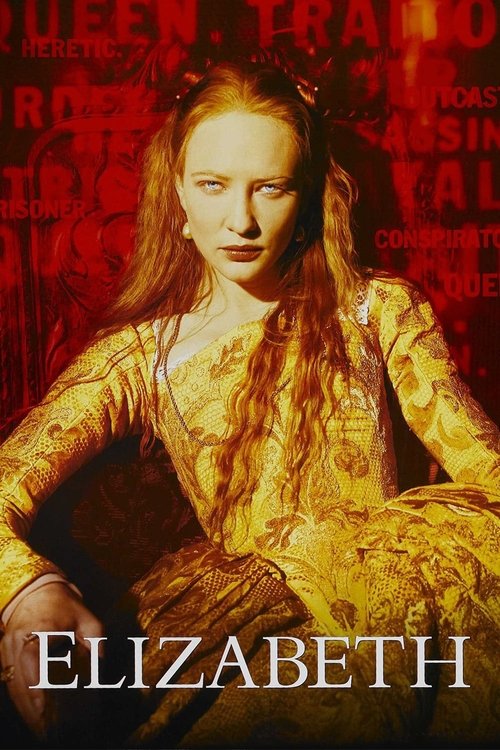
Elizabeth
The story of the ascension to the throne and the early reign of Queen Elizabeth the First, the endless attempts by her council to marry her off, the Catholic hatred of her and her romance with Lord Robert Dudley.
Despite a mid-range budget of $30.0M, Elizabeth became a commercial success, earning $82.2M worldwide—a 174% return.
1 Oscar. 35 wins & 56 nominations


Plot Structure
Story beats plotted across runtime


Narrative Arc
Emotional journey through the story's key moments
Story Circle
Blueprint 15-beat structure
Arcplot Score Breakdown
Weighted: Precision (70%) + Arc (15%) + Theme (15%)
Elizabeth (1998) exhibits precise dramatic framework, characteristic of Shekhar Kapur's storytelling approach. This structural analysis examines how the film's 15-point plot structure maps to proven narrative frameworks across 2 hours and 3 minutes. With an Arcplot score of 6.5, the film balances conventional beats with creative variation.
Characters
Cast & narrative archetypes

Elizabeth I
Sir Francis Walsingham
Robert Dudley
Duke of Norfolk
Sir William Cecil
Mary of Guise
Lettice Howard
Duc d'Anjou
Main Cast & Characters
Elizabeth I
Played by Cate Blanchett
Young Protestant princess who becomes Queen of England and transforms from naive romantic to powerful monarch
Sir Francis Walsingham
Played by Geoffrey Rush
Elizabeth's spymaster and chief advisor who uses ruthless methods to protect her reign
Robert Dudley
Played by Joseph Fiennes
Elizabeth's childhood friend and romantic interest, ambitious nobleman torn between love and power
Duke of Norfolk
Played by Christopher Eccleston
Catholic nobleman who conspires against Elizabeth to restore Catholic rule in England
Sir William Cecil
Played by Richard Attenborough
Elizabeth's elderly chief advisor who seeks stability through political marriage
Mary of Guise
Played by Fanny Ardant
Regent of Scotland and Catholic conspirator plotting against Elizabeth
Lettice Howard
Played by Kelly Macdonald
Lady-in-waiting who becomes Dudley's lover, betraying Elizabeth's trust
Duc d'Anjou
Played by Vincent Cassel
French Catholic prince proposed as Elizabeth's suitor for political alliance
Structural Analysis
The Status Quo at 2 minutes (1% through the runtime) establishes Elizabeth dances freely with Robert Dudley in the garden, embodying youth, romance, and innocence before the weight of the crown. She is carefree, passionate, and unburdened by political responsibility.. The analysis reveals that this early placement immediately immerses viewers in the story world.
The inciting incident occurs at 15 minutes when Queen Mary dies, and Elizabeth is summoned to become Queen of England. The news arrives with both triumph and dread—her sister's death forces her into a role she never sought.. At 12% through the film, this Disruption aligns precisely with traditional story structure. This beat shifts the emotional landscape, launching the protagonist into the central conflict.
The First Threshold at 30 minutes marks the transition into Act II, occurring at 25% of the runtime. This reveals the protagonist's commitment to Elizabeth chooses to refuse marriage to the Duke of Anjou and confronts the reality that she must rule alone. She accepts that her personal desires must be subordinated to political necessity, entering the ruthless world of true sovereignty., moving from reaction to action.
At 61 minutes, the Midpoint arrives at 50% of the runtime—precisely centered, creating perfect narrative symmetry. The analysis reveals that this crucial beat Elizabeth discovers that Dudley is already married and has betrayed her trust. This false defeat shatters her romantic illusions and marks the point where her personal transformation becomes inevitable. Trust is impossible., fundamentally raising what's at risk. The emotional intensity shifts, dividing the narrative into clear before-and-after phases.
The Collapse moment at 91 minutes (74% through) represents the emotional nadir. Here, The assassination attempt nearly succeeds—Elizabeth is shot at, and her trusted confidants are revealed as traitors. The whiff of death: her innocence and naïve idealism about ruling with love dies. She realizes mercy is weakness., reveals the protagonist at their lowest point. This beat's placement in the final quarter sets up the climactic reversal.
The Second Threshold at 98 minutes initiates the final act resolution at 79% of the runtime. Elizabeth makes the conscious choice to become the Virgin Queen. She cuts her hair, adopts the white makeup, and declares herself married to England. She synthesizes power and sacrifice, embracing the iconography of divine rulership., demonstrating the transformation achieved throughout the journey.
Emotional Journey
Elizabeth's emotional architecture traces a deliberate progression across 15 carefully calibrated beats.
Narrative Framework
This structural analysis employs a 15-point narrative structure framework that maps key story moments. By mapping Elizabeth against these established plot points, we can identify how Shekhar Kapur utilizes or subverts traditional narrative conventions. The plot point approach reveals not only adherence to structural principles but also creative choices that distinguish Elizabeth within the drama genre.
Shekhar Kapur's Structural Approach
Among the 4 Shekhar Kapur films analyzed on Arcplot, the average structural score is 7.0, reflecting strong command of classical structure. Elizabeth takes a more unconventional approach compared to the director's typical style. For comparative analysis, explore the complete Shekhar Kapur filmography.
Comparative Analysis
Additional drama films include After Thomas, South Pacific and Dirty Dancing: Havana Nights. For more Shekhar Kapur analyses, see Elizabeth: The Golden Age, What's Love Got to Do with It? and The Four Feathers.
Plot Points by Act
Act I
SetupStatus Quo
Elizabeth dances freely with Robert Dudley in the garden, embodying youth, romance, and innocence before the weight of the crown. She is carefree, passionate, and unburdened by political responsibility.
Theme
Sir William Cecil warns: "I ask you, what is a king without soldiers, without soldiers, what is he? Nothing." The theme of power requiring sacrifice and ruthlessness is established.
Worldbuilding
Protestant heretics are burned under Queen Mary's reign. Elizabeth lives in fear as a Protestant princess, suspected of treason. We see the brutal religious politics, her romance with Dudley, and her arrest, establishing the dangerous world she inhabits.
Disruption
Queen Mary dies, and Elizabeth is summoned to become Queen of England. The news arrives with both triumph and dread—her sister's death forces her into a role she never sought.
Resistance
Elizabeth resists the full burden of queenship. She wants to marry Dudley and rule with compassion. Cecil and her advisors debate strategies. She is crowned but struggles with religious compromise, political marriages, and threats from Catholic forces.
Act II
ConfrontationFirst Threshold
Elizabeth chooses to refuse marriage to the Duke of Anjou and confronts the reality that she must rule alone. She accepts that her personal desires must be subordinated to political necessity, entering the ruthless world of true sovereignty.
Mirror World
Elizabeth's deepening relationship with Robert Dudley represents the personal life and love she must sacrifice. Their intimacy mirrors the theme: can she be both woman and monarch, or must she choose?
Premise
Elizabeth navigates court intrigue, assassination plots, and foreign threats. She attempts to rule with mercy and love, but discovers betrayal everywhere—from Norfolk's conspiracy to the Pope's machinations. The premise: can a young woman hold power through kindness?
Midpoint
Elizabeth discovers that Dudley is already married and has betrayed her trust. This false defeat shatters her romantic illusions and marks the point where her personal transformation becomes inevitable. Trust is impossible.
Opposition
The Norfolk conspiracy intensifies. Elizabeth faces assassination attempts, military threats from France and Scotland, and betrayal from within her court. Her attempts at merciful rule backfire. Walsingham operates in the shadows while Elizabeth loses control.
Collapse
The assassination attempt nearly succeeds—Elizabeth is shot at, and her trusted confidants are revealed as traitors. The whiff of death: her innocence and naïve idealism about ruling with love dies. She realizes mercy is weakness.
Crisis
Elizabeth retreats into darkness and contemplation. She mourns the woman she was and the life she cannot have. She processes the betrayal of Dudley, the failure of mercy, and the cost of survival. A dark night of reckoning.
Act III
ResolutionSecond Threshold
Elizabeth makes the conscious choice to become the Virgin Queen. She cuts her hair, adopts the white makeup, and declares herself married to England. She synthesizes power and sacrifice, embracing the iconography of divine rulership.
Synthesis
Elizabeth executes the conspirators, including Norfolk. She banishes Dudley. She fully assumes her role as the iconic Virgin Queen, wielding absolute power with calculated ruthlessness. The finale consolidates her transformation into a political icon rather than a person.
Transformation
Elizabeth appears in full regal splendor, pale and remote, as her court bows before her. The final image mirrors the opening—where she danced freely, she now stands frozen as an untouchable icon. The woman has died; the legend is born.