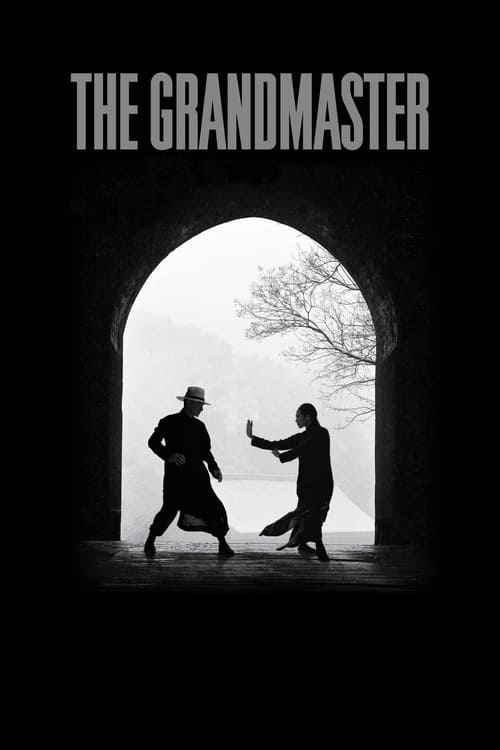
The Grandmaster
Ip Man's peaceful life in Foshan changes after Gong Yutian seeks an heir for his family in Southern China. Ip Man then meets Gong Er who challenges him for the sake of regaining her family's honor. After the Second Sino-Japanese War, Ip Man moves to Hong Kong and struggles to provide for his family. In the mean time, Gong Er chooses the path of vengeance after her father was killed by Ma San.
Working with a mid-range budget of $38.6M, the film achieved a modest success with $64.1M in global revenue (+66% profit margin).
Nominated for 2 Oscars. 68 wins & 72 nominations


Plot Structure
Story beats plotted across runtime


Narrative Arc
Emotional journey through the story's key moments
Story Circle
Blueprint 15-beat structure
Arcplot Score Breakdown
Weighted: Precision (70%) + Arc (15%) + Theme (15%)
The Grandmaster (2013) reveals strategically placed story structure, characteristic of Wong Kar-Wai's storytelling approach. This structural analysis examines how the film's 15-point plot structure maps to proven narrative frameworks across 2 hours and 10 minutes. With an Arcplot score of 7.1, the film balances conventional beats with creative variation.
Characters
Cast & narrative archetypes

Ip Man
Gong Er
Gong Yutian
Ma San
The Razor
Ip Man's Wife
Main Cast & Characters
Ip Man
Played by Tony Leung Chiu-wai
A Wing Chun master navigating love, duty, and martial arts philosophy during the tumultuous Republican era of China.
Gong Er
Played by Zhang Ziyi
The daughter of Gong Yutian, a skilled martial artist torn between revenge, love, and the burden of her family's legacy.
Gong Yutian
Played by Wang Qingxiang
A revered martial arts grandmaster who passes his legacy and triggers the central conflicts of succession and honor.
Ma San
Played by Zhang Jin
Gong Yutian's treacherous disciple who betrays his master for power and control of the martial arts lineage.
The Razor
Played by Chang Chen
A mysterious assassin and martial artist connected to Gong Er, representing the darker side of martial arts honor.
Ip Man's Wife
Played by Song Hye-kyo
Ip Man's devoted wife who represents his connection to family and traditional life before upheaval.
Structural Analysis
The Status Quo at 1 minutes (1% through the runtime) establishes Ip Man stands in the rain fighting multiple opponents in slow motion, demonstrating his supreme mastery of Wing Chun. This establishes him as the undisputed martial arts master of Foshan in his prime.. The analysis reveals that this early placement immediately immerses viewers in the story world.
The inciting incident occurs at 16 minutes when Gong Yutian announces his retirement and proposes that a southern master should carry on his legacy. This opens the door for Ip Man to step beyond his comfortable world and test himself against the legendary northern styles.. At 12% through the film, this Disruption aligns precisely with traditional story structure. This beat shifts the emotional landscape, launching the protagonist into the central conflict.
The First Threshold at 34 minutes marks the transition into Act II, occurring at 26% of the runtime. This reveals the protagonist's commitment to Ip Man accepts Gong Er's challenge to fight her on the train platform, choosing to engage with northern kung fu on its own terms rather than remaining safely in his southern tradition. This is his active choice to enter a new world of martial arts philosophy., moving from reaction to action.
At 63 minutes, the Midpoint arrives at 49% of the runtime—precisely centered, creating perfect narrative symmetry. Significantly, this crucial beat The Japanese invasion destroys everything. Ip Man loses his wealth, his home, and his old life. Gong Er's father is killed by Ma San, a traitor. This is a false defeat that raises the stakes - the golden age of kung fu is over, and survival becomes the new priority., fundamentally raising what's at risk. The emotional intensity shifts, dividing the narrative into clear before-and-after phases.
The Collapse moment at 95 minutes (73% through) represents the emotional nadir. Here, Gong Er defeats Ma San but is mortally wounded by her commitment to revenge. The whiff of death: she has sacrificed everything - her martial arts legacy, her chance at love with Ip Man, her health, her future - for honor. A way of life dies with her., demonstrates the protagonist at their lowest point. This beat's placement in the final quarter sets up the climactic reversal.
The Second Threshold at 106 minutes initiates the final act resolution at 81% of the runtime. Ip Man synthesizes his understanding: he will preserve Wing Chun not through personal glory or revenge, but by teaching the next generation. He sees that survival and adaptation - passing on knowledge - is the true way to honor tradition. He opens his school., demonstrating the transformation achieved throughout the journey.
Emotional Journey
The Grandmaster's emotional architecture traces a deliberate progression across 15 carefully calibrated beats.
Narrative Framework
This structural analysis employs structural analysis methodology used to understand storytelling architecture. By mapping The Grandmaster against these established plot points, we can identify how Wong Kar-Wai utilizes or subverts traditional narrative conventions. The plot point approach reveals not only adherence to structural principles but also creative choices that distinguish The Grandmaster within the action genre.
Wong Kar-Wai's Structural Approach
Among the 5 Wong Kar-Wai films analyzed on Arcplot, the average structural score is 7.0, reflecting strong command of classical structure. The Grandmaster represents one of the director's most structurally precise works. For comparative analysis, explore the complete Wong Kar-Wai filmography.
Comparative Analysis
Additional action films include The Bad Guys, Puss in Boots and Venom: The Last Dance. For more Wong Kar-Wai analyses, see 2046, Happy Together and In the Mood for Love.
Plot Points by Act
Act I
SetupStatus Quo
Ip Man stands in the rain fighting multiple opponents in slow motion, demonstrating his supreme mastery of Wing Chun. This establishes him as the undisputed martial arts master of Foshan in his prime.
Theme
Ip Man's voiceover states: "Kung fu - two words: horizontal, vertical. The state of kung fu ultimately boils down to two words: one horizontal, one standing." This introduces the theme of what defines true mastery - whether one stays standing or falls.
Worldbuilding
Introduction to the world of southern Chinese martial arts in 1930s Foshan. Ip Man's comfortable life with his wife and daughters, the ritual of martial arts culture, and the impending arrival of Gong Yutian, the northern grandmaster seeking to retire and unify north and south.
Disruption
Gong Yutian announces his retirement and proposes that a southern master should carry on his legacy. This opens the door for Ip Man to step beyond his comfortable world and test himself against the legendary northern styles.
Resistance
Ip Man is selected to represent the south. He prepares mentally and physically, contemplating the philosophical differences between northern and southern kung fu. He meets Gong Er, the grandmaster's daughter, who becomes both rival and mirror to his journey.
Act II
ConfrontationFirst Threshold
Ip Man accepts Gong Er's challenge to fight her on the train platform, choosing to engage with northern kung fu on its own terms rather than remaining safely in his southern tradition. This is his active choice to enter a new world of martial arts philosophy.
Mirror World
After their fight, Ip Man and Gong Er share a moment of mutual respect and connection. Gong Er represents the thematic counterpoint - she embodies honor, tradition, and the cost of choosing martial arts over personal life. Their relationship will teach Ip Man about sacrifice.
Premise
The promise of the premise: witnessing the beauty and philosophy of various kung fu styles, the elegant world of martial arts mastery at its peak. Exploration of different schools, techniques, and the cultural richness of 1930s-40s China before everything changes.
Midpoint
The Japanese invasion destroys everything. Ip Man loses his wealth, his home, and his old life. Gong Er's father is killed by Ma San, a traitor. This is a false defeat that raises the stakes - the golden age of kung fu is over, and survival becomes the new priority.
Opposition
Ip Man struggles in poverty in Hong Kong, working menial jobs while his family remains in Foshan. Gong Er pursues her vow of revenge against Ma San, sacrificing any chance of personal happiness. The old world pressures both to abandon their ideals as reality closes in.
Collapse
Gong Er defeats Ma San but is mortally wounded by her commitment to revenge. The whiff of death: she has sacrificed everything - her martial arts legacy, her chance at love with Ip Man, her health, her future - for honor. A way of life dies with her.
Crisis
Ip Man processes the loss of Gong Er and contemplates the meaning of their parallel journeys. Both chose kung fu over everything else, but at what cost? He sits with the darkness of knowing the old world is truly gone forever.
Act III
ResolutionSecond Threshold
Ip Man synthesizes his understanding: he will preserve Wing Chun not through personal glory or revenge, but by teaching the next generation. He sees that survival and adaptation - passing on knowledge - is the true way to honor tradition. He opens his school.
Synthesis
Ip Man teaches Wing Chun in Hong Kong, training students including the young Bruce Lee. He executes his synthesis of tradition and adaptation, proving that kung fu can survive by evolving. The finale shows his legacy being passed forward to a new generation.
Transformation
Final image: Ip Man stands teaching, transformed from the wealthy master fighting in the rain to the humble teacher who preserved an entire tradition. The button he carries - Gong Er's gift - reminds him of what was lost, but his students represent what endures. He remains standing.