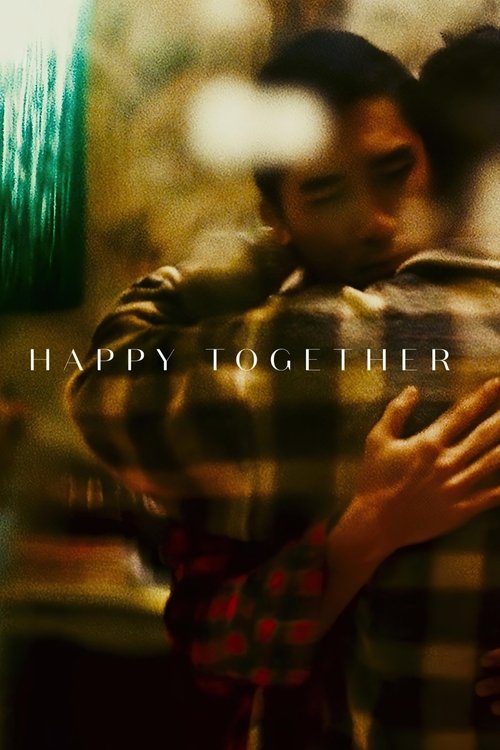
Happy Together
A gay couple from Hong Kong takes a trip to Argentina in search of a new beginning but instead begins drifting even further apart.
Despite its extremely modest budget of $125K, Happy Together became a runaway success, earning $5.0M worldwide—a remarkable 3900% return. The film's unique voice resonated with audiences, confirming that strong storytelling can transcend budget limitations.
7 wins & 20 nominations


Plot Structure
Story beats plotted across runtime


Narrative Arc
Emotional journey through the story's key moments
Story Circle
Blueprint 15-beat structure
Arcplot Score Breakdown
Weighted: Precision (70%) + Arc (15%) + Theme (15%)
Happy Together (1997) exhibits precise plot construction, characteristic of Wong Kar-Wai's storytelling approach. This structural analysis examines how the film's 15-point plot structure maps to proven narrative frameworks across 1 hour and 36 minutes. With an Arcplot score of 7.0, the film balances conventional beats with creative variation.
Characters
Cast & narrative archetypes

Lai Yiu-fai
Ho Po-wing
Chang
Main Cast & Characters
Lai Yiu-fai
Played by Tony Leung Chiu-wai
A Hong Kong expatriate in Argentina struggling with his volatile relationship with Ho Po-wing. Works odd jobs while yearning for stability and home.
Ho Po-wing
Played by Leslie Cheung
Lai's charismatic but unreliable lover whose impulsive nature drives the relationship's cycle of breakups and reconciliations.
Chang
Played by Chen Chang
A young Taiwanese traveler working at the same restaurant as Lai, whose presence offers an alternative perspective on connection and moving forward.
Structural Analysis
The Status Quo at 1 minutes (1% through the runtime) establishes Black and white footage of Lai Yiu-fai and Ho Po-wing in an intimate embrace in Buenos Aires, establishing their passionate but unstable relationship as exiles far from Hong Kong.. Notably, this early placement immediately immerses viewers in the story world.
The inciting incident occurs at 12 minutes when Po-wing returns to Fai badly beaten and injured, forcing Fai to take him in and care for him despite their recent breakup, trapping Fai in a caretaker role he didn't choose.. At 12% through the film, this Disruption aligns precisely with traditional story structure. This beat shifts the emotional landscape, launching the protagonist into the central conflict.
The First Threshold at 24 minutes marks the transition into Act II, occurring at 25% of the runtime. This indicates the protagonist's commitment to Fai makes the choice to fully commit to caring for Po-wing and trying to make the relationship work, even as he keeps him captive — crossing into a new dynamic of control and codependency., moving from reaction to action.
At 48 minutes, the Midpoint arrives at 50% of the runtime—precisely centered, creating perfect narrative symmetry. Structural examination shows that this crucial beat Po-wing recovers fully and begins going out again, returning to his promiscuous ways. The false hope of reconciliation collapses as Fai realizes Po-wing will never change — their attempt to "start over" has failed again., fundamentally raising what's at risk. The emotional intensity shifts, dividing the narrative into clear before-and-after phases.
The Collapse moment at 72 minutes (75% through) represents the emotional nadir. Here, Fai and Po-wing have their final, devastating confrontation. Po-wing begs to start over once more, but Fai refuses — he finally recognizes the relationship is destroying him. The dream of being happy together dies., illustrates the protagonist at their lowest point. This beat's placement in the final quarter sets up the climactic reversal.
The Second Threshold at 77 minutes initiates the final act resolution at 80% of the runtime. Fai decides to finally make the journey to Iguazu Falls alone — the destination he and Po-wing never reached together. He chooses to complete his own journey rather than remain trapped in the past., demonstrating the transformation achieved throughout the journey.
Emotional Journey
Happy Together's emotional architecture traces a deliberate progression across 15 carefully calibrated beats.
Narrative Framework
This structural analysis employs structural analysis methodology used to understand storytelling architecture. By mapping Happy Together against these established plot points, we can identify how Wong Kar-Wai utilizes or subverts traditional narrative conventions. The plot point approach reveals not only adherence to structural principles but also creative choices that distinguish Happy Together within the drama genre.
Wong Kar-Wai's Structural Approach
Among the 5 Wong Kar-Wai films analyzed on Arcplot, the average structural score is 7.0, reflecting strong command of classical structure. Happy Together exemplifies the director's characteristic narrative technique. For comparative analysis, explore the complete Wong Kar-Wai filmography.
Comparative Analysis
Additional drama films include After Thomas, South Pacific and Dirty Dancing: Havana Nights. For more Wong Kar-Wai analyses, see 2046, The Grandmaster and In the Mood for Love.
Plot Points by Act
Act I
SetupStatus Quo
Black and white footage of Lai Yiu-fai and Ho Po-wing in an intimate embrace in Buenos Aires, establishing their passionate but unstable relationship as exiles far from Hong Kong.
Theme
Po-wing says "Let's start over" — the recurring phrase that encapsulates the film's meditation on whether love can truly be renewed or if couples are doomed to repeat destructive patterns.
Worldbuilding
Establishes the couple's existence in Argentina: their cramped apartment, the lamp featuring Iguazu Falls they never reached, and the toxic cycle of breaking up and reuniting that defines their relationship.
Disruption
Po-wing returns to Fai badly beaten and injured, forcing Fai to take him in and care for him despite their recent breakup, trapping Fai in a caretaker role he didn't choose.
Resistance
Fai nurses Po-wing back to health while working at a tango bar. He hides Po-wing's passport to prevent him from leaving, revealing his desperate need to control the relationship and keep Po-wing dependent.
Act II
ConfrontationFirst Threshold
Fai makes the choice to fully commit to caring for Po-wing and trying to make the relationship work, even as he keeps him captive — crossing into a new dynamic of control and codependency.
Mirror World
Chang, a cheerful Taiwanese coworker at the Chinese restaurant, enters Fai's life. His openness and emotional clarity contrast sharply with the dysfunction of Fai and Po-wing's relationship, offering an alternative model of connection.
Premise
The film explores the push-pull dynamics of Fai and Po-wing's relationship: tender moments of domestic intimacy interrupted by jealousy, infidelity, and Po-wing's restlessness. The color gradually saturates as their bond temporarily stabilizes.
Midpoint
Po-wing recovers fully and begins going out again, returning to his promiscuous ways. The false hope of reconciliation collapses as Fai realizes Po-wing will never change — their attempt to "start over" has failed again.
Opposition
The relationship deteriorates as Po-wing stays out all night and Fai grows increasingly isolated and bitter. Fai throws himself into work and his friendship with Chang intensifies, creating jealousy in Po-wing.
Collapse
Fai and Po-wing have their final, devastating confrontation. Po-wing begs to start over once more, but Fai refuses — he finally recognizes the relationship is destroying him. The dream of being happy together dies.
Crisis
Fai grieves the end of the relationship alone. Chang has already left for the southern tip of Argentina, and Fai must confront his solitude and decide what to do next with his life.
Act III
ResolutionSecond Threshold
Fai decides to finally make the journey to Iguazu Falls alone — the destination he and Po-wing never reached together. He chooses to complete his own journey rather than remain trapped in the past.
Synthesis
Fai visits the magnificent Iguazu Falls and then travels to Ushuaia, the southernmost point of the world, where Chang left a recording for him. He earns enough money to return to Hong Kong, stopping in Taipei where Chang's family has a food stall.
Transformation
Fai rides the Taipei metro as news of Hong Kong's handover plays. He has broken free from his destructive relationship and returned to Asia transformed — no longer seeking to "start over" with Po-wing, but starting over with himself.