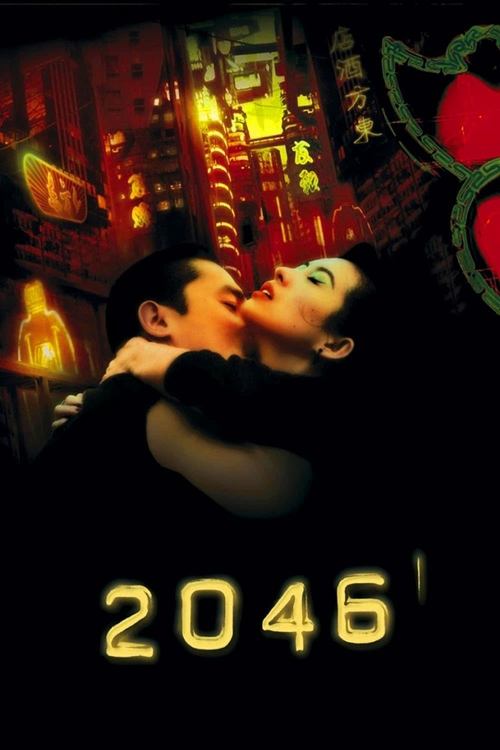
2046
Women enter and exit a science fiction author's life over the course of a few years after the author loses the woman he considers his one true love.
Working with a tight budget of $12.0M, the film achieved a respectable showing with $20.2M in global revenue (+68% profit margin).
38 wins & 81 nominations


Plot Structure
Story beats plotted across runtime


Narrative Arc
Emotional journey through the story's key moments
Story Circle
Blueprint 15-beat structure
Arcplot Score Breakdown
Weighted: Precision (70%) + Arc (15%) + Theme (15%)
2046 (2004) reveals deliberately positioned narrative architecture, characteristic of Wong Kar-Wai's storytelling approach. This structural analysis examines how the film's 15-point plot structure maps to proven narrative frameworks across 2 hours and 8 minutes. With an Arcplot score of 7.1, the film balances conventional beats with creative variation.
Characters
Cast & narrative archetypes

Chow Mo-wan
Su Li-zhen / Su Li-zhen (Black Spider)
Bai Ling
Wang Jing-wen
Wang Jing-wen (Android 1967)
Lulu / Mimi
Tak
Main Cast & Characters
Chow Mo-wan
Played by Tony Leung Chiu-wai
A melancholic writer who chronicles his romantic entanglements while unable to forget his lost love Su Li-zhen.
Su Li-zhen / Su Li-zhen (Black Spider)
Played by Maggie Cheung
The woman from Chow's past who appears in his memories and his science fiction story within room 2046.
Bai Ling
Played by Zhang Ziyi
A vivacious prostitute who falls deeply in love with Chow despite his emotional unavailability.
Wang Jing-wen
Played by Faye Wong
The hotel owner's daughter who falls for a Japanese man and asks Chow to help with her love letters.
Wang Jing-wen (Android 1967)
Played by Faye Wong
The android version of Wang Jing-wen in Chow's science fiction narrative aboard the train to 2046.
Lulu / Mimi
Played by Carina Lau
A flirtatious gambler and occasional lover of Chow who represents transient connections.
Tak
Played by Takuya Kimura
A Japanese man and Wang Jing-wen's forbidden love, whose relationship faces familial opposition.
Structural Analysis
The Status Quo at 2 minutes (2% through the runtime) establishes Chow Mo-wan narrates his isolated existence in 1960s Hong Kong, writing pulp science fiction in hotel room 2046. He is emotionally detached, using women without commitment, still haunted by a lost love from his past.. Notably, this early placement immediately immerses viewers in the story world.
The inciting incident occurs at 15 minutes when Chow encounters Lulu/Mimi, a spirited cabaret dancer who moves into room 2046—the same room number where he once spent time with Su Li-zhen. This triggers painful memories and disrupts his emotional detachment.. At 12% through the film, this Disruption aligns precisely with traditional story structure. This beat shifts the emotional landscape, launching the protagonist into the central conflict.
The First Threshold at 30 minutes marks the transition into Act II, occurring at 24% of the runtime. This indicates the protagonist's commitment to Chow makes the active choice to pursue a relationship with Bai Ling, a hotel prostitute, beginning a destructive pattern of emotional games. He consciously enters this mirror world of failed relationships as substitute for his lost love., moving from reaction to action.
At 64 minutes, the Midpoint arrives at 50% of the runtime—precisely centered, creating perfect narrative symmetry. Notably, this crucial beat False defeat: Bai Ling confesses she has fallen in love with Chow and needs him to reciprocate. He realizes he has hurt her but remains unable to love. Simultaneously, his sci-fi protagonist cannot reach his android lover on the train—mirroring his real paralysis., fundamentally raising what's at risk. The emotional intensity shifts, dividing the narrative into clear before-and-after phases.
The Collapse moment at 95 minutes (74% through) represents the emotional nadir. Here, Chow receives a final, desperate phone call from Bai Ling, who has been waiting for him in the cold, ill and broken. He does not go to her. This moment contains the "whiff of death"—the death of his capacity to love and be loved., demonstrates the protagonist at their lowest point. This beat's placement in the final quarter sets up the climactic reversal.
The Second Threshold at 101 minutes initiates the final act resolution at 79% of the runtime. Chow receives Wang Jing-wen's returned letters with a note: "I don't want them anymore." This synthesis moment—he understands that everyone moves on from the past except him. He recognizes his futile attempt to preserve what cannot be preserved., demonstrating the transformation achieved throughout the journey.
Emotional Journey
2046's emotional architecture traces a deliberate progression across 15 carefully calibrated beats.
Narrative Framework
This structural analysis employs proven narrative structure principles that track dramatic progression. By mapping 2046 against these established plot points, we can identify how Wong Kar-Wai utilizes or subverts traditional narrative conventions. The plot point approach reveals not only adherence to structural principles but also creative choices that distinguish 2046 within the drama genre.
Wong Kar-Wai's Structural Approach
Among the 5 Wong Kar-Wai films analyzed on Arcplot, the average structural score is 7.0, reflecting strong command of classical structure. 2046 represents one of the director's most structurally precise works. For comparative analysis, explore the complete Wong Kar-Wai filmography.
Comparative Analysis
Additional drama films include After Thomas, South Pacific and Dirty Dancing: Havana Nights. For more Wong Kar-Wai analyses, see Happy Together, The Grandmaster and In the Mood for Love.
Plot Points by Act
Act I
SetupStatus Quo
Chow Mo-wan narrates his isolated existence in 1960s Hong Kong, writing pulp science fiction in hotel room 2046. He is emotionally detached, using women without commitment, still haunted by a lost love from his past.
Theme
A character observes: "All memories are traces of tears." This establishes the film's central exploration of memory, loss, and the impossibility of returning to the past—emotional moments frozen in time like room 2046.
Worldbuilding
Introduction to Chow's world: the Oriental Hotel, his neighbors, his profession as a writer of erotic fiction, and flashbacks establishing his relationship with Su Li-zhen (from In the Mood for Love). His pattern of seducing and abandoning women is established.
Disruption
Chow encounters Lulu/Mimi, a spirited cabaret dancer who moves into room 2046—the same room number where he once spent time with Su Li-zhen. This triggers painful memories and disrupts his emotional detachment.
Resistance
Chow resists emotional involvement with Lulu while beginning an affair with her. He writes his science fiction novel "2046" about a train to a place where nothing changes. He debates whether to open his heart again or remain isolated.
Act II
ConfrontationFirst Threshold
Chow makes the active choice to pursue a relationship with Bai Ling, a hotel prostitute, beginning a destructive pattern of emotional games. He consciously enters this mirror world of failed relationships as substitute for his lost love.
Mirror World
Wang Jing-wen, the hotel owner's daughter, is introduced. She becomes a mirror to Chow's own trapped emotional state—she loves someone she cannot have (a Japanese man her father forbids), just as Chow cannot have Su Li-zhen.
Premise
The promise of the premise: Chow's exploration of relationships with multiple women (Bai Ling, Lulu, Wang Jing-wen) intercut with his science fiction narrative about seeking lost love on the train to 2046. Each woman represents a different possibility of connection or escape from his past.
Midpoint
False defeat: Bai Ling confesses she has fallen in love with Chow and needs him to reciprocate. He realizes he has hurt her but remains unable to love. Simultaneously, his sci-fi protagonist cannot reach his android lover on the train—mirroring his real paralysis.
Opposition
Relationships deteriorate: Bai Ling grows desperate and degraded, Lulu disappears with a wealthy man, Wang Jing-wen prepares to leave for Japan. Chow's emotional isolation deepens as each woman exits his life, confirming his belief that love cannot be recaptured.
Collapse
Chow receives a final, desperate phone call from Bai Ling, who has been waiting for him in the cold, ill and broken. He does not go to her. This moment contains the "whiff of death"—the death of his capacity to love and be loved.
Crisis
Chow reflects on his failures in voiceover. Wang Jing-wen says goodbye before leaving for Japan. In his novel, the protagonist realizes the androids on the train to 2046 have no feelings—a recognition of his own emotional numbness.
Act III
ResolutionSecond Threshold
Chow receives Wang Jing-wen's returned letters with a note: "I don't want them anymore." This synthesis moment—he understands that everyone moves on from the past except him. He recognizes his futile attempt to preserve what cannot be preserved.
Synthesis
The finale interweaves the science fiction narrative with reality: in the story, the protagonist finally leaves the train to 2046, accepting he cannot recapture his android love. In reality, Chow completes his novel, accepting he cannot recapture Su Li-zhen or any genuine connection.
Transformation
Closing image mirrors the opening but shows transformation: Chow remains alone in his room, but now consciously accepts his isolation. Unlike the opening's detachment, he now understands the price of his emotional imprisonment—a tragic recognition without redemption.