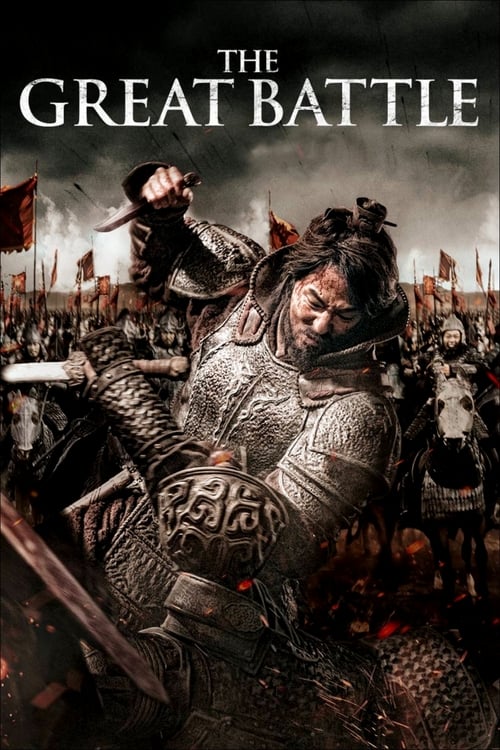
The Great Battle
Kingdom of Goguryeo, ancient Korea, 645. The ruthless Emperor Taizong of Tang invades the country and leads his armies towards the capital, achieving one victory after another, but on his way is the stronghold of Ansi, protected by General Yang Man-chu, who will do everything possible to stop the invasion, even if his troops are outnumbered by thousands of enemies.
Despite its limited budget of $13.3M, The Great Battle became a financial success, earning $41.5M worldwide—a 212% return. The film's innovative storytelling engaged audiences, showing that strong storytelling can transcend budget limitations.


Plot Structure
Story beats plotted across runtime


Narrative Arc
Emotional journey through the story's key moments
Story Circle
Blueprint 15-beat structure
Arcplot Score Breakdown
Weighted: Precision (70%) + Arc (15%) + Theme (15%)
The Great Battle (2018) showcases strategically placed dramatic framework, characteristic of Kim Kwang-sik's storytelling approach. This structural analysis examines how the film's 15-point plot structure maps to proven narrative frameworks across 2 hours and 15 minutes. With an Arcplot score of 6.8, the film balances conventional beats with creative variation.
Characters
Cast & narrative archetypes

Yang Man-chun
Sa-mul
Emperor Li Shimin
Baek-ha
General Yeongnyue
Chu-bal
Main Cast & Characters
Yang Man-chun
Played by Jo In-sung
The commander of Ansi Fortress who leads the defense against the Tang invasion with strategic brilliance and unwavering determination.
Sa-mul
Played by Nam Joo-hyuk
A skilled archer and slave who joins the defense of Ansi Fortress, seeking freedom and purpose through battle.
Emperor Li Shimin
Played by Park Sung-woong
The ambitious Tang Dynasty emperor who leads a massive army to conquer Goguryeo and expand his empire.
Baek-ha
Played by Bae Sung-woo
A loyal and brave warrior who fights alongside Yang Man-chun, serving as one of his trusted commanders.
General Yeongnyue
Played by Yoo Oh-seong
A cunning Tang general who serves as the emperor's strategic advisor and military commander during the siege.
Chu-bal
Played by Park Byung-eun
A fierce warrior defending Ansi Fortress, known for his combat prowess and dedication to his homeland.
Structural Analysis
The Status Quo at 1 minutes (1% through the runtime) establishes The Tang army marches through conquered Goguryeo territory, establishing the overwhelming military threat facing the kingdom as fortresses fall one by one.. Notably, this early placement immediately immerses viewers in the story world.
The inciting incident occurs at 16 minutes when The massive Tang army of 200,000 soldiers arrives at Ansi Fortress. Emperor Taizong demands surrender, and the siege officially begins—there is no escape now.. At 12% through the film, this Disruption aligns precisely with traditional story structure. This beat shifts the emotional landscape, launching the protagonist into the central conflict.
The First Threshold at 34 minutes marks the transition into Act II, occurring at 25% of the runtime. This reveals the protagonist's commitment to Yang Man-chun makes the defiant choice to fight rather than surrender, leading his small garrison against impossible odds. Sa-mul abandons his assassination mission and commits to defending the fortress., moving from reaction to action.
At 68 minutes, the Midpoint arrives at 50% of the runtime—precisely centered, creating perfect narrative symmetry. Structural examination shows that this crucial beat A major Tang assault is repelled with significant enemy casualties. It appears the fortress might actually survive—a false victory as Emperor Taizong has not yet committed his full resources and cunning., fundamentally raising what's at risk. The emotional intensity shifts, dividing the narrative into clear before-and-after phases.
The Collapse moment at 101 minutes (75% through) represents the emotional nadir. Here, The Tang army builds a massive earthen siege ramp that will allow them to breach the walls. Beloved defenders die in a desperate counterattack. All seems lost as the fortress faces its darkest hour., indicates the protagonist at their lowest point. This beat's placement in the final quarter sets up the climactic reversal.
The Second Threshold at 108 minutes initiates the final act resolution at 80% of the runtime. Yang Man-chun devises a brilliant final gambit—they will use the enemy's own siege ramp against them. The defenders unite for one last coordinated effort, combining all they've learned about each other and their enemy., demonstrating the transformation achieved throughout the journey.
Emotional Journey
The Great Battle's emotional architecture traces a deliberate progression across 15 carefully calibrated beats.
Narrative Framework
This structural analysis employs systematic plot point analysis that identifies crucial turning points. By mapping The Great Battle against these established plot points, we can identify how Kim Kwang-sik utilizes or subverts traditional narrative conventions. The plot point approach reveals not only adherence to structural principles but also creative choices that distinguish The Great Battle within the war genre.
Comparative Analysis
Additional war films include Fury, Shenandoah and More American Graffiti.
Plot Points by Act
Act I
SetupStatus Quo
The Tang army marches through conquered Goguryeo territory, establishing the overwhelming military threat facing the kingdom as fortresses fall one by one.
Theme
A veteran soldier remarks that walls don't protect people—people protect each other. This establishes the film's core theme of unity and collective sacrifice.
Worldbuilding
The setup establishes the political situation: Goguryeo faces extinction as Tang forces advance. We meet Sa-mul, a young soldier sent to assassinate Yang Man-chun, and see the fortress community's way of life under threat.
Disruption
The massive Tang army of 200,000 soldiers arrives at Ansi Fortress. Emperor Taizong demands surrender, and the siege officially begins—there is no escape now.
Resistance
Yang Man-chun debates strategy with his commanders and rallies the defenders. Sa-mul struggles with his assassination mission as he witnesses Man-chun's genuine care for his people. The fortress prepares for the coming onslaught.
Act II
ConfrontationFirst Threshold
Yang Man-chun makes the defiant choice to fight rather than surrender, leading his small garrison against impossible odds. Sa-mul abandons his assassination mission and commits to defending the fortress.
Mirror World
Sa-mul fully integrates with the defenders, forming bonds with fellow soldiers. His subplot embodies the theme—a assassin sent to kill becomes willing to die for the community he was meant to destroy.
Premise
The promise of the premise delivers: spectacular siege warfare, ingenious defensive tactics, and the underdog fortress successfully repelling wave after wave of Tang attacks through clever strategy and fierce determination.
Midpoint
A major Tang assault is repelled with significant enemy casualties. It appears the fortress might actually survive—a false victory as Emperor Taizong has not yet committed his full resources and cunning.
Opposition
The Tang forces escalate with new tactics, siege towers, and psychological warfare. Resources dwindle inside the fortress. Key defenders fall. The walls begin to crack both literally and figuratively as casualties mount.
Collapse
The Tang army builds a massive earthen siege ramp that will allow them to breach the walls. Beloved defenders die in a desperate counterattack. All seems lost as the fortress faces its darkest hour.
Crisis
The survivors mourn their fallen comrades. Yang Man-chun and the remaining defenders face the reality that the siege ramp will be completed—there seems no way to stop the inevitable final assault.
Act III
ResolutionSecond Threshold
Yang Man-chun devises a brilliant final gambit—they will use the enemy's own siege ramp against them. The defenders unite for one last coordinated effort, combining all they've learned about each other and their enemy.
Synthesis
The finale unfolds as the defenders execute their desperate plan. They capture and collapse the siege ramp, routing the Tang forces. Sa-mul proves his transformation through heroic sacrifice. Emperor Taizong is forced to retreat.
Transformation
Yang Man-chun stands on the battered but unbroken walls, saluting the retreating Emperor Taizong—who returns the salute in respect. The fortress that was meant to fall stands victorious, its people united and transformed by sacrifice.