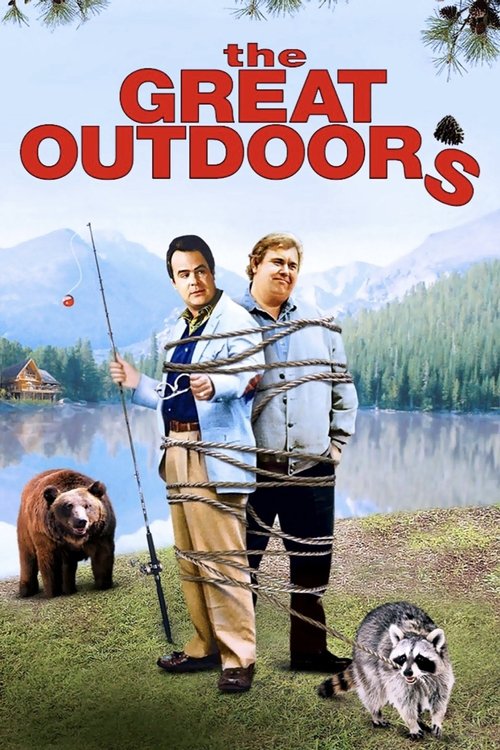
The Great Outdoors
It's vacation time for outdoorsy Chicago man Chet Ripley, along with his wife, Connie, and their two kids, Buck and Ben. But a serene weekend of fishing at a Wisconsin lakeside cabin gets crashed by Connie's obnoxious brother-in-law, Roman Craig, his wife, Kate, and the couple's two daughters. As the excursion wears on, the Ripleys find themselves at odds with the stuffy Craig family.
Working with a moderate budget of $24.0M, the film achieved a modest success with $43.5M in global revenue (+81% profit margin).


Plot Structure
Story beats plotted across runtime


Narrative Arc
Emotional journey through the story's key moments
Story Circle
Blueprint 15-beat structure
Arcplot Score Breakdown
Weighted: Precision (70%) + Arc (15%) + Theme (15%)
The Great Outdoors (1988) showcases strategically placed narrative design, characteristic of Howard Deutch's storytelling approach. This structural analysis examines how the film's 15-point plot structure maps to proven narrative frameworks across 1 hour and 31 minutes. With an Arcplot score of 7.8, the film showcases strong structural fundamentals.
Characters
Cast & narrative archetypes

Chet Ripley
Roman Craig
Connie Ripley
Kate Craig
Buck Ripley
Wally
Main Cast & Characters
Chet Ripley
Played by John Candy
A good-natured family man seeking a peaceful vacation with his wife and kids at a lakeside cabin.
Roman Craig
Played by Dan Aykroyd
Chet's opportunistic brother-in-law who shows up uninvited and constantly one-ups Chet with stories and schemes.
Connie Ripley
Played by Stephanie Faracy
Chet's supportive wife who tries to keep the peace between her husband and her obnoxious brother.
Kate Craig
Played by Annette Bening
Roman's materialistic wife who shares her husband's pretentious attitude and investment schemes.
Buck Ripley
Played by Chris Young
Chet's teenage son dealing with typical adolescent awkwardness and romantic interests.
Wally
Played by Lewis Arquette
A bizarre, bald-headed local man obsessed with the legendary giant bear and harassing the vacationers.
Structural Analysis
The Status Quo at 1 minutes (1% through the runtime) establishes The Ripley family arrives at their idyllic lakeside cabin in the woods. Chet is cheerful and excited for quality family time, showing his desire for simple, authentic connection with his wife Connie and their kids.. Of particular interest, this early placement immediately immerses viewers in the story world.
The inciting incident occurs at 10 minutes when Roman Craig, Chet's obnoxious brother-in-law, arrives uninvited with his family. Roman is everything Chet isn't: materialistic, phony, competitive, and manipulative. The peaceful vacation is immediately disrupted.. At 11% through the film, this Disruption aligns precisely with traditional story structure. This beat shifts the emotional landscape, launching the protagonist into the central conflict.
The First Threshold at 22 minutes marks the transition into Act II, occurring at 24% of the runtime. This indicates the protagonist's commitment to Chet decides to actively compete with Roman rather than passively endure him. He chooses to engage in Roman's world of one-upmanship and games, abandoning his original plan for peaceful family time. This choice pulls him into Act 2., moving from reaction to action.
At 46 minutes, the Midpoint arrives at 51% of the runtime—precisely centered, creating perfect narrative symmetry. The analysis reveals that this crucial beat False defeat: Chet discovers that Roman has been secretly investing Chet's money without permission, planning to buy the beloved family land out from under him. The stakes raise dramatically—this isn't just about vacation annoyance, it's about Roman stealing Chet's dreams., fundamentally raising what's at risk. The emotional intensity shifts, dividing the narrative into clear before-and-after phases.
The Collapse moment at 68 minutes (75% through) represents the emotional nadir. Here, All is lost: The massive bear attacks their cabins, destroying property and terrorizing everyone. Roman's twin daughters are endangered. Chet's dream vacation is in ruins, the families are fractured, and physical danger reaches its peak—metaphorical and literal death at the door., reveals the protagonist at their lowest point. This beat's placement in the final quarter sets up the climactic reversal.
The Second Threshold at 71 minutes initiates the final act resolution at 78% of the runtime. Breakthrough: Chet realizes he must protect his family and face the bear (both literal and metaphorical). He synthesizes his authentic self with newfound courage, choosing to confront danger directly rather than compete with Roman. Act 3 begins., demonstrating the transformation achieved throughout the journey.
Emotional Journey
The Great Outdoors's emotional architecture traces a deliberate progression across 15 carefully calibrated beats.
Narrative Framework
This structural analysis employs structural analysis methodology used to understand storytelling architecture. By mapping The Great Outdoors against these established plot points, we can identify how Howard Deutch utilizes or subverts traditional narrative conventions. The plot point approach reveals not only adherence to structural principles but also creative choices that distinguish The Great Outdoors within the comedy genre.
Howard Deutch's Structural Approach
Among the 9 Howard Deutch films analyzed on Arcplot, the average structural score is 7.5, reflecting strong command of classical structure. The Great Outdoors represents one of the director's most structurally precise works. For comparative analysis, explore the complete Howard Deutch filmography.
Comparative Analysis
Additional comedy films include The Bad Guys, Ella Enchanted and The Evening Star. For more Howard Deutch analyses, see The Whole Ten Yards, Grumpier Old Men and Pretty in Pink.
Plot Points by Act
Act I
SetupStatus Quo
The Ripley family arrives at their idyllic lakeside cabin in the woods. Chet is cheerful and excited for quality family time, showing his desire for simple, authentic connection with his wife Connie and their kids.
Theme
Chet talks about the importance of family bonding and getting away from the phoniness of city life. The theme: authenticity vs. artificiality, genuine connection vs. superficial relationships.
Worldbuilding
Establishment of Chet's simple vacation plans: fishing, relaxing, spending time with family. We meet the kids, see the beautiful cabin, and understand Chet's earnest, good-natured personality. His world is about honest, straightforward pleasures.
Disruption
Roman Craig, Chet's obnoxious brother-in-law, arrives uninvited with his family. Roman is everything Chet isn't: materialistic, phony, competitive, and manipulative. The peaceful vacation is immediately disrupted.
Resistance
Chet debates whether to confront Roman or tolerate him. Connie encourages Chet to be patient and maintain family harmony. Chet tries to preserve the vacation despite Roman's invasive behavior, passive-aggressively resisting but not yet taking decisive action.
Act II
ConfrontationFirst Threshold
Chet decides to actively compete with Roman rather than passively endure him. He chooses to engage in Roman's world of one-upmanship and games, abandoning his original plan for peaceful family time. This choice pulls him into Act 2.
Mirror World
Connie represents the thematic mirror: she reminds Chet what truly matters (family, love, authenticity) and tries to pull him back from his ego-driven competition with Roman. Their relationship subplot carries the theme throughout.
Premise
The "fun and games" of vacation warfare: Chet and Roman compete over everything (water skiing, cooking, storytelling). Comedy escalates through various outdoor mishaps, the famous "Old 96er" steak challenge, encounters with wildlife, and family activities gone wrong.
Midpoint
False defeat: Chet discovers that Roman has been secretly investing Chet's money without permission, planning to buy the beloved family land out from under him. The stakes raise dramatically—this isn't just about vacation annoyance, it's about Roman stealing Chet's dreams.
Opposition
Pressure intensifies as Chet's anger and resentment build. Roman's schemes worsen, local dangers escalate (the bear, the bat), and family tensions peak. Chet becomes increasingly desperate and aggressive, his flaws (pride, stubbornness) catching up with him.
Collapse
All is lost: The massive bear attacks their cabins, destroying property and terrorizing everyone. Roman's twin daughters are endangered. Chet's dream vacation is in ruins, the families are fractured, and physical danger reaches its peak—metaphorical and literal death at the door.
Crisis
Dark night: Chet sits in the wreckage, processing the disaster. He confronts his own complicity in the escalating conflict. The family is traumatized, the vacation destroyed, and Chet must decide what kind of person he wants to be.
Act III
ResolutionSecond Threshold
Breakthrough: Chet realizes he must protect his family and face the bear (both literal and metaphorical). He synthesizes his authentic self with newfound courage, choosing to confront danger directly rather than compete with Roman. Act 3 begins.
Synthesis
The finale: Chet and Roman work together to defeat the bear. Chet confronts Roman about the investment scheme and sets boundaries. The families reconcile, Roman admits his jealousy of Chet's authentic life, and Chet reclaims his values while maintaining family bonds.
Transformation
Closing image: The families depart on good terms, with Chet having successfully maintained his authenticity while learning to set healthy boundaries. He got his family time, stood up to Roman, and remained true to himself—transformed from passive-aggressive to authentically assertive.