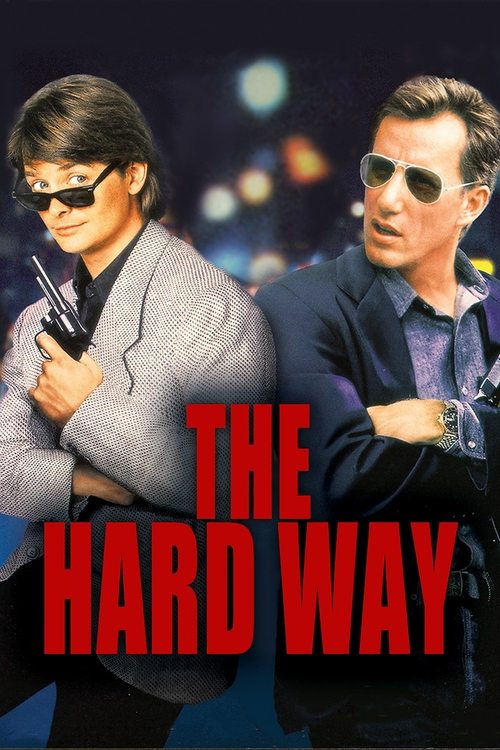
The Hard Way
Seeking to raise his credibility as an actor and to land a role as a tough cop on a new show, Hollywood action star Nick Lang works a deal with New York City Police Capt. Brix, who by chance is one of his fans. Nick will be paired with detective Lt. John Moss and learn how to act like a real cop. But when Nick drives John crazy with questions and imitating him, he gets in the way of John's pursuit of a serial killer.
Despite a moderate budget of $24.0M, The Hard Way became a financial success, earning $65.6M worldwide—a 173% return.


Plot Structure
Story beats plotted across runtime


Narrative Arc
Emotional journey through the story's key moments
Story Circle
Blueprint 15-beat structure
Arcplot Score Breakdown
Weighted: Precision (70%) + Arc (15%) + Theme (15%)
The Hard Way (1991) exemplifies strategically placed narrative architecture, characteristic of John Badham's storytelling approach. This structural analysis examines how the film's 15-point plot structure maps to proven narrative frameworks across 1 hour and 51 minutes. With an Arcplot score of 7.5, the film showcases strong structural fundamentals.
Characters
Cast & narrative archetypes

John Moss
Nick Lang
The Party Crasher
Susan
Angie
Main Cast & Characters
John Moss
Played by James Woods
A tough, no-nonsense NYPD detective hunting a serial killer called the Party Crasher. His world is turned upside down when forced to babysit a pampered Hollywood actor.
Nick Lang
Played by Michael J. Fox
A famous action movie star who shadows Detective Moss to research an authentic cop role. His naive enthusiasm and Hollywood methods clash with real police work.
The Party Crasher
Played by Stephen Lang
A sadistic serial killer who targets young women at parties. Intelligent and methodical, he becomes fixated on the media attention surrounding Nick Lang.
Susan
Played by Annabella Sciorra
John Moss's ex-wife who maintains a complicated relationship with him. She represents the personal life he sacrificed for his obsessive police work.
Angie
Played by Delroy Lindo
John Moss's girlfriend who works as a 911 operator. She provides emotional support but is frustrated by his dangerous lifestyle and emotional unavailability.
Structural Analysis
The Status Quo at 1 minutes (1% through the runtime) establishes Nick Lang films an over-the-top action scene for his latest blockbuster, establishing him as Hollywood's biggest action star living in a world of stunts, special effects, and manufactured heroism.. Of particular interest, this early placement immediately immerses viewers in the story world.
The inciting incident occurs at 12 minutes when Nick Lang announces to the press that he's going to shadow a real NYPD detective for his next serious role, specifically targeting John Moss. Moss watches this on TV with horror, his private world about to be invaded.. At 11% through the film, this Disruption aligns precisely with traditional story structure. This beat shifts the emotional landscape, launching the protagonist into the central conflict.
The First Threshold at 27 minutes marks the transition into Act II, occurring at 24% of the runtime. This indicates the protagonist's commitment to Moss is ordered by his captain to take Nick on as a ride-along. He reluctantly agrees, choosing to sabotage the experience rather than refuse and lose his job. He enters the "buddy cop" world unwillingly but actively., moving from reaction to action.
At 56 minutes, the Midpoint arrives at 50% of the runtime—precisely centered, creating perfect narrative symmetry. Notably, this crucial beat Nick saves Moss's life during a shootout with the Party Crasher, taking real action for the first time. False victory: Moss begins to respect Nick, but this draws them deeper into danger as the killer now targets them both personally., fundamentally raising what's at risk. The emotional intensity shifts, dividing the narrative into clear before-and-after phases.
The Collapse moment at 81 minutes (73% through) represents the emotional nadir. Here, Nick's Hollywood instincts cause a major mistake during a stakeout that allows the Party Crasher to escape and nearly kill Moss's ex. Moss explodes at Nick, tells him he'll never be real, and kicks him off the case. Partnership dies., indicates the protagonist at their lowest point. This beat's placement in the final quarter sets up the climactic reversal.
The Second Threshold at 88 minutes initiates the final act resolution at 80% of the runtime. Nick discovers a crucial clue about the Party Crasher's identity using both his Hollywood research skills and real detective work. He returns to NYC with the synthesis: combining movie-star resources with authentic courage and street-smarts learned from Moss., demonstrating the transformation achieved throughout the journey.
Emotional Journey
The Hard Way's emotional architecture traces a deliberate progression across 15 carefully calibrated beats.
Narrative Framework
This structural analysis employs systematic plot point analysis that identifies crucial turning points. By mapping The Hard Way against these established plot points, we can identify how John Badham utilizes or subverts traditional narrative conventions. The plot point approach reveals not only adherence to structural principles but also creative choices that distinguish The Hard Way within the action genre.
John Badham's Structural Approach
Among the 11 John Badham films analyzed on Arcplot, the average structural score is 7.1, reflecting strong command of classical structure. The Hard Way represents one of the director's most structurally precise works. For comparative analysis, explore the complete John Badham filmography.
Comparative Analysis
Additional action films include The Bad Guys, Puss in Boots and Venom: The Last Dance. For more John Badham analyses, see Nick of Time, Saturday Night Fever and Drop Zone.
Plot Points by Act
Act I
SetupStatus Quo
Nick Lang films an over-the-top action scene for his latest blockbuster, establishing him as Hollywood's biggest action star living in a world of stunts, special effects, and manufactured heroism.
Theme
Nick's agent tells him "You want to be taken seriously? You want respect? Then you gotta do something real." The theme: authenticity vs. artifice, and what it means to be a real hero versus playing one.
Worldbuilding
Parallel worlds established: Nick Lang's superficial Hollywood life of fame and luxury contrasted with Detective John Moss's gritty NYC reality chasing the "Party Crasher" serial killer. Moss is tough, skilled, and cynical about everything fake.
Disruption
Nick Lang announces to the press that he's going to shadow a real NYPD detective for his next serious role, specifically targeting John Moss. Moss watches this on TV with horror, his private world about to be invaded.
Resistance
Moss vehemently refuses to babysit a movie star. The police captain pressures him. Nick's people pressure the department. Moss debates and resists, but political pressure mounts. He tries every angle to avoid this assignment.
Act II
ConfrontationFirst Threshold
Moss is ordered by his captain to take Nick on as a ride-along. He reluctantly agrees, choosing to sabotage the experience rather than refuse and lose his job. He enters the "buddy cop" world unwillingly but actively.
Mirror World
Nick and Moss meet face-to-face for the first time. They are opposites: real vs. fake, substance vs. style, cynic vs. optimist. Their relationship will explore whether Nick can become authentic and whether Moss can learn to trust again.
Premise
The "fun and games" of the buddy cop premise: Moss tries to humiliate and bore Nick with degrading tasks (parking duty, paperwork, surveillance). Nick maintains enthusiasm and gradually proves himself useful. Comic clash of cultures with escalating action sequences.
Midpoint
Nick saves Moss's life during a shootout with the Party Crasher, taking real action for the first time. False victory: Moss begins to respect Nick, but this draws them deeper into danger as the killer now targets them both personally.
Opposition
The Party Crasher escalates attacks. Moss's ex-girlfriend becomes endangered. Nick's Hollywood tricks backfire in real situations. The case gets more dangerous, personal, and complicated. Moss's walls go back up as stakes rise.
Collapse
Nick's Hollywood instincts cause a major mistake during a stakeout that allows the Party Crasher to escape and nearly kill Moss's ex. Moss explodes at Nick, tells him he'll never be real, and kicks him off the case. Partnership dies.
Crisis
Nick returns to Hollywood defeated, questioning if he can ever be more than a fake hero. Moss works alone but realizes he misses Nick. Both process what they've learned from each other in isolation. Dark night of self-doubt.
Act III
ResolutionSecond Threshold
Nick discovers a crucial clue about the Party Crasher's identity using both his Hollywood research skills and real detective work. He returns to NYC with the synthesis: combining movie-star resources with authentic courage and street-smarts learned from Moss.
Synthesis
Nick and Moss reunite and combine their skills for the finale. They track the Party Crasher to his lair. Final confrontation blends Hollywood spectacle with real danger. Nick proves his authentic heroism while Moss learns to trust and work with a partner.
Transformation
Nick earns genuine respect from Moss and the NYPD, having proven himself a real hero. Moss has opened up and gained a true friend. Final image mirrors the opening but transformed: Nick filming a new movie scene, now with authentic experience and Moss visiting the set as a friend.