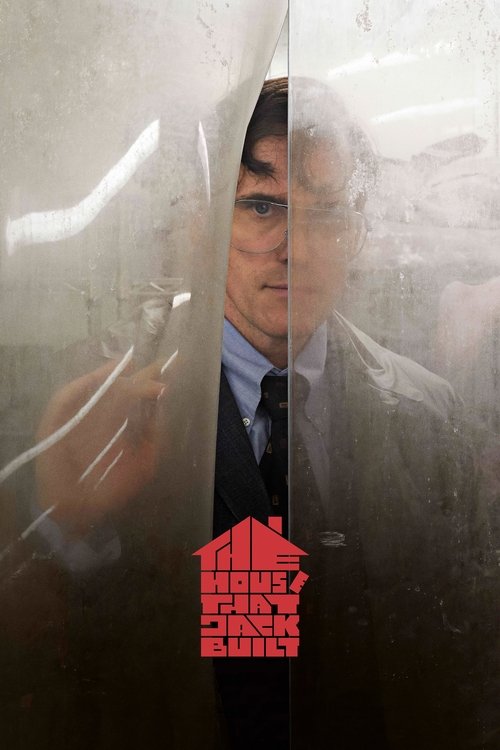
The House That Jack Built
Failed architect, engineer and vicious murderer Jack narrates the details of some of his most elaborately orchestrated crimes, each of them a towering piece of art that defines his life's work as a serial killer for twelve years.
The film disappointed at the box office against its modest budget of $9.8M, earning $5.6M globally (-43% loss). While initial box office returns were modest, the film has gained appreciation for its fresh perspective within the drama genre.
11 wins & 17 nominations


Plot Structure
Story beats plotted across runtime


Narrative Arc
Emotional journey through the story's key moments
Story Circle
Blueprint 15-beat structure
Arcplot Score Breakdown
Weighted: Precision (70%) + Arc (15%) + Theme (15%)
The House That Jack Built (2018) reveals strategically placed plot construction, characteristic of Lars von Trier's storytelling approach. This structural analysis examines how the film's 15-point plot structure maps to proven narrative frameworks across 2 hours and 32 minutes. With an Arcplot score of 7.1, the film balances conventional beats with creative variation.
Structural Analysis
The Status Quo at 2 minutes (1% through the runtime) establishes Jack begins his confessional narrative to Verge, establishing himself as an unreliable narrator discussing his life's work as a serial killer. The frame story sets up his ordinary façade as an architectural enthusiast with extraordinary darkness beneath.. Of particular interest, this early placement immediately immerses viewers in the story world.
The inciting incident occurs at 18 minutes when Jack commits his first murder (the stranded woman with the jack), discovering the intoxicating power of taking life. This catalyzes his transformation from obsessive-compulsive man to methodical serial killer, disrupting any possibility of normal existence.. At 12% through the film, this Disruption aligns precisely with traditional story structure. This beat shifts the emotional landscape, launching the protagonist into the central conflict.
The First Threshold at 39 minutes marks the transition into Act II, occurring at 26% of the runtime. This illustrates the protagonist's commitment to Incident 2: Jack actively chooses to kill again, this time the woman he meets while scouting. This is not impulse but calculated choice. He crosses the threshold from accidental killer to deliberate artist of death, fully committing to his dark path., moving from reaction to action.
At 76 minutes, the Midpoint arrives at 50% of the runtime—precisely centered, creating perfect narrative symmetry. Significantly, this crucial beat Incident 4: The murder of Simple, whom Jack has groomed. This represents a false victory - Jack believes he's achieved artistic perfection and total control. But this hubris marks the beginning of his unraveling, as his need to create his ultimate "house" becomes obsessive., fundamentally raising what's at risk. The emotional intensity shifts, dividing the narrative into clear before-and-after phases.
The Collapse moment at 114 minutes (75% through) represents the emotional nadir. Here, Incident 5: The massacre that finally brings the police to Jack's door. His "masterpiece" crumbles as law enforcement closes in. The house he tried to build - both literal and metaphorical - collapses. His artistic pretensions die as he faces the reality of being hunted., reveals the protagonist at their lowest point. This beat's placement in the final quarter sets up the climactic reversal.
The Second Threshold at 122 minutes initiates the final act resolution at 80% of the runtime. Jack meets Verge in physical form and follows him into the underworld. He crosses from life into death, from the material world into the realm of judgment. This threshold offers no redemption - only the final reckoning for his choices., demonstrating the transformation achieved throughout the journey.
Emotional Journey
The House That Jack Built's emotional architecture traces a deliberate progression across 15 carefully calibrated beats.
Narrative Framework
This structural analysis employs a 15-point narrative structure framework that maps key story moments. By mapping The House That Jack Built against these established plot points, we can identify how Lars von Trier utilizes or subverts traditional narrative conventions. The plot point approach reveals not only adherence to structural principles but also creative choices that distinguish The House That Jack Built within the drama genre.
Lars von Trier's Structural Approach
Among the 8 Lars von Trier films analyzed on Arcplot, the average structural score is 7.2, reflecting strong command of classical structure. The House That Jack Built takes a more unconventional approach compared to the director's typical style. For comparative analysis, explore the complete Lars von Trier filmography.
Comparative Analysis
Additional drama films include After Thomas, South Pacific and Dirty Dancing: Havana Nights. For more Lars von Trier analyses, see Antichrist, Melancholia and Dogville.
Plot Points by Act
Act I
SetupStatus Quo
Jack begins his confessional narrative to Verge, establishing himself as an unreliable narrator discussing his life's work as a serial killer. The frame story sets up his ordinary façade as an architectural enthusiast with extraordinary darkness beneath.
Theme
Verge poses philosophical questions about art, morality, and whether evil can create beauty. The thematic inquiry: Can acts of pure destruction be considered art? Jack will attempt to prove they can throughout his "incidents."
Worldbuilding
Introduction to Jack's world through the first incident with the stranded woman. Establishes his compulsions, his architectural obsessions, his need for perfection, and his ability to manipulate. We see his ordinary life mask and the rituals that govern his kills.
Disruption
Jack commits his first murder (the stranded woman with the jack), discovering the intoxicating power of taking life. This catalyzes his transformation from obsessive-compulsive man to methodical serial killer, disrupting any possibility of normal existence.
Resistance
Jack debates with himself (and Verge) about the nature of his compulsions. He experiments with his methods, struggles with OCD-driven cleanup rituals, and tests the boundaries of what he can accomplish. His "education" as a killer begins.
Act II
ConfrontationFirst Threshold
Incident 2: Jack actively chooses to kill again, this time the woman he meets while scouting. This is not impulse but calculated choice. He crosses the threshold from accidental killer to deliberate artist of death, fully committing to his dark path.
Mirror World
Verge emerges more clearly as Jack's philosophical counterpoint and guide through the underworld. Their dialogue creates a thematic mirror - Verge questions while Jack justifies, representing conscience versus ego, morality versus amorality.
Premise
The "promise of the premise" - we watch Jack perfect his craft through Incidents 2 and 3. He experiments with methods, develops his signature, and builds toward his masterwork. The grotesque artistry the audience came to witness unfolds in increasingly disturbing detail.
Midpoint
Incident 4: The murder of Simple, whom Jack has groomed. This represents a false victory - Jack believes he's achieved artistic perfection and total control. But this hubris marks the beginning of his unraveling, as his need to create his ultimate "house" becomes obsessive.
Opposition
Jack's ambitions grow as opposition closes in. He becomes more reckless, more grandiose in his claims. Evidence accumulates, near-misses increase, and his psychological deterioration accelerates. His obsession with building the perfect house from his victims intensifies.
Collapse
Incident 5: The massacre that finally brings the police to Jack's door. His "masterpiece" crumbles as law enforcement closes in. The house he tried to build - both literal and metaphorical - collapses. His artistic pretensions die as he faces the reality of being hunted.
Crisis
Jack flees through the night, his perfect world shattered. He confronts the emptiness of his philosophy in conversation with Verge. The dark night of his soul reveals not remorse but the bankruptcy of his attempts to justify evil as art.
Act III
ResolutionSecond Threshold
Jack meets Verge in physical form and follows him into the underworld. He crosses from life into death, from the material world into the realm of judgment. This threshold offers no redemption - only the final reckoning for his choices.
Synthesis
The descent through Hell with Verge as guide (Dante's Inferno). Jack attempts to argue for his place in artistic paradise, but confronts the reality of his damnation. The finale synthesizes all themes: art, morality, narcissism, and divine judgment.
Transformation
Jack attempts to climb toward the light but falls into the abyss. His final transformation is into eternal damnation - the ultimate judgment on his life's "work." The artist becomes his art: a soul condemned to Hell, his narcissism finally and permanently shattered.