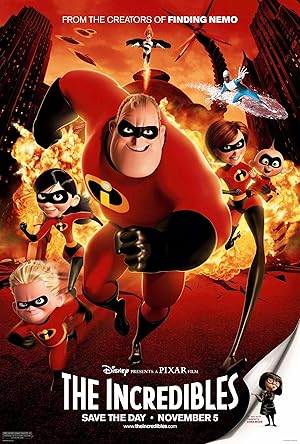
The Incredibles
Bob Parr (A.K.A. Mr. Incredible), and his wife Helen (A.K.A. Elastigirl), are the world's greatest famous crime-fighting superheroes in Metroville. Always saving lives and battling evil on a daily basis. But fifteen years later, they have been forced to adopt civilian identities and retreat to the suburbs where they have no choice but to retire as superheroes to live a "normal life" with their three children Violet, Dash and Jack-Jack (who were secretly born with superpowers). Itching to get back into action, Bob gets his chance when a mysterious communication summons him to a remote island for a top secret assignment. He soon discovers that it will take a super family effort to rescue the world from total destruction.
Despite a significant budget of $92.0M, The Incredibles became a runaway success, earning $631.4M worldwide—a remarkable 586% return.
2 Oscars. 69 wins & 56 nominations


Plot Structure
Story beats plotted across runtime


Narrative Arc
Emotional journey through the story's key moments
Story Circle
Blueprint 15-beat structure
Arcplot Score Breakdown
Weighted: Precision (70%) + Arc (15%) + Theme (15%)
The Incredibles (2004) reveals meticulously timed narrative architecture, characteristic of Brad Bird's storytelling approach. This structural analysis examines how the film's 15-point plot structure maps to proven narrative frameworks across 1 hour and 55 minutes. With an Arcplot score of 7.7, the film showcases strong structural fundamentals.
Structural Analysis
The Status Quo at 1 minutes (1% through the runtime) establishes Golden Age documentary footage shows Mr. Incredible at his peak: beloved superhero saving lives, adored by the public, on top of the world. "I feel like the maid - I just cleaned up this mess! Can you believe it?" Establishes the glory days before everything changed.. Of particular interest, this early placement immediately immerses viewers in the story world.
The inciting incident occurs at 13 minutes when Mysterious woman Mirage arrives with a tablet offering Bob a secret superhero mission on Nomanisan Island: "The Omnidroid 9000 is a top-secret prototype battle robot. Its artificial intelligence enables it to solve any problem it's confronted with." A substantial paycheck is offered. This is the external event that disrupts Bob's miserable status quo and offers escape.. At 12% through the film, this Disruption aligns precisely with traditional story structure. This beat shifts the emotional landscape, launching the protagonist into the central conflict.
The First Threshold at 32 minutes marks the transition into Act II, occurring at 27% of the runtime. This demonstrates the protagonist's commitment to Bob actively chooses to continue his secret superhero work despite the risks. He accepts another mission from Mirage, fully committing to his double life. This isn't forced on him - he chooses glory and heroism over honesty with his family, crossing into Act 2's deception and adventure., moving from reaction to action.
At 56 minutes, the Midpoint arrives at 49% of the runtime—precisely centered, creating perfect narrative symmetry. Significantly, this crucial beat False defeat: The Omnidroid 10 captures Mr. Incredible in the jungle. Syndrome reveals himself as Buddy Pine, Bob's rejected former fan: "You can't count on anyone, especially your heroes." Syndrome has been luring and killing supers to perfect his robot. Bob is imprisoned. The stakes raise dramatically - the villain is personal, Bob is trapped, and his past rejection created this monster., fundamentally raising what's at risk. The emotional intensity shifts, dividing the narrative into clear before-and-after phases.
The Collapse moment at 84 minutes (73% through) represents the emotional nadir. Here, All is lost: The entire family is captured and held by Syndrome's immobilization beam. Syndrome gloats about his plan to unleash the Omnidroid on the city, then "defeat" it as a fake hero. Bob, believing his family might die because of his choices, breaks down: "I'm not strong enough..." Helen: "Strong enough? This is because you don't have powers? Of course I have powers!" Bob: "Not anymore." His identity as a solo hero has collapsed - he can't save his family alone., shows the protagonist at their lowest point. This beat's placement in the final quarter sets up the climactic reversal.
The Second Threshold at 91 minutes initiates the final act resolution at 79% of the runtime. Synthesis and revelation: Bob embraces the truth from the Mirror World (family). He tells Helen and the kids: "I'm sorry. I've been a lousy father. Blind to what I have. So obsessed with being undervalued that I undervalued all of you." The family dynamic shifts - they're now a superhero team. They steal a rocket to return to the city and stop the Omnidroid together. Bob has integrated his identity as hero WITH his identity as husband and father., demonstrating the transformation achieved throughout the journey.
Emotional Journey
The Incredibles's emotional architecture traces a deliberate progression across 15 carefully calibrated beats.
Narrative Framework
This structural analysis employs structural analysis methodology used to understand storytelling architecture. By mapping The Incredibles against these established plot points, we can identify how Brad Bird utilizes or subverts traditional narrative conventions. The plot point approach reveals not only adherence to structural principles but also creative choices that distinguish The Incredibles within the animation genre.
Brad Bird's Structural Approach
Among the 6 Brad Bird films analyzed on Arcplot, the average structural score is 5.6, showcasing experimental approaches to narrative form. The Incredibles represents one of the director's most structurally precise works. For comparative analysis, explore the complete Brad Bird filmography.
Comparative Analysis
Additional animation films include The Bad Guys, Puss in Boots and Violet Evergarden: Eternity and the Auto Memory Doll. For more Brad Bird analyses, see Mission: Impossible - Ghost Protocol, Incredibles 2 and The Iron Giant.
Plot Points by Act
Act I
SetupStatus Quo
Golden Age documentary footage shows Mr. Incredible at his peak: beloved superhero saving lives, adored by the public, on top of the world. "I feel like the maid - I just cleaned up this mess! Can you believe it?" Establishes the glory days before everything changed.
Theme
Buddy Pine (future Syndrome) declares "I can be your ward, IncrediBoy!" but Mr. Incredible rejects him: "I work alone." Buddy responds with hurt: "But I'm your biggest fan!" This moment states the film's core theme about the tension between individual glory and family/teamwork - Mr. Incredible's refusal to embrace help will be what he must learn to overcome.
Worldbuilding
Extended setup showing the glory days and their collapse: Mr. Incredible's wedding to Elastigirl, the catastrophic lawsuit from the suicidal man Mr. Incredible saved, the government forcing all supers into hiding. Flash-forward 15 years to Bob Parr's mundane suburban life: soul-crushing insurance job, three kids, minivan, weight gain, secret Wednesday night vigilante sessions with Frozone. His family has powers but must hide them.
Disruption
Mysterious woman Mirage arrives with a tablet offering Bob a secret superhero mission on Nomanisan Island: "The Omnidroid 9000 is a top-secret prototype battle robot. Its artificial intelligence enables it to solve any problem it's confronted with." A substantial paycheck is offered. This is the external event that disrupts Bob's miserable status quo and offers escape.
Resistance
Bob debates whether to accept the mission. He lies to Helen about a business trip, gets back in shape with secret training montages, visits superhero costume designer Edna Mode who creates his new suit ("No capes!"), and successfully defeats the Omnidroid on the island. His double life creates marital tension but he's alive again. Helen grows suspicious of his behavior.
Act II
ConfrontationFirst Threshold
Bob actively chooses to continue his secret superhero work despite the risks. He accepts another mission from Mirage, fully committing to his double life. This isn't forced on him - he chooses glory and heroism over honesty with his family, crossing into Act 2's deception and adventure.
Mirror World
Helen discovers Bob's ripped suit and finds a white platinum hair (Mirage's) on it, suspecting an affair. This introduces the emotional B-story: Bob's relationship with his family, particularly Helen. His pursuit of individual glory is damaging his marriage and connection to those who matter most, embodying the theme of family vs. solo heroism.
Premise
The "fun and games" of being a superhero again: Bob trains, defeats the Omnidroid in their second encounter, flirts with danger and Mirage. Meanwhile, Helen investigates his behavior. Bob returns for another mission but this time the Omnidroid is upgraded and learning. The promise of the premise - seeing Mr. Incredible be incredible again.
Midpoint
False defeat: The Omnidroid 10 captures Mr. Incredible in the jungle. Syndrome reveals himself as Buddy Pine, Bob's rejected former fan: "You can't count on anyone, especially your heroes." Syndrome has been luring and killing supers to perfect his robot. Bob is imprisoned. The stakes raise dramatically - the villain is personal, Bob is trapped, and his past rejection created this monster.
Opposition
Pressure intensifies on all fronts: Bob is captured and threatened with his family's death. Helen discovers Bob's superhero activities, calls Edna, learns the whole family has super-suits. She takes the jet to find Bob. Violet and Dash stow away. Syndrome destroys their plane with missiles. The family barely survives ocean landing and jungle dangers. Syndrome captures them all. Bob's lies have put everyone in mortal danger.
Collapse
All is lost: The entire family is captured and held by Syndrome's immobilization beam. Syndrome gloats about his plan to unleash the Omnidroid on the city, then "defeat" it as a fake hero. Bob, believing his family might die because of his choices, breaks down: "I'm not strong enough..." Helen: "Strong enough? This is because you don't have powers? Of course I have powers!" Bob: "Not anymore." His identity as a solo hero has collapsed - he can't save his family alone.
Crisis
Dark night of the soul: The family is imprisoned in Syndrome's base, seemingly helpless. But this crisis becomes their turning point - Violet discovers she can use her force fields to free them. Helen tells the kids they're in real danger now, not a cartoon. The family begins working together, using each member's unique powers cooperatively for the first time.
Act III
ResolutionSecond Threshold
Synthesis and revelation: Bob embraces the truth from the Mirror World (family). He tells Helen and the kids: "I'm sorry. I've been a lousy father. Blind to what I have. So obsessed with being undervalued that I undervalued all of you." The family dynamic shifts - they're now a superhero team. They steal a rocket to return to the city and stop the Omnidroid together. Bob has integrated his identity as hero WITH his identity as husband and father.
Synthesis
The finale: The family fights the Omnidroid as a team in the city. Each member contributes their unique abilities. Bob uses Syndrome's remote control against the robot. They defeat it together - something Bob couldn't have done alone. Syndrome attempts to kidnap baby Jack-Jack but discovers the baby has powers. The family defeats Syndrome together when Jack-Jack goes ballistic and Bob throws Elastigirl who catches him. Syndrome is killed by his own cape in the jet turbine (Edna was right). The family is united and whole.
Transformation
Closing image mirrors the opening but transformed: The family attends Dash's track meet together, working as a team to let him participate (but not win by too much). They're interrupted by the Underminer emerging from the ground - a new threat. But now they face it together, putting on their masks as a family unit. Where the opening showed Bob as a solo hero at his peak, the closing shows the family as a superhero team, stronger together than Bob ever was alone.