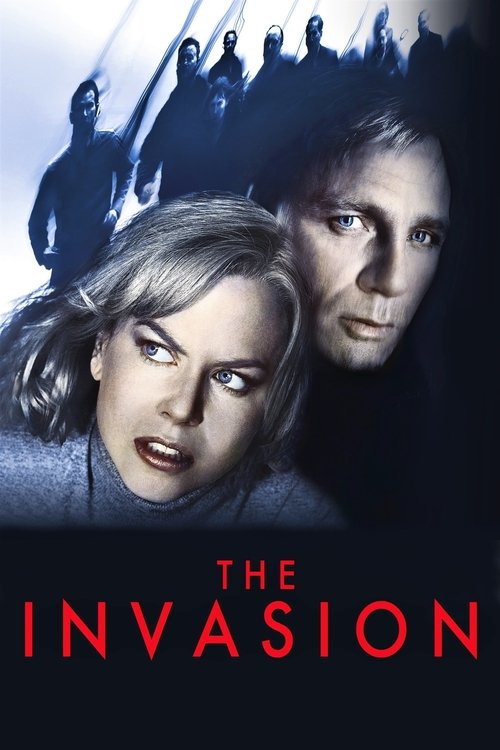
The Invasion
Washington, D.C. psychologist Carol Bennell and her colleague Dr. Ben Driscoll are the only two people on Earth who are aware of an epidemic running rampant through the city. They discover an alien virus aboard a crashed space shuttle that transforms anyone who comes into contact with it into unfeeling drones while they sleep. Carol realizes her son holds the key to stopping the spread of the plague and she races to find him before it is too late.
The film struggled financially against its substantial budget of $80.0M, earning $40.2M globally (-50% loss). While initial box office returns were modest, the film has gained appreciation for its fresh perspective within the horror genre.
1 win & 2 nominations


Plot Structure
Story beats plotted across runtime


Narrative Arc
Emotional journey through the story's key moments
Story Circle
Blueprint 15-beat structure
Arcplot Score Breakdown
Weighted: Precision (70%) + Arc (15%) + Theme (15%)
The Invasion (2007) exhibits precise story structure, characteristic of Oliver Hirschbiegel's storytelling approach. This structural analysis examines how the film's 15-point plot structure maps to proven narrative frameworks across 1 hour and 39 minutes. With an Arcplot score of 7.0, the film balances conventional beats with creative variation.
Structural Analysis
The Status Quo at 1 minutes (1% through the runtime) establishes Dr. Carol Bennell, a Washington D.C. Psychiatrist, lives a controlled, rational life treating patients and co-parenting her son Oliver. She represents compassion and human connection in her ordinary world.. Notably, this early placement immediately immerses viewers in the story world.
The inciting incident occurs at 13 minutes when Carol notices strange behavior in people around her, including her ex-husband Tucker. A mysterious epidemic is spreading through physical contact, turning people emotionless and unified. The ordinary world becomes threatening.. At 13% through the film, this Disruption is delayed, allowing extended setup of the story world. This beat shifts the emotional landscape, launching the protagonist into the central conflict.
The First Threshold at 25 minutes marks the transition into Act II, occurring at 25% of the runtime. This reveals the protagonist's commitment to Carol realizes Oliver is with his father Tucker, who is likely infected. She makes the active choice to go into the dangerous, infected world to retrieve her son, fully committing to the fight for humanity., moving from reaction to action.
At 50 minutes, the Midpoint arrives at 51% of the runtime—precisely centered, creating perfect narrative symmetry. Of particular interest, this crucial beat Carol finds Oliver, but discovers he may be immune to the infection. False victory turns to higher stakes: he's now the key to a cure, making him a target. The mission shifts from rescue to protecting humanity's last hope., fundamentally raising what's at risk. The emotional intensity shifts, dividing the narrative into clear before-and-after phases.
The Collapse moment at 75 minutes (76% through) represents the emotional nadir. Here, Carol succumbs to infection and falls asleep, facing the "death" of her humanity and individual identity. All seems lost as she transforms into one of them, losing her ability to protect Oliver., shows the protagonist at their lowest point. This beat's placement in the final quarter sets up the climactic reversal.
The Second Threshold at 79 minutes initiates the final act resolution at 80% of the runtime. Ben successfully creates a cure using Oliver's immunity. Carol is restored to humanity, synthesizing her maternal instinct with the scientific solution. She gains clarity that humanity's flaws are inseparable from its capacity for love., demonstrating the transformation achieved throughout the journey.
Emotional Journey
The Invasion's emotional architecture traces a deliberate progression across 15 carefully calibrated beats.
Narrative Framework
This structural analysis employs structural analysis methodology used to understand storytelling architecture. By mapping The Invasion against these established plot points, we can identify how Oliver Hirschbiegel utilizes or subverts traditional narrative conventions. The plot point approach reveals not only adherence to structural principles but also creative choices that distinguish The Invasion within the horror genre.
Oliver Hirschbiegel's Structural Approach
Among the 4 Oliver Hirschbiegel films analyzed on Arcplot, the average structural score is 6.2, demonstrating varied approaches to story architecture. The Invasion represents one of the director's most structurally precise works. For comparative analysis, explore the complete Oliver Hirschbiegel filmography.
Comparative Analysis
Additional horror films include Thinner, A Nightmare on Elm Street and Mary Reilly. For more Oliver Hirschbiegel analyses, see Downfall, Diana and The Experiment.
Plot Points by Act
Act I
SetupStatus Quo
Dr. Carol Bennell, a Washington D.C. psychiatrist, lives a controlled, rational life treating patients and co-parenting her son Oliver. She represents compassion and human connection in her ordinary world.
Theme
A patient or colleague discusses how humans are violent and emotional, suggesting the world might be better without conflict. This raises the central question: Is humanity worth preserving with all its flaws?
Worldbuilding
Introduction to Carol's world: her psychiatric practice, her relationship with her son Oliver, her friendship with Dr. Ben Driscoll, and the strained dynamic with her ex-husband Tucker. A space shuttle crashes, setting an ominous backdrop.
Disruption
Carol notices strange behavior in people around her, including her ex-husband Tucker. A mysterious epidemic is spreading through physical contact, turning people emotionless and unified. The ordinary world becomes threatening.
Resistance
Carol and Ben investigate the strange phenomena. Ben discovers the alien pathogen from the shuttle debris. They debate whether this is real or paranoia, and what to do about it. Carol resists believing the full scope of the threat.
Act II
ConfrontationFirst Threshold
Carol realizes Oliver is with his father Tucker, who is likely infected. She makes the active choice to go into the dangerous, infected world to retrieve her son, fully committing to the fight for humanity.
Mirror World
Ben becomes Carol's ally and potential love interest, representing the emotional connection and human relationships worth fighting for. His scientific knowledge complements her maternal determination, embodying the theme of human bonds.
Premise
Carol navigates the increasingly infected city, pretending to be one of them to avoid detection. The "promise of the premise" - a tense cat-and-mouse game where showing any emotion means death. She searches for Oliver while the invasion spreads.
Midpoint
Carol finds Oliver, but discovers he may be immune to the infection. False victory turns to higher stakes: he's now the key to a cure, making him a target. The mission shifts from rescue to protecting humanity's last hope.
Opposition
The infected, led by Tucker, actively hunt Carol and Oliver. Carol becomes infected herself but fights to stay awake. The odds worsen as the entire city turns against them, and her own body becomes the enemy.
Collapse
Carol succumbs to infection and falls asleep, facing the "death" of her humanity and individual identity. All seems lost as she transforms into one of them, losing her ability to protect Oliver.
Crisis
In her infected state, Carol experiences the dark night - the loss of everything that makes her human. The question becomes whether any part of her maternal love and humanity can survive.
Act III
ResolutionSecond Threshold
Ben successfully creates a cure using Oliver's immunity. Carol is restored to humanity, synthesizing her maternal instinct with the scientific solution. She gains clarity that humanity's flaws are inseparable from its capacity for love.
Synthesis
The cure is distributed globally. Carol and Ben work to restore humanity. The invasion is reversed as people return to their emotional, flawed, but authentically human selves. Order is restored, but changed.
Transformation
Carol and Oliver are reunited in a world restored to messy humanity. Unlike the opening, she now fully appreciates human emotion and connection, having fought to preserve it. The image mirrors the status quo but shows deeper understanding.