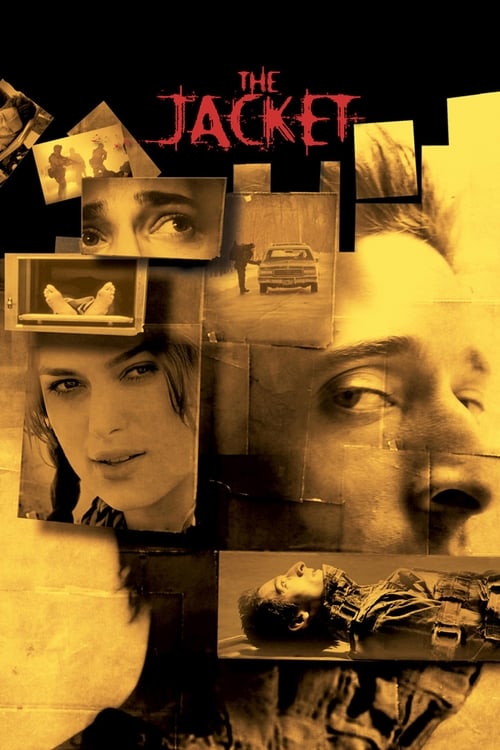
The Jacket
A military veteran goes on a journey into the future, where he can foresee his death and is left with questions that could save his life and those he loves.
The film underperformed commercially against its moderate budget of $29.0M, earning $21.7M globally (-25% loss). While initial box office returns were modest, the film has gained appreciation for its unique voice within the drama genre.





Plot Structure
Story beats plotted across runtime


Narrative Arc
Emotional journey through the story's key moments
Story Circle
Blueprint 15-beat structure
Arcplot Score Breakdown
Weighted: Precision (70%) + Arc (15%) + Theme (15%)
The Jacket (2005) exemplifies meticulously timed narrative design, characteristic of John Maybury's storytelling approach. This structural analysis examines how the film's 12-point plot structure maps to proven narrative frameworks across 1 hour and 43 minutes. With an Arcplot score of 6.7, the film balances conventional beats with creative variation.
Structural Analysis
The Status Quo at 1 minutes (1% through the runtime) establishes Jack Starks is shot in the head during the Gulf War in 1991, establishing his status as a damaged veteran with memory problems and a connection to death.. Structural examination shows that this early placement immediately immerses viewers in the story world.
The inciting incident occurs at 12 minutes when Jack is declared not guilty by reason of insanity and committed to Alpine Grove psychiatric institution, stripping away his freedom and identity.. At 12% through the film, this Disruption aligns precisely with traditional story structure. This beat shifts the emotional landscape, launching the protagonist into the central conflict.
The First Threshold at 26 minutes marks the transition into Act II, occurring at 26% of the runtime. This shows the protagonist's commitment to During his first full session in the jacket and drawer, Jack is thrust forward in time to the year 2007, entering a reality where he can investigate his own fate., moving from reaction to action.
At 52 minutes, the Midpoint arrives at 50% of the runtime—precisely centered, creating perfect narrative symmetry. Significantly, this crucial beat Jack discovers the devastating truth: he dies on January 1st, 1993, just days away. The stakes shift from escape to preventing his own death and saving those he cares about., fundamentally raising what's at risk. The emotional intensity shifts, dividing the narrative into clear before-and-after phases.
The Collapse moment at 77 minutes (75% through) represents the emotional nadir. Here, Jack experiences his final, most brutal session in the jacket. He appears to be dying in the drawer, suffocating and losing his grip on reality - a literal brush with death., shows the protagonist at their lowest point. This beat's placement in the final quarter sets up the climactic reversal.
The Synthesis at 82 minutes initiates the final act resolution at 80% of the runtime. Jack orchestrates events in 1992 to ensure Jackie receives his messages in 2007. On his final day, he escapes the institution and finds young Jackie, giving her mother critical help that will change their future., demonstrating the transformation achieved throughout the journey.
Emotional Journey
The Jacket's emotional architecture traces a deliberate progression across 12 carefully calibrated beats.
Narrative Framework
This structural analysis employs structural analysis methodology used to understand storytelling architecture. By mapping The Jacket against these established plot points, we can identify how John Maybury utilizes or subverts traditional narrative conventions. The plot point approach reveals not only adherence to structural principles but also creative choices that distinguish The Jacket within the drama genre.
Comparative Analysis
Additional drama films include Eye for an Eye, South Pacific and Kiss of the Spider Woman.
Plot Points by Act
Act I
SetupStatus Quo
Jack Starks is shot in the head during the Gulf War in 1991, establishing his status as a damaged veteran with memory problems and a connection to death.
Theme
Young Jackie asks Jack "Are you dead?" on the roadside, planting the thematic question about existence, identity, and whether Jack is truly alive.
Worldbuilding
Jack returns to civilian life in Vermont, struggles with amnesia and PTSD, encounters young Jackie and her alcoholic mother on the road, then is wrongly accused of murdering a police officer.
Disruption
Jack is declared not guilty by reason of insanity and committed to Alpine Grove psychiatric institution, stripping away his freedom and identity.
Resistance
Jack is introduced to the brutal experimental treatment by Dr. Becker: drugged, restrained in a straitjacket, and locked in a morgue drawer. He resists but cannot escape.
Act II
ConfrontationFirst Threshold
During his first full session in the jacket and drawer, Jack is thrust forward in time to the year 2007, entering a reality where he can investigate his own fate.
Premise
Jack explores the future through repeated sessions in the jacket, piecing together clues about his death, developing his relationship with adult Jackie, and attempting to understand the rules of his time travel.
Midpoint
Jack discovers the devastating truth: he dies on January 1st, 1993, just days away. The stakes shift from escape to preventing his own death and saving those he cares about.
Opposition
Jack races against time, using the jacket sessions to gather information while Dr. Becker's treatments intensify. His mental state deteriorates, and the line between past, present, and future blurs dangerously.
Collapse
Jack experiences his final, most brutal session in the jacket. He appears to be dying in the drawer, suffocating and losing his grip on reality - a literal brush with death.
Crisis
In his darkest moment, Jack processes what he's learned and accepts the possibility of his death, but finds meaning in having connected with Jackie and changed her life for the better.
Act III
ResolutionSynthesis
Jack orchestrates events in 1992 to ensure Jackie receives his messages in 2007. On his final day, he escapes the institution and finds young Jackie, giving her mother critical help that will change their future.