The Jungle Book
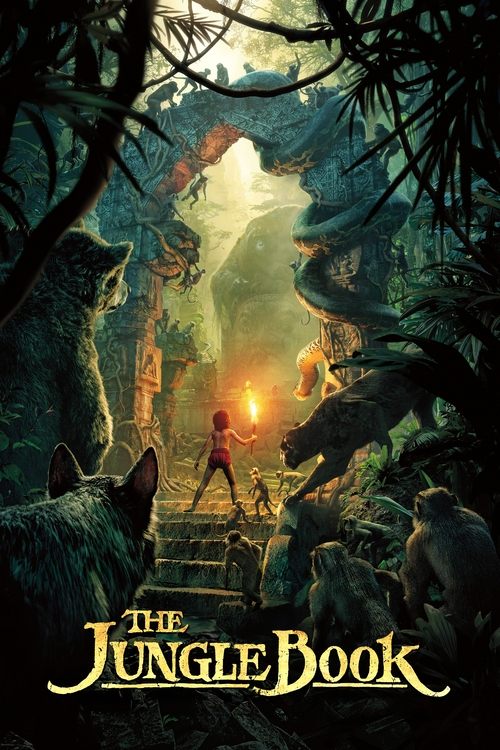
After a threat from the tiger Shere Khan forces him to flee the jungle, a man-cub named Mowgli embarks on a journey of self discovery with the help of panther Bagheera and free-spirited bear Baloo.
Despite a enormous budget of $175.0M, The Jungle Book became a solid performer, earning $966.6M worldwide—a 452% return. This commercial performance validated the ambitious narrative scope, confirming that audiences embrace innovative storytelling even at blockbuster scale.
1 Oscar. 33 wins & 56 nominations


Plot Structure
Story beats plotted across runtime


Narrative Arc
Emotional journey through the story's key moments
Story Circle
Blueprint 15-beat structure
Structural Analysis
The Status Quo at 1 minutes (1% through the runtime) establishes Mowgli runs through the jungle with wolf cubs, trying to keep up. He's a "man-cub" raised by wolves, living in harmony with the jungle, though he struggles with the physical demands.. Structural examination shows that this early placement immediately immerses viewers in the story world.
The inciting incident occurs at 12 minutes when Shere Khan's threat forces a crisis. Mowgli decides he must leave the wolf pack to protect them. He will go to the man-village with Bagheera as his guide.. At 12% through the film, this Disruption aligns precisely with traditional story structure. This beat shifts the emotional landscape, launching the protagonist into the central conflict.
The First Threshold at 26 minutes marks the transition into Act II, occurring at 24% of the runtime. This demonstrates the protagonist's commitment to Mowgli is rescued by Baloo the bear and agrees to help Baloo get honey from a cliff in exchange for staying in the jungle. He chooses to remain rather than continue to the man-village., moving from reaction to action.
At 52 minutes, the Midpoint arrives at 50% of the runtime—precisely centered, creating perfect narrative symmetry. Significantly, this crucial beat King Louie's temple collapses during Mowgli's escape. Mowgli learns that Shere Khan has killed Akela. The stakes become personal and the fun ends - Mowgli must face the truth about the danger he brings to those he loves., fundamentally raising what's at risk. The emotional intensity shifts, dividing the narrative into clear before-and-after phases.
The Collapse moment at 78 minutes (74% through) represents the emotional nadir. Here, Mowgli takes a torch from the man-village (the "red flower") and brings fire into the jungle. He has abandoned who he is and embraced the destructive power of man. The jungle recoils in fear; he has become the threat they always feared., shows the protagonist at their lowest point. This beat's placement in the final quarter sets up the climactic reversal.
The Second Threshold at 84 minutes initiates the final act resolution at 80% of the runtime. Mowgli rejects man's fire and embraces his identity: "This is my home!" He uses his human tricks combined with jungle knowledge to fight Shere Khan, synthesizing both parts of himself., demonstrating the transformation achieved throughout the journey.
Emotional Journey
The Jungle Book's emotional architecture traces a deliberate progression across 15 carefully calibrated beats.
Narrative Framework
This structural analysis employs structural analysis methodology used to understand storytelling architecture. By mapping The Jungle Book against these established plot points, we can identify how Jon Favreau utilizes or subverts traditional narrative conventions. The plot point approach reveals not only adherence to structural principles but also creative choices that distinguish The Jungle Book within the animation genre.
Jon Favreau's Structural Approach
Among the 8 Jon Favreau films analyzed on Arcplot, the average structural score is 6.8, demonstrating varied approaches to story architecture. The Jungle Book exemplifies the director's characteristic narrative technique. For comparative analysis, explore the complete Jon Favreau filmography.
Comparative Analysis
Additional animation films include The Bad Guys, Puss in Boots and Violet Evergarden: Eternity and the Auto Memory Doll. For more Jon Favreau analyses, see Made, The Lion King and Iron Man 2.
Plot Points by Act
Act I
SetupStatus Quo
Mowgli runs through the jungle with wolf cubs, trying to keep up. He's a "man-cub" raised by wolves, living in harmony with the jungle, though he struggles with the physical demands.
Theme
Bagheera tells Mowgli: "You're a man-cub. That's not a bad thing." The film's central question: Does Mowgli belong in the jungle, or must he return to the man-village? Can he be himself?
Worldbuilding
Introduction to Mowgli's wolf family, the pack council, and the Law of the Jungle. During the Water Truce at Peace Rock, Shere Khan arrives and threatens Mowgli, declaring he will kill the man-cub when the water returns.
Disruption
Shere Khan's threat forces a crisis. Mowgli decides he must leave the wolf pack to protect them. He will go to the man-village with Bagheera as his guide.
Resistance
Mowgli and Bagheera journey toward the man-village. Mowgli resists leaving, using his "tricks" (human ingenuity) despite Bagheera's warnings. Shere Khan attacks, kills Akela (Mowgli's wolf father), and Mowgli falls into the river.
Act II
ConfrontationFirst Threshold
Mowgli is rescued by Baloo the bear and agrees to help Baloo get honey from a cliff in exchange for staying in the jungle. He chooses to remain rather than continue to the man-village.
Mirror World
Baloo and Mowgli bond while floating down the river. Baloo represents acceptance of Mowgli as he is, encouraging his "tricks" and human creativity. Their friendship becomes the emotional heart of the story.
Premise
Mowgli lives with Baloo, using his human ingenuity to get honey and enjoy jungle life. He's kidnapped by monkeys and brought to King Louie, who wants Mowgli to give him the "red flower" (fire) so he can become human and rule the jungle.
Midpoint
King Louie's temple collapses during Mowgli's escape. Mowgli learns that Shere Khan has killed Akela. The stakes become personal and the fun ends - Mowgli must face the truth about the danger he brings to those he loves.
Opposition
Bagheera and Baloo argue about Mowgli's fate. Baloo admits he was using Mowgli. Heartbroken, Mowgli decides to face Shere Khan alone. He runs to the man-village and sees humans with fire for the first time.
Collapse
Mowgli takes a torch from the man-village (the "red flower") and brings fire into the jungle. He has abandoned who he is and embraced the destructive power of man. The jungle recoils in fear; he has become the threat they always feared.
Crisis
Mowgli confronts Shere Khan with the torch. The fire spreads, threatening to destroy the jungle. Mowgli realizes his mistake and throws the torch into the water, choosing to face Shere Khan as himself - a man-cub of the jungle.
Act III
ResolutionSecond Threshold
Mowgli rejects man's fire and embraces his identity: "This is my home!" He uses his human tricks combined with jungle knowledge to fight Shere Khan, synthesizing both parts of himself.
Synthesis
Mowgli defeats Shere Khan by using his ingenuity to trap the tiger in a dead tree that falls into fire. The jungle animals work together to put out the fire. Mowgli is accepted by the pack as one of them, human tricks and all.
Transformation
Mowgli runs with the wolf pack again, but now he runs as himself - using his tricks confidently. The wolves accept him not despite being human, but because of it. He belongs by being true to both sides of his nature.