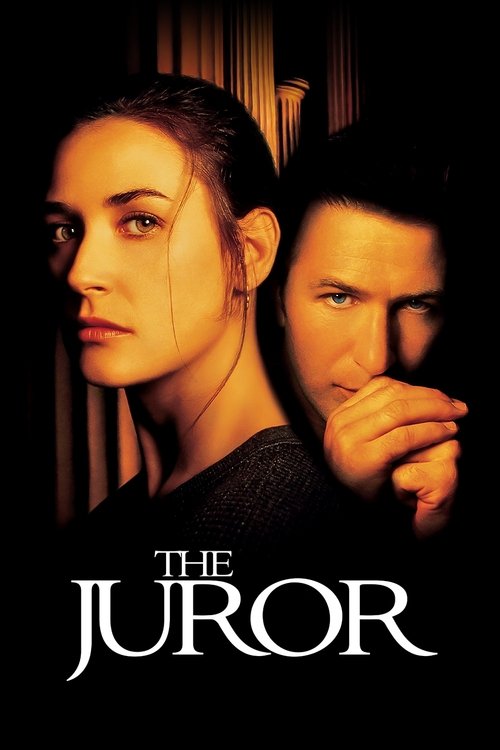
The Juror
With his gangster boss on trial for murder, a mob thug known as "the Teacher" tells Annie Laird she must talk her fellow jurors into a not-guilty verdict, implying that he'll kill her son Oliver if she fails. She manages to do this, but, when it becomes clear that the mobsters might want to silence her for good, she sends Oliver abroad and tries to gather evidence of the plot against her, setting up a final showdown.
The film struggled financially against its mid-range budget of $44.0M, earning $22.8M globally (-48% loss). While initial box office returns were modest, the film has gained appreciation for its unique voice within the thriller genre.


Plot Structure
Story beats plotted across runtime


Narrative Arc
Emotional journey through the story's key moments
Story Circle
Blueprint 15-beat structure
Arcplot Score Breakdown
Weighted: Precision (70%) + Arc (15%) + Theme (15%)
The Juror (1996) exhibits carefully calibrated narrative architecture, characteristic of Brian Gibson's storytelling approach. This structural analysis examines how the film's 15-point plot structure maps to proven narrative frameworks across 1 hour and 58 minutes. With an Arcplot score of 7.2, the film balances conventional beats with creative variation.
Structural Analysis
The Status Quo at 1 minutes (1% through the runtime) establishes Annie Laird is a single mother and artist living a modest life in New York, balancing work and raising her young son Oliver while maintaining her integrity and independence.. Notably, this early placement immediately immerses viewers in the story world.
The inciting incident occurs at 14 minutes when Annie encounters "The Teacher" (Alec Baldwin) at a museum - a charming, mysterious man who seems to take an unusual interest in her. His presence is unsettling despite his charisma.. At 12% through the film, this Disruption aligns precisely with traditional story structure. This beat shifts the emotional landscape, launching the protagonist into the central conflict.
The First Threshold at 29 minutes marks the transition into Act II, occurring at 25% of the runtime. This shows the protagonist's commitment to The Teacher explicitly threatens Oliver's life, showing Annie surveillance photos of her son. Annie realizes she must vote to acquit the mob boss or her child will be killed. She crosses into a world of corruption and terror., moving from reaction to action.
At 58 minutes, the Midpoint arrives at 49% of the runtime—precisely centered, creating perfect narrative symmetry. Structural examination shows that this crucial beat The jury reaches a deadlock. Annie's manipulation is working but another juror stands firm for conviction. The Teacher escalates, making it clear that failure is not an option - he will kill Oliver if the verdict isn't acquittal., fundamentally raising what's at risk. The emotional intensity shifts, dividing the narrative into clear before-and-after phases.
The Collapse moment at 88 minutes (74% through) represents the emotional nadir. Here, The mob boss is acquitted due to Annie's influence. She has sacrificed her principles to save her son, but the Teacher reveals the nightmare isn't over - he expects her continued "cooperation" and may not let her go., demonstrates the protagonist at their lowest point. This beat's placement in the final quarter sets up the climactic reversal.
The Second Threshold at 94 minutes initiates the final act resolution at 80% of the runtime. Annie decides to fight back. She realizes the only way to save her son and reclaim her integrity is to turn the tables on The Teacher and the mob. She stops being a victim and becomes a hunter., demonstrating the transformation achieved throughout the journey.
Emotional Journey
The Juror's emotional architecture traces a deliberate progression across 15 carefully calibrated beats.
Narrative Framework
This structural analysis employs proven narrative structure principles that track dramatic progression. By mapping The Juror against these established plot points, we can identify how Brian Gibson utilizes or subverts traditional narrative conventions. The plot point approach reveals not only adherence to structural principles but also creative choices that distinguish The Juror within the thriller genre.
Brian Gibson's Structural Approach
Among the 3 Brian Gibson films analyzed on Arcplot, the average structural score is 7.2, reflecting strong command of classical structure. The Juror exemplifies the director's characteristic narrative technique. For comparative analysis, explore the complete Brian Gibson filmography.
Comparative Analysis
Additional thriller films include The Warriors, Thunderball and Rustom. For more Brian Gibson analyses, see What's Love Got to Do with It, Poltergeist II: The Other Side.
Plot Points by Act
Act I
SetupStatus Quo
Annie Laird is a single mother and artist living a modest life in New York, balancing work and raising her young son Oliver while maintaining her integrity and independence.
Theme
During jury selection, a discussion emerges about justice, duty, and whether one person can make a difference when facing overwhelming pressure - foreshadowing Annie's moral test.
Worldbuilding
Annie is selected for jury duty in a mafia trial. We see her daily routine, her relationship with her son, her ex-husband, and her struggling art career. The trial begins with opening statements about a dangerous mob boss.
Disruption
Annie encounters "The Teacher" (Alec Baldwin) at a museum - a charming, mysterious man who seems to take an unusual interest in her. His presence is unsettling despite his charisma.
Resistance
The Teacher begins stalking Annie, appearing in her life repeatedly. He reveals he knows everything about her and her son. Annie tries to maintain normalcy while the trial proceeds, but fear creeps in as she realizes this is no coincidence.
Act II
ConfrontationFirst Threshold
The Teacher explicitly threatens Oliver's life, showing Annie surveillance photos of her son. Annie realizes she must vote to acquit the mob boss or her child will be killed. She crosses into a world of corruption and terror.
Mirror World
Annie becomes isolated from her normal support systems - she can't tell anyone the truth without endangering Oliver. The Teacher becomes her dark "mirror," representing the corruption she must either submit to or overcome.
Premise
Annie navigates the dual nightmare of deliberations where she must manipulate fellow jurors toward acquittal while maintaining the facade of normalcy at home. The Teacher continues psychological torment, alternating between seduction and threat.
Midpoint
The jury reaches a deadlock. Annie's manipulation is working but another juror stands firm for conviction. The Teacher escalates, making it clear that failure is not an option - he will kill Oliver if the verdict isn't acquittal.
Opposition
Annie becomes more aggressive in swaying the jury, compromising her integrity piece by piece. The Teacher's psychological hold tightens. Fellow jurors become suspicious of her behavior. The walls close in from all sides.
Collapse
The mob boss is acquitted due to Annie's influence. She has sacrificed her principles to save her son, but the Teacher reveals the nightmare isn't over - he expects her continued "cooperation" and may not let her go.
Crisis
Annie faces the depth of her moral compromise and realizes submission won't end. She contemplates running but knows they'll find her. She hits rock bottom, feeling helpless and destroyed by what she's done.
Act III
ResolutionSecond Threshold
Annie decides to fight back. She realizes the only way to save her son and reclaim her integrity is to turn the tables on The Teacher and the mob. She stops being a victim and becomes a hunter.
Synthesis
Annie uses The Teacher's obsession against him, luring him into a trap. She outmaneuvers the mob's surveillance, protects Oliver, and confronts The Teacher in a final deadly showdown where she must kill to survive.
Transformation
Annie and Oliver are safe, reunited. She has survived by finding strength she didn't know she had. Though scarred, she has reclaimed her agency and protected what matters most - transformed from victim to survivor.