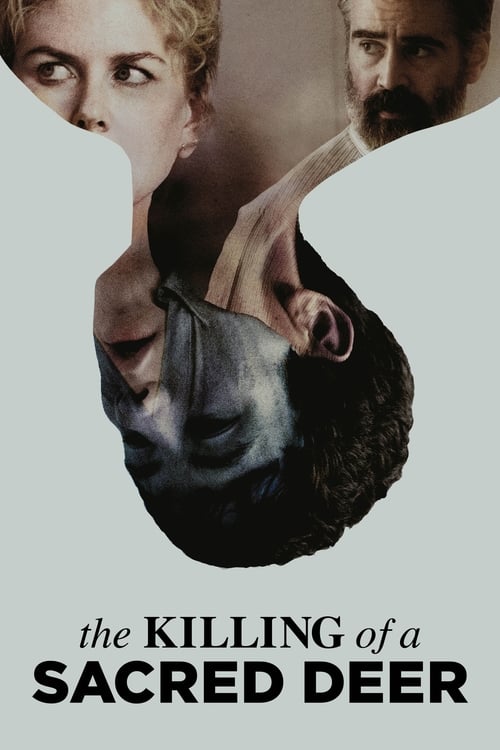
The Killing of a Sacred Deer
Dr. Steven Murphy is a renowned cardiovascular surgeon who presides over a spotless household with his wife and two children. Lurking at the margins of his idyllic suburban existence is Martin, a fatherless teen who insinuates himself into the doctor's life in gradually unsettling ways.
Despite its modest budget of $3.0M, The Killing of a Sacred Deer became a financial success, earning $10.7M worldwide—a 257% return. The film's fresh perspective engaged audiences, demonstrating that strong storytelling can transcend budget limitations.
7 wins & 53 nominations


Plot Structure
Story beats plotted across runtime


Narrative Arc
Emotional journey through the story's key moments
Story Circle
Blueprint 15-beat structure
Arcplot Score Breakdown
Weighted: Precision (70%) + Arc (15%) + Theme (15%)
The Killing of a Sacred Deer (2017) exhibits carefully calibrated dramatic framework, characteristic of Yorgos Lanthimos's storytelling approach. This structural analysis examines how the film's 15-point plot structure maps to proven narrative frameworks across 2 hours and 1 minutes. With an Arcplot score of 7.2, the film balances conventional beats with creative variation.
Structural Analysis
The Status Quo at 1 minutes (1% through the runtime) establishes Steven performs open-heart surgery with clinical precision, establishing his position as a successful cardiac surgeon in complete control of life and death.. Of particular interest, this early placement immediately immerses viewers in the story world.
The inciting incident occurs at 14 minutes when Steven brings Martin home for dinner, crossing a boundary. Martin meets Steven's family for the first time, beginning his infiltration into their world. The relationship shifts from public mentorship to private entanglement.. At 12% through the film, this Disruption aligns precisely with traditional story structure. This beat shifts the emotional landscape, launching the protagonist into the central conflict.
The First Threshold at 29 minutes marks the transition into Act II, occurring at 24% of the runtime. This shows the protagonist's commitment to Bob's legs suddenly stop working. Steven enters the medical mystery that will consume his life, crossing from his ordered world into a nightmare he cannot diagnose or control., moving from reaction to action.
At 60 minutes, the Midpoint arrives at 50% of the runtime—precisely centered, creating perfect narrative symmetry. Significantly, this crucial beat Steven kidnaps and binds Martin in the basement, believing he can force a reversal through violence and starvation. False sense of control - he thinks he's seized the initiative, but he's actually accepted the reality of the curse by fighting it on Martin's terms., fundamentally raising what's at risk. The emotional intensity shifts, dividing the narrative into clear before-and-after phases.
The Collapse moment at 90 minutes (75% through) represents the emotional nadir. Here, Steven releases Martin, admitting complete defeat. He has no medical solution, no escape, no control. Martin walks free while Steven's children lie dying in hospital beds. Steven must accept that he will have to kill one of his family members., reveals the protagonist at their lowest point. This beat's placement in the final quarter sets up the climactic reversal.
The Second Threshold at 97 minutes initiates the final act resolution at 80% of the runtime. Steven decides to let fate choose through a ritual of randomness. He blindfolds himself, spins, and will shoot whoever is in front of him. He synthesizes justice (random selection) with action (pulling the trigger) - becoming executioner while absolving himself of choice., demonstrating the transformation achieved throughout the journey.
Emotional Journey
The Killing of a Sacred Deer's emotional architecture traces a deliberate progression across 15 carefully calibrated beats.
Narrative Framework
This structural analysis employs systematic plot point analysis that identifies crucial turning points. By mapping The Killing of a Sacred Deer against these established plot points, we can identify how Yorgos Lanthimos utilizes or subverts traditional narrative conventions. The plot point approach reveals not only adherence to structural principles but also creative choices that distinguish The Killing of a Sacred Deer within the drama genre.
Yorgos Lanthimos's Structural Approach
Among the 4 Yorgos Lanthimos films analyzed on Arcplot, the average structural score is 6.8, demonstrating varied approaches to story architecture. The Killing of a Sacred Deer represents one of the director's most structurally precise works. For comparative analysis, explore the complete Yorgos Lanthimos filmography.
Comparative Analysis
Additional drama films include After Thomas, South Pacific and Dirty Dancing: Havana Nights. For more Yorgos Lanthimos analyses, see Poor Things, The Favourite and The Lobster.
Plot Points by Act
Act I
SetupStatus Quo
Steven performs open-heart surgery with clinical precision, establishing his position as a successful cardiac surgeon in complete control of life and death.
Theme
Martin tells Steven: "A surgeon never kills a patient. An anesthesiologist can kill a patient, but a surgeon never can." The theme of responsibility, justice, and the price of mistakes is stated.
Worldbuilding
Steven's comfortable upper-class life is established: his family (wife Anna, daughter Kim, son Bob), his affair with anesthesiologist colleague, his secret mentorship of teenage Martin whose father died during Steven's surgery years ago.
Disruption
Steven brings Martin home for dinner, crossing a boundary. Martin meets Steven's family for the first time, beginning his infiltration into their world. The relationship shifts from public mentorship to private entanglement.
Resistance
Steven tries to manage Martin's increasingly invasive presence: refusing gifts, attempting to set boundaries, meeting Martin's mother. Steven debates how to handle the uncomfortable situation without understanding the true danger.
Act II
ConfrontationFirst Threshold
Bob's legs suddenly stop working. Steven enters the medical mystery that will consume his life, crossing from his ordered world into a nightmare he cannot diagnose or control.
Mirror World
Martin reveals the curse: Steven must kill one family member or all three will die (paralysis, refusal to eat, bleeding from the eyes, then death). The metaphysical rules of this new reality are established - justice demands blood for blood.
Premise
Steven explores every avenue to escape the curse: medical tests on Bob, attempting to negotiate with Martin, trying to appease him, violent confrontation, kidnapping Martin. Anna becomes involved. Kim's legs fail. The family experiences the promised stages of the curse.
Midpoint
Steven kidnaps and binds Martin in the basement, believing he can force a reversal through violence and starvation. False sense of control - he thinks he's seized the initiative, but he's actually accepted the reality of the curse by fighting it on Martin's terms.
Opposition
The curse intensifies despite Steven's efforts: Bob refuses to eat, Kim stops eating, both bleed from the eyes. Anna discovers the truth about Steven's father's death during surgery. Steven's marriage fractures. Martin's mother reports him missing. The hospital grows suspicious.
Collapse
Steven releases Martin, admitting complete defeat. He has no medical solution, no escape, no control. Martin walks free while Steven's children lie dying in hospital beds. Steven must accept that he will have to kill one of his family members.
Crisis
Steven faces the impossible choice. The family is brought home. Each member makes their case for survival or sacrifice. Anna offers herself. The children plead. Steven processes that there is no moral way out - only a choice.
Act III
ResolutionSecond Threshold
Steven decides to let fate choose through a ritual of randomness. He blindfolds himself, spins, and will shoot whoever is in front of him. He synthesizes justice (random selection) with action (pulling the trigger) - becoming executioner while absolving himself of choice.
Synthesis
The execution ritual: Steven, Anna, Kim, and Bob sit in the living room. Steven blindfolds himself, spins with the rifle, fires multiple times. One family member dies (Bob). The surviving family members recover. They attempt to return to normal life.
Transformation
The family sits in a diner, silent and dead-eyed. Martin enters and stares at them. Steven stares back. No one speaks. The family is intact but destroyed - the price has been paid, but they are hollow. They have survived but not been saved.