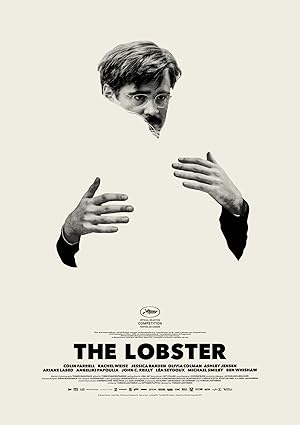
The Lobster
A love story set in a dystopian near future where single people are arrested and transferred to a creepy hotel. There they are obliged to find a matching mate in 45 days. If they fail, they are transformed into an animal and released into the woods.
Despite its modest budget of $4.0M, The Lobster became a box office success, earning $15.7M worldwide—a 293% return. The film's innovative storytelling found its audience, demonstrating that strong storytelling can transcend budget limitations.
Nominated for 1 Oscar. 33 wins & 84 nominations


Plot Structure
Story beats plotted across runtime


Narrative Arc
Emotional journey through the story's key moments
Story Circle
Blueprint 15-beat structure
Arcplot Score Breakdown
Weighted: Precision (70%) + Arc (15%) + Theme (15%)
The Lobster (2015) reveals deliberately positioned narrative architecture, characteristic of Yorgos Lanthimos's storytelling approach. This structural analysis examines how the film's 15-point plot structure maps to proven narrative frameworks across 1 hour and 59 minutes. With an Arcplot score of 7.0, the film balances conventional beats with creative variation.
Structural Analysis
The Status Quo at 1 minutes (1% through the runtime) establishes David's wife leaves him for another man. He arrives at The Hotel with his brother (now a dog), entering a dystopian world where singles must find a romantic partner within 45 days or be transformed into an animal of their choice.. Structural examination shows that this early placement immediately immerses viewers in the story world.
The inciting incident occurs at 16 minutes when David witnesses the Heartless Woman fake emotions to survive and decides to pursue her by feigning heartlessness himself, beginning a dangerous deception that will define his journey through Act 2.. At 13% through the film, this Disruption is delayed, allowing extended setup of the story world. This beat shifts the emotional landscape, launching the protagonist into the central conflict.
The First Threshold at 31 minutes marks the transition into Act II, occurring at 26% of the runtime. This demonstrates the protagonist's commitment to David and the Heartless Woman are officially paired and moved to a couples room. He has chosen to fully commit to the deception, crossing the threshold into a false relationship that will ultimately expose the system's cruelty., moving from reaction to action.
At 57 minutes, the Midpoint arrives at 48% of the runtime—precisely centered, creating perfect narrative symmetry. Notably, this crucial beat The Heartless Woman discovers David's deception when she sees him crying. She reports him to Hotel management. David must escape immediately or face transformation. This false defeat forces him into the woods to join the Loners., fundamentally raising what's at risk. The emotional intensity shifts, dividing the narrative into clear before-and-after phases.
The Collapse moment at 88 minutes (74% through) represents the emotional nadir. Here, The Loner Leader blinds the Short-Sighted Woman as punishment, destroying the shared trait that connected her to David. The literal death of their defining similarity represents the death of their relationship's foundation in this rigid world., reveals the protagonist at their lowest point. This beat's placement in the final quarter sets up the climactic reversal.
The Second Threshold at 96 minutes initiates the final act resolution at 80% of the runtime. David kills the Loner Leader and escapes to the city with the Short-Sighted Woman. They enter society as a couple, attempting to build an authentic relationship in the ordinary world, free from both The Hotel and the Loners., demonstrating the transformation achieved throughout the journey.
Emotional Journey
The Lobster's emotional architecture traces a deliberate progression across 15 carefully calibrated beats.
Narrative Framework
This structural analysis employs systematic plot point analysis that identifies crucial turning points. By mapping The Lobster against these established plot points, we can identify how Yorgos Lanthimos utilizes or subverts traditional narrative conventions. The plot point approach reveals not only adherence to structural principles but also creative choices that distinguish The Lobster within the drama genre.
Yorgos Lanthimos's Structural Approach
Among the 4 Yorgos Lanthimos films analyzed on Arcplot, the average structural score is 6.8, demonstrating varied approaches to story architecture. The Lobster represents one of the director's most structurally precise works. For comparative analysis, explore the complete Yorgos Lanthimos filmography.
Comparative Analysis
Additional drama films include After Thomas, South Pacific and Dirty Dancing: Havana Nights. For more Yorgos Lanthimos analyses, see Poor Things, The Favourite and The Killing of a Sacred Deer.
Plot Points by Act
Act I
SetupStatus Quo
David's wife leaves him for another man. He arrives at The Hotel with his brother (now a dog), entering a dystopian world where singles must find a romantic partner within 45 days or be transformed into an animal of their choice.
Theme
Hotel Manager explains the rules: "A partner is essential for everything. Even the most basic tasks become difficult when you're alone." The theme of societal pressure to conform to coupledom versus individual authenticity is established.
Worldbuilding
David learns The Hotel's rules: residents must find a matching partner based on a shared trait, participate in propaganda presentations about couples, and hunt Loners in the woods to extend their stay. The absurdist system of mandatory romance is fully established.
Disruption
David witnesses the Heartless Woman fake emotions to survive and decides to pursue her by feigning heartlessness himself, beginning a dangerous deception that will define his journey through Act 2.
Resistance
David trains himself to suppress emotions, practicing coldness. He hunts Loners to buy time, observes other guests' desperate attempts at partnership, and systematically deceives the Heartless Woman by mimicking her cruelty and indifference.
Act II
ConfrontationFirst Threshold
David and the Heartless Woman are officially paired and moved to a couples room. He has chosen to fully commit to the deception, crossing the threshold into a false relationship that will ultimately expose the system's cruelty.
Mirror World
The Heartless Woman tests David by kicking his dog-brother to death. David must suppress his grief to maintain his cover, experiencing the full cost of emotional denial and conformity to survive in this system.
Premise
David continues his dangerous charade with the Heartless Woman while witnessing the dark absurdity of Hotel life: forced couples, cruel entertainment, propagandistic theater. His performance becomes increasingly difficult to maintain as his true emotions threaten to surface.
Midpoint
The Heartless Woman discovers David's deception when she sees him crying. She reports him to Hotel management. David must escape immediately or face transformation. This false defeat forces him into the woods to join the Loners.
Opposition
David lives with the Loners in the forest under their Leader's tyrannical rules forbidding any romance or connection. He meets the Short-Sighted Woman and begins falling in love, discovering that both systems—forced coupling and forced solitude—deny authentic human connection.
Collapse
The Loner Leader blinds the Short-Sighted Woman as punishment, destroying the shared trait that connected her to David. The literal death of their defining similarity represents the death of their relationship's foundation in this rigid world.
Crisis
David processes his rage and grief. He decides to take revenge on the Loner Leader while planning escape with the Short-Sighted Woman. He must confront whether genuine love can exist outside the artificial systems that have defined connection in this world.
Act III
ResolutionSecond Threshold
David kills the Loner Leader and escapes to the city with the Short-Sighted Woman. They enter society as a couple, attempting to build an authentic relationship in the ordinary world, free from both The Hotel and the Loners.
Synthesis
David and the Short-Sighted Woman attempt normal life in the city, but their lack of a shared defining trait haunts them. They discuss what makes them compatible. David considers blinding himself to match her, the ultimate test of love versus conformity to systems.
Transformation
David sits in a diner bathroom with a steak knife, the Short-Sighted Woman waiting outside. The film ends ambiguously—will David blind himself to create a shared trait, or has he finally learned to reject the system? His choice remains unknown, mirroring the complexity of authentic human connection.