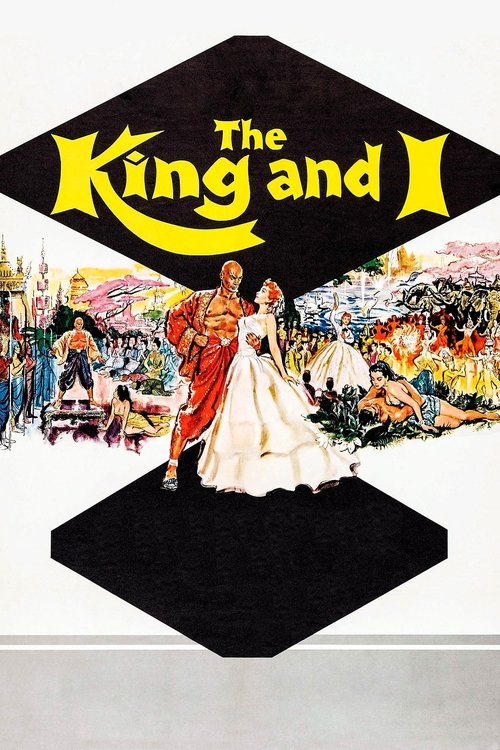
The King and I
Widowed Welsh mother Anna Leonowens becomes a governess and English tutor to the wives and many children of the stubborn King Mongkut of Siam. Anna and the King have a clash of personalities as she works to teach the royal family about the English language, customs and etiquette, and rushes to prepare a party for a group of European diplomats who must change their opinions about the King.
Despite its limited budget of $4.5M, The King and I became a solid performer, earning $21.3M worldwide—a 368% return. The film's compelling narrative attracted moviegoers, illustrating how strong storytelling can transcend budget limitations.
5 Oscars. 11 wins & 13 nominations


Plot Structure
Story beats plotted across runtime


Narrative Arc
Emotional journey through the story's key moments
Story Circle
Blueprint 15-beat structure
Arcplot Score Breakdown
Weighted: Precision (70%) + Arc (15%) + Theme (15%)
The King and I (1956) showcases deliberately positioned narrative architecture, characteristic of Walter Lang's storytelling approach. This structural analysis examines how the film's 15-point plot structure maps to proven narrative frameworks across 2 hours and 13 minutes. With an Arcplot score of 7.3, the film balances conventional beats with creative variation.
Structural Analysis
The Status Quo at 2 minutes (1% through the runtime) establishes Anna Leonowens arrives by ship in Bangkok with her son Louis, confident and optimistic about her new position as royal tutor, representing Western independence and self-determination.. The analysis reveals that this early placement immediately immerses viewers in the story world.
The inciting incident occurs at 17 minutes when The King refuses Anna's request for her own house, breaking his promise and asserting absolute authority. Anna threatens to leave on the next boat, creating their fundamental power struggle.. At 13% through the film, this Disruption is delayed, allowing extended setup of the story world. This beat shifts the emotional landscape, launching the protagonist into the central conflict.
The First Threshold at 33 minutes marks the transition into Act II, occurring at 25% of the runtime. This indicates the protagonist's commitment to Anna actively chooses to commit to her role as teacher, accepting her quarters in the palace and beginning to implement her educational vision, including teaching about world geography and freedom., moving from reaction to action.
At 67 minutes, the Midpoint arrives at 50% of the runtime—precisely centered, creating perfect narrative symmetry. Notably, this crucial beat The King asks Anna to help him host a British delegation to prove Siam is not barbaric. Anna agrees, creating an elaborate Western-style reception. This apparent victory raises stakes as the King becomes vulnerable to outside judgment., fundamentally raising what's at risk. The emotional intensity shifts, dividing the narrative into clear before-and-after phases.
The Collapse moment at 100 minutes (75% through) represents the emotional nadir. Here, Tuptim's attempted escape with Lun Tha is discovered. Lun Tha is killed, and the King prepares to whip Tuptim publicly. Anna realizes her Western ideals have endangered lives and that she cannot change this world., reveals the protagonist at their lowest point. This beat's placement in the final quarter sets up the climactic reversal.
The Second Threshold at 106 minutes initiates the final act resolution at 80% of the runtime. Lady Thiang summons Anna to the dying King's bedside. Anna learns the King has freed Tuptim and begun reforms. The King asks her to help his son lead Siam into modernity, synthesizing Eastern and Western values., demonstrating the transformation achieved throughout the journey.
Emotional Journey
The King and I's emotional architecture traces a deliberate progression across 15 carefully calibrated beats.
Narrative Framework
This structural analysis employs a 15-point narrative structure framework that maps key story moments. By mapping The King and I against these established plot points, we can identify how Walter Lang utilizes or subverts traditional narrative conventions. The plot point approach reveals not only adherence to structural principles but also creative choices that distinguish The King and I within the music genre.
Walter Lang's Structural Approach
Among the 3 Walter Lang films analyzed on Arcplot, the average structural score is 7.1, reflecting strong command of classical structure. The King and I represents one of the director's most structurally precise works. For comparative analysis, explore the complete Walter Lang filmography.
Comparative Analysis
Additional music films include South Pacific, Dirty Dancing: Havana Nights and Yesterday. For more Walter Lang analyses, see Can-Can, There's No Business Like Show Business.
Plot Points by Act
Act I
SetupStatus Quo
Anna Leonowens arrives by ship in Bangkok with her son Louis, confident and optimistic about her new position as royal tutor, representing Western independence and self-determination.
Theme
The Kralahome tells Anna "You must remember, this is not England" - establishing the central thematic conflict between Eastern tradition and Western modernity, respect versus change.
Worldbuilding
Anna learns the rules of the Siamese court, meets the King's many children and wives, discovers the rigid protocol, and is informed she will not receive the promised house of her own.
Disruption
The King refuses Anna's request for her own house, breaking his promise and asserting absolute authority. Anna threatens to leave on the next boat, creating their fundamental power struggle.
Resistance
Anna debates whether to stay or leave, begins teaching the royal children, and gradually connects with them. Lady Thiang counsels patience and understanding, serving as a cultural bridge.
Act II
ConfrontationFirst Threshold
Anna actively chooses to commit to her role as teacher, accepting her quarters in the palace and beginning to implement her educational vision, including teaching about world geography and freedom.
Mirror World
Anna meets Tuptim, the King's newest wife brought from Burma against her will. Tuptim's forbidden love with Lun Tha becomes the thematic subplot about love, freedom, and the cost of tradition.
Premise
Anna teaches the children Western ideas while navigating cultural clashes with the King. Musical numbers "Getting to Know You" and "Shall We Dance" showcase their evolving relationship and mutual influence.
Midpoint
The King asks Anna to help him host a British delegation to prove Siam is not barbaric. Anna agrees, creating an elaborate Western-style reception. This apparent victory raises stakes as the King becomes vulnerable to outside judgment.
Opposition
Preparations intensify for the British visit. The King and Anna clash over protocol and presentation. Tuptim's forbidden romance deepens dangerously. Cultural tensions mount as both Anna and the King struggle with compromise.
Collapse
Tuptim's attempted escape with Lun Tha is discovered. Lun Tha is killed, and the King prepares to whip Tuptim publicly. Anna realizes her Western ideals have endangered lives and that she cannot change this world.
Crisis
Anna condemns the King's cruelty and prepares to leave Siam forever. The King, unable to reconcile tradition with his growing conscience, falls into moral crisis and illness. Both face the cost of their collision.
Act III
ResolutionSecond Threshold
Lady Thiang summons Anna to the dying King's bedside. Anna learns the King has freed Tuptim and begun reforms. The King asks her to help his son lead Siam into modernity, synthesizing Eastern and Western values.
Synthesis
Anna stays to guide the young Prince Chulalongkorn as he issues proclamations ending slavery and servile prostration. The King dies, but his transformation ensures Siam will modernize with dignity, honoring both Anna and his own wisdom.
Transformation
Anna watches as the royal children bow to their new King with heads high, not prostrate - a perfect synthesis of respect and dignity. She has found her place, not changing Siam, but helping it transform itself.