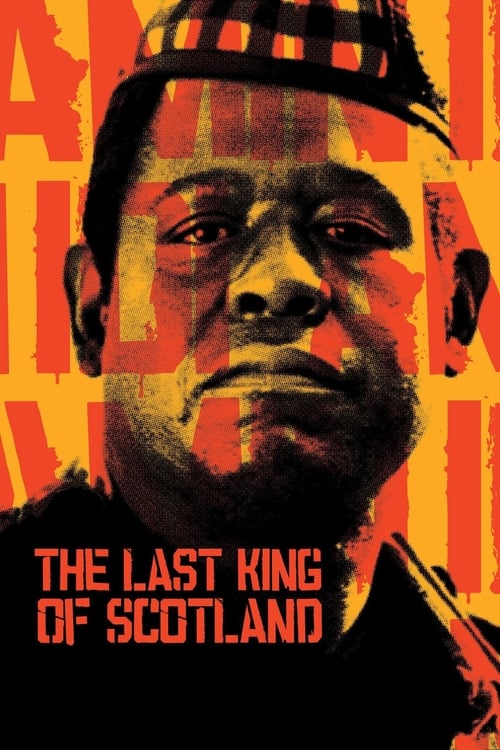
The Last King of Scotland
Young Scottish doctor, Nicholas Garrigan decides it's time for an adventure after he finishes his formal education, so he decides to try his luck in Uganda, and arrives during the downfall of President Obote. General Idi Amin comes to power and asks Garrigan to become his personal doctor.
Despite its limited budget of $6.0M, The Last King of Scotland became a runaway success, earning $48.6M worldwide—a remarkable 710% return. The film's innovative storytelling attracted moviegoers, illustrating how strong storytelling can transcend budget limitations.
1 Oscar. 49 wins & 32 nominations


Plot Structure
Story beats plotted across runtime


Narrative Arc
Emotional journey through the story's key moments
Story Circle
Blueprint 15-beat structure
Arcplot Score Breakdown
Weighted: Precision (70%) + Arc (15%) + Theme (15%)
The Last King of Scotland (2006) showcases deliberately positioned story structure, characteristic of Kevin Macdonald's storytelling approach. This structural analysis examines how the film's 15-point plot structure maps to proven narrative frameworks across 2 hours and 3 minutes. With an Arcplot score of 6.7, the film balances conventional beats with creative variation.
Structural Analysis
The Status Quo at 1 minutes (1% through the runtime) establishes Nicholas Garrigan graduates medical school in Scotland, spinning a globe to randomly choose his destination. Shows his privileged, naïve worldview and desire for adventure over purpose.. The analysis reveals that this early placement immediately immerses viewers in the story world.
The inciting incident occurs at 14 minutes when Nicholas encounters Idi Amin when the new president's motorcade stops with a minor injury. Nicholas treats Amin, who is charismatic and immediately takes a liking to the young Scottish doctor.. At 12% through the film, this Disruption aligns precisely with traditional story structure. This beat shifts the emotional landscape, launching the protagonist into the central conflict.
The First Threshold at 30 minutes marks the transition into Act II, occurring at 25% of the runtime. This reveals the protagonist's commitment to Nicholas actively chooses to accept Amin's offer and becomes his personal physician, moving into the presidential compound. He crosses into a world of power, luxury, and increasingly dangerous politics., moving from reaction to action.
At 61 minutes, the Midpoint arrives at 50% of the runtime—precisely centered, creating perfect narrative symmetry. Of particular interest, this crucial beat Nicholas witnesses the execution of Amin's health minister (whom Nicholas replaced) and realizes the regime's true brutality. False victory turns to awareness - he has become trapped in a deadly game. Stakes are raised irreversibly., fundamentally raising what's at risk. The emotional intensity shifts, dividing the narrative into clear before-and-after phases.
The Collapse moment at 91 minutes (74% through) represents the emotional nadir. Here, Nicholas discovers Kay's dismembered body - Amin had her killed and her limbs surgically reattached backwards as punishment. The "whiff of death" is literal. Nicholas's moral collapse is complete; his complicity has cost an innocent life., indicates the protagonist at their lowest point. This beat's placement in the final quarter sets up the climactic reversal.
The Second Threshold at 99 minutes initiates the final act resolution at 80% of the runtime. Nicholas realizes he must act decisively to survive and reject Amin completely. He synthesizes his medical knowledge with help from Stone (British diplomat) to devise an escape plan during the Entebbe hostage crisis., demonstrating the transformation achieved throughout the journey.
Emotional Journey
The Last King of Scotland's emotional architecture traces a deliberate progression across 15 carefully calibrated beats.
Narrative Framework
This structural analysis employs proven narrative structure principles that track dramatic progression. By mapping The Last King of Scotland against these established plot points, we can identify how Kevin Macdonald utilizes or subverts traditional narrative conventions. The plot point approach reveals not only adherence to structural principles but also creative choices that distinguish The Last King of Scotland within the drama genre.
Kevin Macdonald's Structural Approach
Among the 4 Kevin Macdonald films analyzed on Arcplot, the average structural score is 7.0, reflecting strong command of classical structure. The Last King of Scotland takes a more unconventional approach compared to the director's typical style. For comparative analysis, explore the complete Kevin Macdonald filmography.
Comparative Analysis
Additional drama films include After Thomas, South Pacific and Dirty Dancing: Havana Nights. For more Kevin Macdonald analyses, see The Eagle, The Mauritanian and State of Play.
Plot Points by Act
Act I
SetupStatus Quo
Nicholas Garrigan graduates medical school in Scotland, spinning a globe to randomly choose his destination. Shows his privileged, naïve worldview and desire for adventure over purpose.
Theme
Nicholas arrives in Uganda and his missionary colleague warns him about getting too close to politics: "This is Africa - you should be careful." The theme of complicity and moral responsibility is introduced.
Worldbuilding
Nicholas works at a rural missionary clinic, treating locals and having an affair with Sarah, the wife of his colleague. Establishes his recklessness, charm, and lack of genuine commitment to helping Uganda.
Disruption
Nicholas encounters Idi Amin when the new president's motorcade stops with a minor injury. Nicholas treats Amin, who is charismatic and immediately takes a liking to the young Scottish doctor.
Resistance
Amin summons Nicholas to Kampala and offers him the position of personal physician. Nicholas is initially hesitant, debates leaving the clinic, but is seduced by Amin's charisma and the promise of adventure and importance.
Act II
ConfrontationFirst Threshold
Nicholas actively chooses to accept Amin's offer and becomes his personal physician, moving into the presidential compound. He crosses into a world of power, luxury, and increasingly dangerous politics.
Mirror World
Nicholas begins an affair with Kay, one of Amin's wives. She represents the human cost of Amin's regime and will eventually teach Nicholas about true moral responsibility versus his self-serving naivety.
Premise
Nicholas enjoys the perks of being Amin's confidant - luxury, power, and adventure. He witnesses Amin's brutality but rationalizes it, becoming complicit. The fun of influence and proximity to power is explored.
Midpoint
Nicholas witnesses the execution of Amin's health minister (whom Nicholas replaced) and realizes the regime's true brutality. False victory turns to awareness - he has become trapped in a deadly game. Stakes are raised irreversibly.
Opposition
Amin becomes increasingly paranoid and violent. Nicholas tries to distance himself but is pulled deeper. Kay becomes pregnant with Nicholas's child. British diplomats pressure him to inform, and his complicity becomes undeniable.
Collapse
Nicholas discovers Kay's dismembered body - Amin had her killed and her limbs surgically reattached backwards as punishment. The "whiff of death" is literal. Nicholas's moral collapse is complete; his complicity has cost an innocent life.
Crisis
Nicholas spirals into horror and guilt. Amin demands Nicholas remain loyal and serve him. Nicholas is paralyzed between terror of Amin and the crushing weight of his moral failure. He must find a way to escape or die.
Act III
ResolutionSecond Threshold
Nicholas realizes he must act decisively to survive and reject Amin completely. He synthesizes his medical knowledge with help from Stone (British diplomat) to devise an escape plan during the Entebbe hostage crisis.
Synthesis
Nicholas attempts to escape during the Israeli raid on Entebbe. He confronts Amin in a final brutal encounter, is tortured by Amin's men, but ultimately escapes by posing as the body of a dead hijacker during the rescue operation.
Transformation
Nicholas, battered and traumatized, boards a plane to safety. Unlike the naïve graduate spinning a globe, he is now broken by the consequences of his complicity. His transformation is a corruption arc - he survives but is morally destroyed.