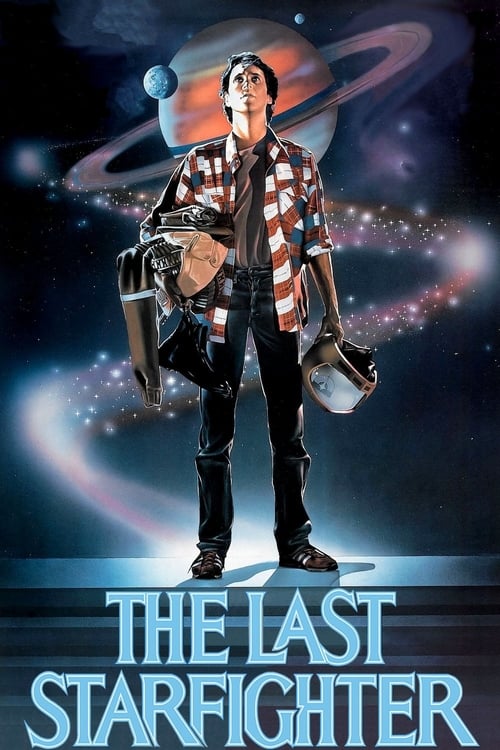
The Last Starfighter
Video game expert Alex Rogan finds himself transported to another planet after conquering the video game The Last Starfighter, only to find out it was just a test. He was recruited to join the team of best Starfighters to defend their world from the attack.
Working with a mid-range budget of $15.0M, the film achieved a respectable showing with $28.7M in global revenue (+92% profit margin).


Plot Structure
Story beats plotted across runtime


Narrative Arc
Emotional journey through the story's key moments
Story Circle
Blueprint 15-beat structure
Arcplot Score Breakdown
Weighted: Precision (70%) + Arc (15%) + Theme (15%)
The Last Starfighter (1984) exhibits precise narrative architecture, characteristic of Nick Castle's storytelling approach. This structural analysis examines how the film's 15-point plot structure maps to proven narrative frameworks across 1 hour and 41 minutes. With an Arcplot score of 7.5, the film showcases strong structural fundamentals.
Structural Analysis
The Status Quo at 1 minutes (1% through the runtime) establishes Alex Rogan lives in the Starlite Starbrite trailer park, stuck in a mundane existence fixing satellite dishes and feeling trapped. He dreams of escaping to the city but sees no way out of his small-town life.. The analysis reveals that this early placement immediately immerses viewers in the story world.
The inciting incident occurs at 11 minutes when Alex breaks the record on the Starfighter game, triggering a message from the game's creator. That night, a mysterious stranger named Centauri arrives in a fancy car, claiming to be a recruiter and offering Alex the opportunity of a lifetime.. At 11% through the film, this Disruption aligns precisely with traditional story structure. This beat shifts the emotional landscape, launching the protagonist into the central conflict.
The First Threshold at 25 minutes marks the transition into Act II, occurring at 25% of the runtime. This reveals the protagonist's commitment to Alex arrives at the Starfighter base and meets Grig, his alien co-pilot. Despite his fear and desire to return home, Alex makes the choice to stay and begin training when he realizes he's been recruited into an actual war against the Ko-Dan armada., moving from reaction to action.
At 49 minutes, the Midpoint arrives at 48% of the runtime—precisely centered, creating perfect narrative symmetry. The analysis reveals that this crucial beat Alex returns to Earth as a "failure," only to discover assassins have been sent to kill him. His Beta duplicate is destroyed, and Alex realizes he can't hide from this war—it has followed him home. The stakes are now life and death, and his ordinary world is no longer safe., fundamentally raising what's at risk. The emotional intensity shifts, dividing the narrative into clear before-and-after phases.
The Collapse moment at 73 minutes (72% through) represents the emotional nadir. Here, Alex learns that all the Starfighters have been killed in Xur's surprise attack. The base is destroyed, Centauri is dying from wounds sustained in the attack, and the Ko-Dan armada is preparing to invade the frontier. Alex and Grig are completely alone against an entire fleet., illustrates the protagonist at their lowest point. This beat's placement in the final quarter sets up the climactic reversal.
The Second Threshold at 79 minutes initiates the final act resolution at 78% of the runtime. Alex makes the conscious choice to become a true Starfighter. He tells Maggie he must go, accepts his role as a warrior, and synthesizes his video game skills with real courage. He's no longer running away—he's choosing to fight., demonstrating the transformation achieved throughout the journey.
Emotional Journey
The Last Starfighter's emotional architecture traces a deliberate progression across 15 carefully calibrated beats.
Narrative Framework
This structural analysis employs systematic plot point analysis that identifies crucial turning points. By mapping The Last Starfighter against these established plot points, we can identify how Nick Castle utilizes or subverts traditional narrative conventions. The plot point approach reveals not only adherence to structural principles but also creative choices that distinguish The Last Starfighter within the adventure genre.
Nick Castle's Structural Approach
Among the 5 Nick Castle films analyzed on Arcplot, the average structural score is 7.3, reflecting strong command of classical structure. The Last Starfighter represents one of the director's most structurally precise works. For comparative analysis, explore the complete Nick Castle filmography.
Comparative Analysis
Additional adventure films include The Black Stallion, The Bad Guys and Puss in Boots. For more Nick Castle analyses, see Tap, Major Payne and Dennis the Menace.
Plot Points by Act
Act I
SetupStatus Quo
Alex Rogan lives in the Starlite Starbrite trailer park, stuck in a mundane existence fixing satellite dishes and feeling trapped. He dreams of escaping to the city but sees no way out of his small-town life.
Theme
Louis (the park handyman) tells Alex: "You're not a Starfighter until you've been in combat." The theme of proving oneself through action rather than just talent or potential is established early.
Worldbuilding
Alex is introduced as a gifted but frustrated teenager trapped in trailer park life. He's rejected from the university loan program, works odd jobs for his neighbors, and has a girlfriend (Maggie) who believes in him. His only escape is the Starfighter arcade game, where he holds the record.
Disruption
Alex breaks the record on the Starfighter game, triggering a message from the game's creator. That night, a mysterious stranger named Centauri arrives in a fancy car, claiming to be a recruiter and offering Alex the opportunity of a lifetime.
Resistance
Alex debates whether Centauri is legitimate or crazy. He reluctantly accepts a ride in what turns out to be a spaceship. Centauri explains the Starfighter game was a test to recruit warriors for an interstellar war. Alex is terrified and disbelieving, resisting the call to adventure.
Act II
ConfrontationFirst Threshold
Alex arrives at the Starfighter base and meets Grig, his alien co-pilot. Despite his fear and desire to return home, Alex makes the choice to stay and begin training when he realizes he's been recruited into an actual war against the Ko-Dan armada.
Mirror World
Alex bonds with Grig, his enthusiastic reptilian navigator who believes in Alex's potential as a Starfighter. Their relationship represents the theme: Grig has faith that Alex can become a true warrior through courage and action, not just video game skills.
Premise
Alex explores the Starfighter base, meets other alien warriors, learns about the galactic frontier and the war with Xur and the Ko-Dan. He undergoes initial training but panics during a real combat situation and demands to go home. Meanwhile, his duplicate "Beta" unit struggles to maintain Alex's cover on Earth.
Midpoint
Alex returns to Earth as a "failure," only to discover assassins have been sent to kill him. His Beta duplicate is destroyed, and Alex realizes he can't hide from this war—it has followed him home. The stakes are now life and death, and his ordinary world is no longer safe.
Opposition
Alex and Maggie are hunted by alien assassins. Alex barely survives multiple attempts on his life. He contacts Centauri for help and learns the Starfighter base has been destroyed by Xur's forces. The entire Starfighter Legion is dead—Alex and Grig are the last ones left.
Collapse
Alex learns that all the Starfighters have been killed in Xur's surprise attack. The base is destroyed, Centauri is dying from wounds sustained in the attack, and the Ko-Dan armada is preparing to invade the frontier. Alex and Grig are completely alone against an entire fleet.
Crisis
Alex faces his dark night—he's terrified, outmatched, and ready to give up. Grig challenges him to remember what he's fighting for. Alex realizes he must make a choice: hide and let the frontier fall, or stand and fight even though he's afraid.
Act III
ResolutionSecond Threshold
Alex makes the conscious choice to become a true Starfighter. He tells Maggie he must go, accepts his role as a warrior, and synthesizes his video game skills with real courage. He's no longer running away—he's choosing to fight.
Synthesis
Alex and Grig launch a desperate attack on the Ko-Dan mothership. Using strategy, skill, and courage, Alex navigates through the enemy fleet, destroys key targets, and ultimately obliterates the command ship. He defeats Xur and saves the frontier, proving himself a true Starfighter.
Transformation
Alex returns to Earth as a hero and official Starfighter. He invites Maggie to join him among the stars, and she accepts. Unlike the opening where he was trapped and dreaming of escape, he's now freely choosing his destiny and bringing his love with him to a life of adventure and purpose.