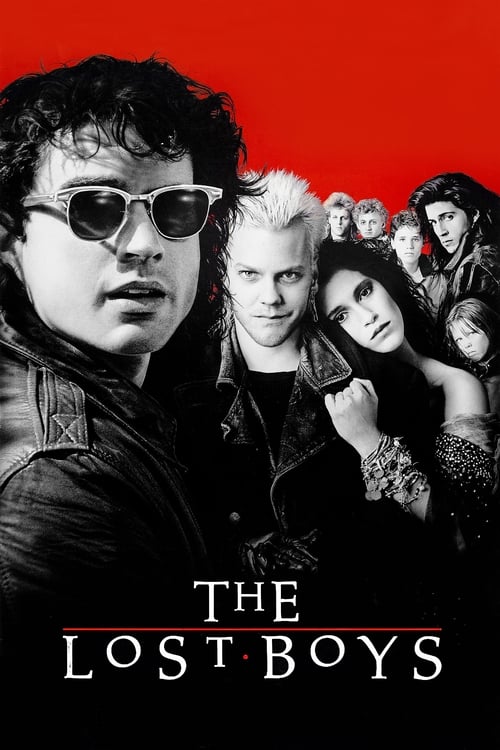
The Lost Boys
When an unsuspecting town newcomer is drawn to local blood fiends, the Frog brothers and other unlikely heroes gear up to rescue him.
Despite its tight budget of $8.5M, The Lost Boys became a financial success, earning $32.2M worldwide—a 279% return. The film's distinctive approach engaged audiences, illustrating how strong storytelling can transcend budget limitations.
3 wins & 5 nominations


Plot Structure
Story beats plotted across runtime


Narrative Arc
Emotional journey through the story's key moments
Story Circle
Blueprint 15-beat structure
Arcplot Score Breakdown
Weighted: Precision (70%) + Arc (15%) + Theme (15%)
The Lost Boys (1987) showcases carefully calibrated story structure, characteristic of Joel Schumacher's storytelling approach. This structural analysis examines how the film's 15-point plot structure maps to proven narrative frameworks across 1 hour and 37 minutes. With an Arcplot score of 7.0, the film balances conventional beats with creative variation.
Structural Analysis
The Status Quo at 1 minutes (1% through the runtime) establishes The Emerson family arrives in Santa Carla, driving past the welcome sign that reveals "Murder Capital of the World" on the back. Michael and Sam are uprooted teenagers following their divorced mother Lucy to live with eccentric Grandpa.. Significantly, this early placement immediately immerses viewers in the story world.
The inciting incident occurs at 12 minutes when Michael becomes entranced by Star at the boardwalk concert and follows her, leading him directly to David and his gang of vampires. This chance encounter with the supernatural disrupts his ordinary teenage existence and sets him on a dangerous path.. At 12% through the film, this Disruption aligns precisely with traditional story structure. This beat shifts the emotional landscape, launching the protagonist into the central conflict.
The First Threshold at 24 minutes marks the transition into Act II, occurring at 25% of the runtime. This shows the protagonist's commitment to In the underground cave lair, Michael drinks from the jeweled bottle that David offers, believing it to be wine. "You're one of us now, Michael." He has unknowingly crossed into the vampire world—an irreversible choice that begins his transformation., moving from reaction to action.
At 49 minutes, the Midpoint arrives at 50% of the runtime—precisely centered, creating perfect narrative symmetry. Notably, this crucial beat Michael witnesses David and the gang's brutal feeding frenzy on the beach bonfire victims, confirming the horrific reality of what he's becoming. This false defeat moment shatters any illusion that being a vampire could be cool—it's murder. Michael must now actively fight his transformation., fundamentally raising what's at risk. The emotional intensity shifts, dividing the narrative into clear before-and-after phases.
The Collapse moment at 73 minutes (75% through) represents the emotional nadir. Here, The Frog Brothers and Sam stake what they believe is the head vampire, but Michael doesn't revert. They were wrong—the head vampire still lives. Michael is running out of time, Star and Laddie are still trapped, and the gang knows they've been attacked. All hope of an easy solution dies., shows the protagonist at their lowest point. This beat's placement in the final quarter sets up the climactic reversal.
The Second Threshold at 78 minutes initiates the final act resolution at 80% of the runtime. Michael makes the conscious choice to stand with his family against David and the vampires, fully embracing his human side despite his vampire urges. He will fight the gang rather than join them—choosing family bonds over the seductive belonging David offered., demonstrating the transformation achieved throughout the journey.
Emotional Journey
The Lost Boys's emotional architecture traces a deliberate progression across 15 carefully calibrated beats.
Narrative Framework
This structural analysis employs proven narrative structure principles that track dramatic progression. By mapping The Lost Boys against these established plot points, we can identify how Joel Schumacher utilizes or subverts traditional narrative conventions. The plot point approach reveals not only adherence to structural principles but also creative choices that distinguish The Lost Boys within the horror genre.
Joel Schumacher's Structural Approach
Among the 17 Joel Schumacher films analyzed on Arcplot, the average structural score is 7.0, reflecting strong command of classical structure. The Lost Boys takes a more unconventional approach compared to the director's typical style. For comparative analysis, explore the complete Joel Schumacher filmography.
Comparative Analysis
Additional horror films include Thinner, A Nightmare on Elm Street and Mary Reilly. For more Joel Schumacher analyses, see Batman Forever, The Phantom of the Opera and Trespass.
Plot Points by Act
Act I
SetupStatus Quo
The Emerson family arrives in Santa Carla, driving past the welcome sign that reveals "Murder Capital of the World" on the back. Michael and Sam are uprooted teenagers following their divorced mother Lucy to live with eccentric Grandpa.
Theme
Grandpa tells the boys about Santa Carla: "If all the corpses buried around here were to stand up all at once, we'd have one hell of a population problem." The theme of hidden danger beneath surface charm—and the seductive pull of darkness—is introduced.
Worldbuilding
The family settles into Grandpa's quirky taxidermy-filled house. Michael and Sam explore the Santa Carla boardwalk, establishing the vibrant but dangerous beach town atmosphere. Sam meets the Frog Brothers at the comic shop, who warn him about vampires. Michael first spots the mysterious Star.
Disruption
Michael becomes entranced by Star at the boardwalk concert and follows her, leading him directly to David and his gang of vampires. This chance encounter with the supernatural disrupts his ordinary teenage existence and sets him on a dangerous path.
Resistance
Michael is drawn deeper into David's world, torn between attraction to Star and wariness of the gang. David challenges and tests Michael with dangerous motorcycle stunts near cliff edges. Meanwhile, Sam receives vampire comics and warnings from the Frog Brothers, establishing the rules of the supernatural world.
Act II
ConfrontationFirst Threshold
In the underground cave lair, Michael drinks from the jeweled bottle that David offers, believing it to be wine. "You're one of us now, Michael." He has unknowingly crossed into the vampire world—an irreversible choice that begins his transformation.
Mirror World
Star reveals to Michael that she too is a half-vampire, trapped between worlds. She represents the possibility of redemption and the thematic counterpoint—someone who resisted fully turning. Their connection offers Michael hope that transformation isn't inevitable.
Premise
Michael experiences vampire powers—flying, superhuman strength, heightened senses—while struggling with bloodlust. He sleeps all day, can't see his reflection, and nearly attacks Sam. The Frog Brothers become convinced Michael is turning. The fun and horror of vampire mythology plays out as Michael navigates his new half-vampire existence.
Midpoint
Michael witnesses David and the gang's brutal feeding frenzy on the beach bonfire victims, confirming the horrific reality of what he's becoming. This false defeat moment shatters any illusion that being a vampire could be cool—it's murder. Michael must now actively fight his transformation.
Opposition
Michael's condition worsens as his vampire nature strengthens. David pressures Michael to make his first kill to complete the transformation. Sam and the Frog Brothers research how to save Michael—they must kill the head vampire. Lucy begins dating Max, unknowingly bringing danger closer. The family unit fractures under supernatural strain.
Collapse
The Frog Brothers and Sam stake what they believe is the head vampire, but Michael doesn't revert. They were wrong—the head vampire still lives. Michael is running out of time, Star and Laddie are still trapped, and the gang knows they've been attacked. All hope of an easy solution dies.
Crisis
The survivors regroup at Grandpa's house, fortifying it against the coming vampire assault. Michael struggles against his bloodlust while preparing to defend his family. The dark night before the final battle—uncertain if they can survive or if Michael can be saved.
Act III
ResolutionSecond Threshold
Michael makes the conscious choice to stand with his family against David and the vampires, fully embracing his human side despite his vampire urges. He will fight the gang rather than join them—choosing family bonds over the seductive belonging David offered.
Synthesis
The vampires attack Grandpa's house in a spectacular battle. The Frog Brothers, Sam, and Michael use holy water, stakes, and sunlight to destroy the gang one by one. David and Michael fight—Michael impales David on antlers. When Max reveals himself as the true head vampire and threatens Lucy, Grandpa crashes through the wall with his Jeep, staking Max and freeing all the half-vampires.
Transformation
Michael, Star, and Laddie are restored to humanity as Max dies. The family stands together in the destroyed house—battered but united. Grandpa casually grabs a root beer and delivers the iconic line: "One thing about living in Santa Carla I never could stomach... all the damn vampires." Family triumphs over darkness.