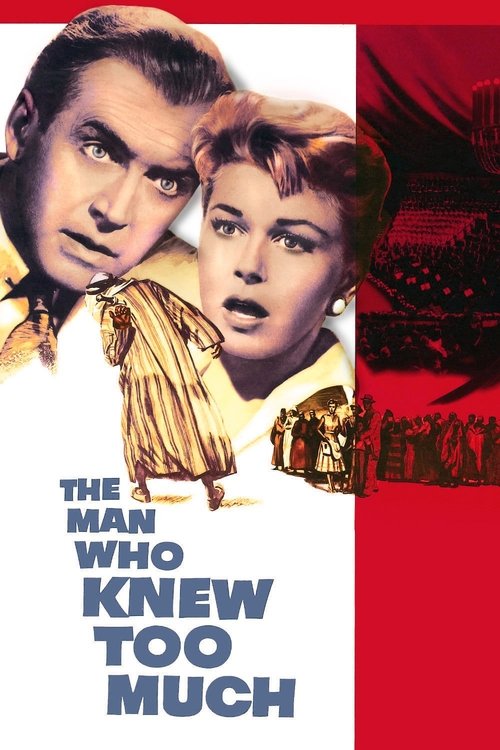
The Man Who Knew Too Much
An American doctor and his wife, a former singing star, witness a murder while vacationing in Morocco, and are drawn into a twisting plot of international intrigue when their young son is kidnapped.
Despite its modest budget of $1.2M, The Man Who Knew Too Much became a commercial juggernaut, earning $11.3M worldwide—a remarkable 842% return. The film's unconventional structure attracted moviegoers, proving that strong storytelling can transcend budget limitations.
1 Oscar. 3 wins & 4 nominations


Plot Structure
Story beats plotted across runtime


Narrative Arc
Emotional journey through the story's key moments
Story Circle
Blueprint 15-beat structure
Arcplot Score Breakdown
Weighted: Precision (70%) + Arc (15%) + Theme (15%)
The Man Who Knew Too Much (1956) showcases precise plot construction, characteristic of Alfred Hitchcock's storytelling approach. This structural analysis examines how the film's 15-point plot structure maps to proven narrative frameworks across 2 hours. With an Arcplot score of 7.3, the film balances conventional beats with creative variation.
Structural Analysis
The Status Quo at 1 minutes (1% through the runtime) establishes The McKenna family - Dr. Ben, his wife Jo, and son Hank - arrive in Marrakesh on vacation, establishing their happy American tourist status and close family bond.. Significantly, this early placement immediately immerses viewers in the story world.
The inciting incident occurs at 14 minutes when Louis Bernard is stabbed in the marketplace and dies in Ben's arms, whispering crucial information about an assassination plot in London involving "Ambrose Chapel.".. At 12% through the film, this Disruption aligns precisely with traditional story structure. This beat shifts the emotional landscape, launching the protagonist into the central conflict.
The First Threshold at 29 minutes marks the transition into Act II, occurring at 24% of the runtime. This reveals the protagonist's commitment to Ben and Jo decide to travel to London themselves to find their son, actively choosing to enter the dangerous world of international espionage rather than wait helplessly., moving from reaction to action.
At 61 minutes, the Midpoint arrives at 51% of the runtime—precisely centered, creating perfect narrative symmetry. Significantly, this crucial beat The McKennas discover Ambrose Chapel is not a person but a place - a church where the assassins are hiding. False victory: they know where to go, but the assassination attempt at Royal Albert Hall is imminent., fundamentally raising what's at risk. The emotional intensity shifts, dividing the narrative into clear before-and-after phases.
The Collapse moment at 90 minutes (75% through) represents the emotional nadir. Here, After Jo's scream disrupts the assassination, the conspirators escape with Hank still missing. The McKennas are questioned by police, seeming no closer to recovering their son despite preventing the murder., shows the protagonist at their lowest point. This beat's placement in the final quarter sets up the climactic reversal.
The Second Threshold at 96 minutes initiates the final act resolution at 80% of the runtime. The Prime Minister invites Jo to sing at the embassy - Ben realizes this is their chance to infiltrate the conspirators' location. They synthesize their knowledge: Jo's fame as a performer gives them access., demonstrating the transformation achieved throughout the journey.
Emotional Journey
The Man Who Knew Too Much's emotional architecture traces a deliberate progression across 15 carefully calibrated beats.
Narrative Framework
This structural analysis employs a 15-point narrative structure framework that maps key story moments. By mapping The Man Who Knew Too Much against these established plot points, we can identify how Alfred Hitchcock utilizes or subverts traditional narrative conventions. The plot point approach reveals not only adherence to structural principles but also creative choices that distinguish The Man Who Knew Too Much within the thriller genre.
Alfred Hitchcock's Structural Approach
Among the 20 Alfred Hitchcock films analyzed on Arcplot, the average structural score is 6.6, demonstrating varied approaches to story architecture. The Man Who Knew Too Much represents one of the director's most structurally precise works. For comparative analysis, explore the complete Alfred Hitchcock filmography.
Comparative Analysis
Additional thriller films include The Warriors, Thunderball and Rustom. For more Alfred Hitchcock analyses, see Family Plot, The Birds and Vertigo.
Plot Points by Act
Act I
SetupStatus Quo
The McKenna family - Dr. Ben, his wife Jo, and son Hank - arrive in Marrakesh on vacation, establishing their happy American tourist status and close family bond.
Theme
Louis Bernard cryptically warns Ben that "a single man who knows too much" is dangerous, foreshadowing the central conflict between knowledge and safety.
Worldbuilding
Introduction to the exotic Moroccan setting, the McKenna family dynamics, mysterious Frenchman Louis Bernard, and friendly British couple the Draytons. Ben is an ordinary doctor seeking simple vacation pleasures.
Disruption
Louis Bernard is stabbed in the marketplace and dies in Ben's arms, whispering crucial information about an assassination plot in London involving "Ambrose Chapel."
Resistance
Ben grapples with whether to tell authorities about the assassination plot. The Draytons reveal themselves as spies and kidnap Hank to ensure the McKennas' silence. Ben receives a phone call warning him not to interfere.
Act II
ConfrontationFirst Threshold
Ben and Jo decide to travel to London themselves to find their son, actively choosing to enter the dangerous world of international espionage rather than wait helplessly.
Mirror World
Ben and Jo meet with British Intelligence inspector Buchanan, establishing the thematic relationship between institutional authority and individual parental determination.
Premise
The McKennas navigate London searching for clues about "Ambrose Chapel," encountering red herrings, investigating a taxidermy shop, and experiencing the suspense and danger of amateur sleuthing in unfamiliar territory.
Midpoint
The McKennas discover Ambrose Chapel is not a person but a place - a church where the assassins are hiding. False victory: they know where to go, but the assassination attempt at Royal Albert Hall is imminent.
Opposition
Jo must choose between saving a foreign dignitary and finding her son. The famous Albert Hall sequence builds unbearable tension as Jo spots the assassin while the orchestra plays. Stakes escalate as the McKennas get closer to the truth but remain separated from Hank.
Collapse
After Jo's scream disrupts the assassination, the conspirators escape with Hank still missing. The McKennas are questioned by police, seeming no closer to recovering their son despite preventing the murder.
Crisis
Ben and Jo face their darkest emotional moment, exhausted and uncertain if they'll ever see Hank again. Jo struggles with guilt and despair.
Act III
ResolutionSecond Threshold
The Prime Minister invites Jo to sing at the embassy - Ben realizes this is their chance to infiltrate the conspirators' location. They synthesize their knowledge: Jo's fame as a performer gives them access.
Synthesis
Jo performs "Que Sera Sera" at the embassy, using the song to signal Hank. Ben searches the building, confronts the Draytons, and rescues Hank. Final confrontation as the conspirators are defeated and the family reunited.
Transformation
The McKenna family returns home together, transformed from naive tourists into survivors who proved parental love and courage triumph over sinister forces. The family bond is stronger, tested by fire.