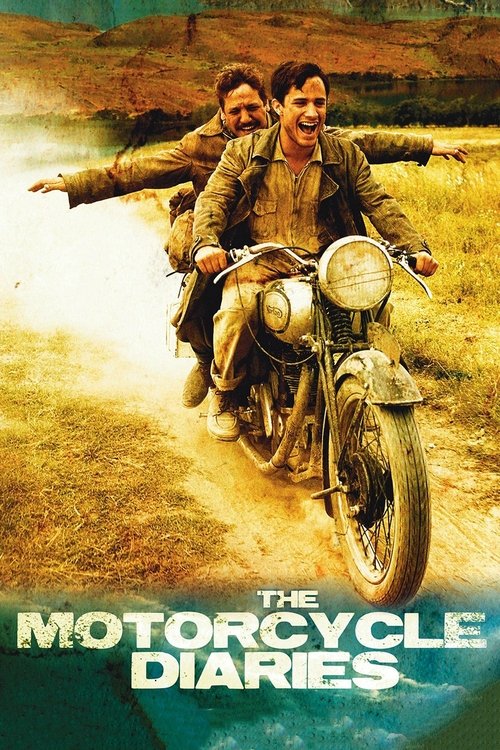
The Motorcycle Diaries
Based on the journals of Che Guevara, leader of the Cuban Revolution. In his memoirs, Guevara recounts adventures he and best friend Alberto Granado had while crossing South America by motorcycle in the early 1950s.
The film earned $57.7M at the global box office.
1 Oscar. 36 wins & 49 nominations


Plot Structure
Story beats plotted across runtime


Narrative Arc
Emotional journey through the story's key moments
Story Circle
Blueprint 15-beat structure
Arcplot Score Breakdown
Weighted: Precision (70%) + Arc (15%) + Theme (15%)
The Motorcycle Diaries (2004) showcases deliberately positioned narrative design, characteristic of Walter Salles's storytelling approach. This structural analysis examines how the film's 15-point plot structure maps to proven narrative frameworks across 2 hours and 6 minutes. With an Arcplot score of 7.6, the film showcases strong structural fundamentals.
Structural Analysis
The Status Quo at 2 minutes (2% through the runtime) establishes Ernesto "Fuser" Guevara, a privileged medical student in Buenos Aires, celebrates his 24th birthday surrounded by family and his girlfriend Chichina. He lives comfortably in bourgeois society, focused on personal ambitions and romantic pursuits.. Notably, this early placement immediately immerses viewers in the story world.
The inciting incident occurs at 16 minutes when Ernesto and Alberto depart Buenos Aires on their motorcycle journey. They leave behind comfort, family, and Chichina (who gives Ernesto her bracelet). The catalyst is their choice to embark on this journey, disrupting the status quo of privileged safety.. At 13% through the film, this Disruption is delayed, allowing extended setup of the story world. This beat shifts the emotional landscape, launching the protagonist into the central conflict.
The First Threshold at 32 minutes marks the transition into Act II, occurring at 25% of the runtime. This demonstrates the protagonist's commitment to La Poderosa (the motorcycle) breaks down irreparably in the Chilean desert. Forced to continue on foot and by hitchhiking, they lose their last vestige of privilege and comfort. This mechanical failure represents their irrevocable entry into the lives of South America's poor—they must now travel as the dispossessed do., moving from reaction to action.
At 63 minutes, the Midpoint arrives at 50% of the runtime—precisely centered, creating perfect narrative symmetry. Structural examination shows that this crucial beat At Machu Picchu, Ernesto has a moment of awakening. Surrounded by the ruins of indigenous civilization destroyed by Spanish conquest, he begins to understand the historical and ongoing exploitation of Latin America's people. The false victory of "adventure tourism" ends; the real transformation begins. Stakes raised—this is now a political awakening., fundamentally raising what's at risk. The emotional intensity shifts, dividing the narrative into clear before-and-after phases.
The Collapse moment at 95 minutes (75% through) represents the emotional nadir. Here, Ernesto realizes he cannot return to his old life. Chichina's bracelet—symbol of his privileged past and personal romantic dreams—is gone, lost or discarded. The death of his former self and former ambitions. He sees that personal success means nothing when millions suffer., demonstrates the protagonist at their lowest point. This beat's placement in the final quarter sets up the climactic reversal.
The Second Threshold at 105 minutes initiates the final act resolution at 83% of the runtime. Ernesto swims across the Amazon River on his birthday, symbolically crossing from the side of privilege and separation to unite with the leper patients. This dangerous swim represents his synthesis—combining his medical skills with revolutionary consciousness. He chooses solidarity with the oppressed over safety and convention., demonstrating the transformation achieved throughout the journey.
Emotional Journey
The Motorcycle Diaries's emotional architecture traces a deliberate progression across 15 carefully calibrated beats.
Narrative Framework
This structural analysis employs a 15-point narrative structure framework that maps key story moments. By mapping The Motorcycle Diaries against these established plot points, we can identify how Walter Salles utilizes or subverts traditional narrative conventions. The plot point approach reveals not only adherence to structural principles but also creative choices that distinguish The Motorcycle Diaries within the drama genre.
Walter Salles's Structural Approach
Among the 6 Walter Salles films analyzed on Arcplot, the average structural score is 7.2, reflecting strong command of classical structure. The Motorcycle Diaries represents one of the director's most structurally precise works. For comparative analysis, explore the complete Walter Salles filmography.
Comparative Analysis
Additional drama films include After Thomas, South Pacific and Dirty Dancing: Havana Nights. For more Walter Salles analyses, see On the Road, Central Station and Central Station.
Plot Points by Act
Act I
SetupStatus Quo
Ernesto "Fuser" Guevara, a privileged medical student in Buenos Aires, celebrates his 24th birthday surrounded by family and his girlfriend Chichina. He lives comfortably in bourgeois society, focused on personal ambitions and romantic pursuits.
Theme
Alberto Granado tells Ernesto about the need to see beyond their comfortable bubble: "We're going to discover a new world." This journey will reveal the social inequalities of Latin America and challenge Ernesto's worldview.
Worldbuilding
Setup of Ernesto's comfortable life in Buenos Aires, his relationship with Chichina, his medical studies, and his friendship with biochemist Alberto. They plan a motorcycle journey across South America on Alberto's aging Norton 500 ("La Poderosa"). The world of privilege and academic ambition is established.
Disruption
Ernesto and Alberto depart Buenos Aires on their motorcycle journey. They leave behind comfort, family, and Chichina (who gives Ernesto her bracelet). The catalyst is their choice to embark on this journey, disrupting the status quo of privileged safety.
Resistance
Early adventures through Argentina toward Chile. Initial "fun" road trip phase with comic mishaps, parties, and romantic encounters. They debate their purpose, encounter early glimpses of poverty, but still view the journey as adventure tourism. The motorcycle still works, maintaining connection to their privileged world.
Act II
ConfrontationFirst Threshold
La Poderosa (the motorcycle) breaks down irreparably in the Chilean desert. Forced to continue on foot and by hitchhiking, they lose their last vestige of privilege and comfort. This mechanical failure represents their irrevocable entry into the lives of South America's poor—they must now travel as the dispossessed do.
Mirror World
Encounter with the communist couple evicted from their land, traveling in search of work. These displaced miners represent the thematic heart of the film—social injustice and the exploitation of indigenous and working-class people. They share their meager food despite having nothing, teaching solidarity.
Premise
The "promise of the premise"—traveling through Chile and Peru, witnessing poverty, meeting indigenous peoples, visiting Machu Picchu, working at the leper colony. Ernesto begins seeing social inequalities but still maintains some emotional distance. Growing awareness through direct experience with the dispossessed.
Midpoint
At Machu Picchu, Ernesto has a moment of awakening. Surrounded by the ruins of indigenous civilization destroyed by Spanish conquest, he begins to understand the historical and ongoing exploitation of Latin America's people. The false victory of "adventure tourism" ends; the real transformation begins. Stakes raised—this is now a political awakening.
Opposition
At the San Pablo leper colony in Peru, Ernesto works directly with the sick and marginalized. He confronts the segregation between healthy staff and sick patients across the Amazon River. His growing political consciousness creates tension with authority figures who want to maintain social divisions. Alberto remains more pragmatic while Ernesto radicalizes.
Collapse
Ernesto realizes he cannot return to his old life. Chichina's bracelet—symbol of his privileged past and personal romantic dreams—is gone, lost or discarded. The death of his former self and former ambitions. He sees that personal success means nothing when millions suffer.
Crisis
Ernesto wrestles with what his newfound awareness means. On his birthday at the leper colony, he reflects on how much he has changed. The emotional weight of all he has witnessed—poverty, disease, exploitation, indigenous suffering—settles on him. He must decide who he will become.
Act III
ResolutionSecond Threshold
Ernesto swims across the Amazon River on his birthday, symbolically crossing from the side of privilege and separation to unite with the leper patients. This dangerous swim represents his synthesis—combining his medical skills with revolutionary consciousness. He chooses solidarity with the oppressed over safety and convention.
Synthesis
Ernesto gives his famous speech at the leper colony about a unified Latin America without borders. He and Alberto complete their journey through Venezuela and part ways. Ernesto returns home transformed, no longer the bourgeois medical student but someone committed to revolutionary change. The finale resolves his character arc.
Transformation
Closing images show the real photographs of the journey, followed by text revealing Ernesto became "Che" Guevara. The young man who left seeking adventure returns as a revolutionary. The mirror of the Status Quo—he began privileged and apolitical; he ends awakened to injustice and committed to fighting it.