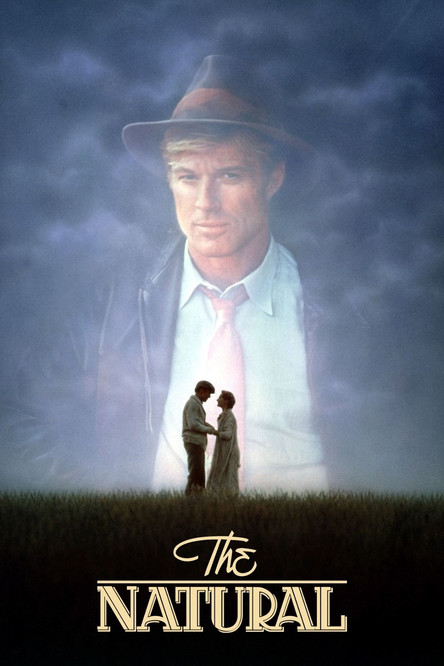
The Natural
An unknown middle-aged batter named Roy Hobbs with a mysterious past appears out of nowhere to take a losing 1930s baseball team to the top of the league.
Working with a mid-range budget of $28.0M, the film achieved a respectable showing with $48.0M in global revenue (+71% profit margin).
Nominated for 4 Oscars. 3 wins & 8 nominations


Plot Structure
Story beats plotted across runtime


Narrative Arc
Emotional journey through the story's key moments
Story Circle
Blueprint 15-beat structure
Arcplot Score Breakdown
Weighted: Precision (70%) + Arc (15%) + Theme (15%)
The Natural (1984) showcases strategically placed narrative design, characteristic of Barry Levinson's storytelling approach. This structural analysis examines how the film's 15-point plot structure maps to proven narrative frameworks across 2 hours and 17 minutes. With an Arcplot score of 7.4, the film balances conventional beats with creative variation.
Structural Analysis
The Status Quo at 2 minutes (1% through the runtime) establishes Young Roy Hobbs plays catch with his father under a tree, demonstrating his natural pitching talent. His father collapses and dies, and lightning strikes the tree. Roy crafts a bat from the wood, naming it "Wonderboy" - establishing his pure, God-given talent and destiny.. Significantly, this early placement immediately immerses viewers in the story world.
The inciting incident occurs at 16 minutes when Harriet Bird shoots Roy in her hotel room, seemingly without motive. Roy collapses, his dreams destroyed. This violent disruption ends his youth and derails his destined path to greatness. Sixteen years of his life are stolen.. At 12% through the film, this Disruption aligns precisely with traditional story structure. This beat shifts the emotional landscape, launching the protagonist into the central conflict.
The First Threshold at 33 minutes marks the transition into Act II, occurring at 24% of the runtime. This demonstrates the protagonist's commitment to Roy finally gets his chance when Pop Fisher puts him in as a pinch hitter out of desperation. Roy retrieves Wonderboy from his case and steps up to the plate. He crushes a home run, shattering the clock on the scoreboard. Roy actively chooses to reveal his talent and enter the world of professional baseball., moving from reaction to action.
At 70 minutes, the Midpoint arrives at 51% of the runtime—precisely centered, creating perfect narrative symmetry. Of particular interest, this crucial beat Roy leads the Knights to first place. He appears on magazine covers as the hero of baseball. The Judge (team owner) and his associate Gus Sands realize Roy threatens their plan to keep the team losing so they can buy it cheap from Pop Fisher. False victory: Roy seems unstoppable, but corrupt forces are aligning against him. Stakes raise., fundamentally raising what's at risk. The emotional intensity shifts, dividing the narrative into clear before-and-after phases.
The Collapse moment at 102 minutes (75% through) represents the emotional nadir. Here, Roy collapses during a game, bleeding internally from the bullet still lodged near his stomach from Harriet's shooting. He's rushed to the hospital where doctors tell him he can never play again or he'll die. His dream dies. Whiff of death: the old wound (his past mistake) literally threatens to kill him. All seems lost., shows the protagonist at their lowest point. This beat's placement in the final quarter sets up the climactic reversal.
The Second Threshold at 108 minutes initiates the final act resolution at 79% of the runtime. Roy meets Iris and learns about his son. She tells him "I believe we have two lives - the life we learn with and the life we live after that." This synthesis gives Roy clarity: he can redeem his wasted years by playing for something bigger than personal glory - for his son, for Pop, for the game itself. He decides to play the final game despite the danger., demonstrating the transformation achieved throughout the journey.
Emotional Journey
The Natural's emotional architecture traces a deliberate progression across 15 carefully calibrated beats.
Narrative Framework
This structural analysis employs systematic plot point analysis that identifies crucial turning points. By mapping The Natural against these established plot points, we can identify how Barry Levinson utilizes or subverts traditional narrative conventions. The plot point approach reveals not only adherence to structural principles but also creative choices that distinguish The Natural within the drama genre.
Barry Levinson's Structural Approach
Among the 14 Barry Levinson films analyzed on Arcplot, the average structural score is 7.0, reflecting strong command of classical structure. The Natural represents one of the director's most structurally precise works. For comparative analysis, explore the complete Barry Levinson filmography.
Comparative Analysis
Additional drama films include After Thomas, South Pacific and Dirty Dancing: Havana Nights. For more Barry Levinson analyses, see Envy, Wag the Dog and Diner.
Plot Points by Act
Act I
SetupStatus Quo
Young Roy Hobbs plays catch with his father under a tree, demonstrating his natural pitching talent. His father collapses and dies, and lightning strikes the tree. Roy crafts a bat from the wood, naming it "Wonderboy" - establishing his pure, God-given talent and destiny.
Theme
On the train to Chicago for his tryout, sportswriter Max Mercy asks Roy about his ambitions. Roy says he wants people to say "there goes Roy Hobbs, the best there ever was in this game" - stating the theme of legacy, greatness, and what defines a hero.
Worldbuilding
Establishes 1920s America, Roy's small-town origins, his natural talent, and his journey to the big leagues. Introduces the baseball world, his girlfriend Iris, the mysterious woman in black (Harriet Bird), and the Whammer - the greatest hitter in baseball whom Roy strikes out, proving his exceptional ability.
Disruption
Harriet Bird shoots Roy in her hotel room, seemingly without motive. Roy collapses, his dreams destroyed. This violent disruption ends his youth and derails his destined path to greatness. Sixteen years of his life are stolen.
Resistance
The film jumps sixteen years to 1939. Roy, now 35, shows up as an unknown rookie for the last-place New York Knights. Manager Pop Fisher is skeptical and dismissive. Roy sits on the bench, watching and waiting, debating whether his second chance is real or if he's too old and broken to succeed.
Act II
ConfrontationFirst Threshold
Roy finally gets his chance when Pop Fisher puts him in as a pinch hitter out of desperation. Roy retrieves Wonderboy from his case and steps up to the plate. He crushes a home run, shattering the clock on the scoreboard. Roy actively chooses to reveal his talent and enter the world of professional baseball.
Mirror World
Roy sees Iris Gaines (his old girlfriend) in the stands, wearing white, standing up when everyone else sits - a visual opposite to Harriet Bird. She represents purity, redemption, and authentic love versus corruption. This subplot will carry the theme of choosing between pure talent and corrupting influences.
Premise
The promise of the premise: Roy Hobbs becomes the greatest player in baseball. He goes on an incredible hitting streak, leading the Knights from last place toward the pennant. We see the joy of his natural talent unleashed - spectacular catches, towering home runs, and the crowd's adoration. Pop Fisher becomes a believer.
Midpoint
Roy leads the Knights to first place. He appears on magazine covers as the hero of baseball. The Judge (team owner) and his associate Gus Sands realize Roy threatens their plan to keep the team losing so they can buy it cheap from Pop Fisher. False victory: Roy seems unstoppable, but corrupt forces are aligning against him. Stakes raise.
Opposition
The bad guys close in. The Judge sends Memo Paris (his niece) to seduce and distract Roy. She represents corruption and materialism - the opposite of Iris. Roy begins living extravagantly, staying out late, eating badly. His performance suffers. Max Mercy investigates Roy's mysterious past. The Judge offers Roy a bribe to throw games.
Collapse
Roy collapses during a game, bleeding internally from the bullet still lodged near his stomach from Harriet's shooting. He's rushed to the hospital where doctors tell him he can never play again or he'll die. His dream dies. Whiff of death: the old wound (his past mistake) literally threatens to kill him. All seems lost.
Crisis
Roy lies in the hospital in darkness, facing his mortality and failure. Pop Fisher loses hope. The team falls apart without Roy. Roy receives a letter from Iris revealing she has a son - his son - from their brief time together sixteen years ago. Roy contemplates what legacy means beyond personal glory.
Act III
ResolutionSecond Threshold
Roy meets Iris and learns about his son. She tells him "I believe we have two lives - the life we learn with and the life we live after that." This synthesis gives Roy clarity: he can redeem his wasted years by playing for something bigger than personal glory - for his son, for Pop, for the game itself. He decides to play the final game despite the danger.
Synthesis
The finale: Roy returns for the championship game. The Judge sends Memo to deliver the bribe money, but Roy throws it back. He struggles at the plate as his wound bleeds. Wonderboy breaks. A bat boy brings him a replacement. With two strikes, Roy hits the game-winning home run that explodes the stadium lights in a shower of sparks - choosing redemption over corruption.
Transformation
Final image mirrors the opening: Roy plays catch with his son in a golden field, the same way he played with his father. But now he's transformed - no longer seeking personal glory but passing on the gift to the next generation. He found redemption and true legacy through sacrifice and choosing love over corruption.