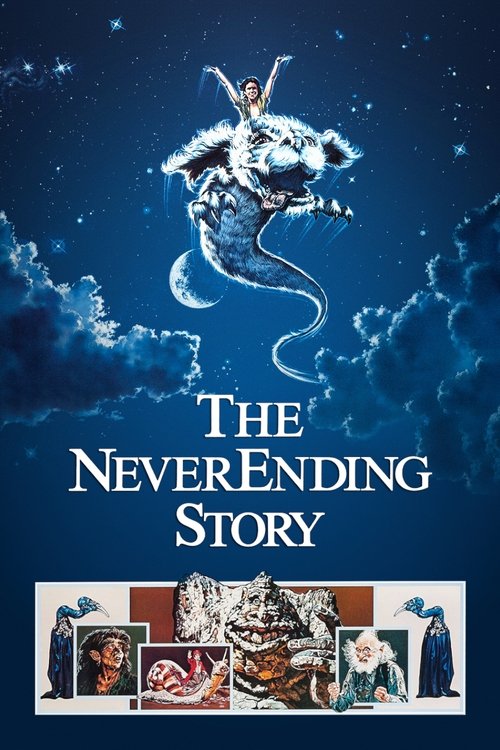
The NeverEnding Story
While hiding from bullies in his school's attic, a young boy discovers the extraordinary land of Fantasia, through a magical book called The Neverending Story. The book tells the tale of Atreyu, a young warrior who, with the help of a luck dragon named Falkor, must save Fantasia from the destruction of The Nothing.
The film disappointed at the box office against its mid-range budget of $27.0M, earning $20.2M globally (-25% loss). While initial box office returns were modest, the film has gained appreciation for its innovative storytelling within the adventure genre.
6 wins & 9 nominations


Plot Structure
Story beats plotted across runtime


Narrative Arc
Emotional journey through the story's key moments
Story Circle
Blueprint 15-beat structure
Arcplot Score Breakdown
Weighted: Precision (70%) + Arc (15%) + Theme (15%)
The NeverEnding Story (1984) demonstrates deliberately positioned narrative architecture, characteristic of Wolfgang Petersen's storytelling approach. This structural analysis examines how the film's 15-point plot structure maps to proven narrative frameworks across 1 hour and 37 minutes. With an Arcplot score of 6.7, the film balances conventional beats with creative variation.
Structural Analysis
The Status Quo at 1 minutes (1% through the runtime) establishes Bastian wakes from a nightmare about his deceased mother, revealing a grieving boy who has retreated into books to escape his pain. His father dismisses his dreams, urging him to keep his feet on the ground.. The analysis reveals that this early placement immediately immerses viewers in the story world.
The inciting incident occurs at 11 minutes when Bastian steals "The NeverEnding Story" from Mr. Koreander's shop after being warned that this book is "not safe." The mysterious tome calls to him irresistibly, disrupting his mundane existence.. At 12% through the film, this Disruption aligns precisely with traditional story structure. This beat shifts the emotional landscape, launching the protagonist into the central conflict.
The First Threshold at 23 minutes marks the transition into Act II, occurring at 23% of the runtime. This shows the protagonist's commitment to Atreyu accepts the quest to find a cure for the Empress, departing on his horse Artax. Paralleling this, Bastian commits fully to the story, skipping school entirely—both heroes cross into their respective adventures., moving from reaction to action.
At 47 minutes, the Midpoint arrives at 49% of the runtime—precisely centered, creating perfect narrative symmetry. Notably, this crucial beat Atreyu passes through the Magic Mirror Gate and sees not himself but Bastian—the reader in the attic. Bastian screams in shock. The false defeat: the solution requires crossing the boundary between fiction and reality, which seems impossible., fundamentally raising what's at risk. The emotional intensity shifts, dividing the narrative into clear before-and-after phases.
The Collapse moment at 70 minutes (72% through) represents the emotional nadir. Here, Atreyu confronts Gmork in the ruins of Spook City. Gmork reveals the devastating truth: Fantasia represents human hopes and dreams, and the Nothing is winning because humans have stopped believing. Atreyu kills Gmork but is nearly consumed by the Nothing himself., indicates the protagonist at their lowest point. This beat's placement in the final quarter sets up the climactic reversal.
The Second Threshold at 77 minutes initiates the final act resolution at 80% of the runtime. The Childlike Empress speaks directly to Bastian, breaking the fourth wall: "He has suffered with you. He went through everything you went through." Bastian finally understands that HE is the human child who must save Fantasia—his imagination is the cure., demonstrating the transformation achieved throughout the journey.
Emotional Journey
The NeverEnding Story's emotional architecture traces a deliberate progression across 15 carefully calibrated beats.
Narrative Framework
This structural analysis employs proven narrative structure principles that track dramatic progression. By mapping The NeverEnding Story against these established plot points, we can identify how Wolfgang Petersen utilizes or subverts traditional narrative conventions. The plot point approach reveals not only adherence to structural principles but also creative choices that distinguish The NeverEnding Story within the adventure genre.
Wolfgang Petersen's Structural Approach
Among the 10 Wolfgang Petersen films analyzed on Arcplot, the average structural score is 6.8, demonstrating varied approaches to story architecture. The NeverEnding Story takes a more unconventional approach compared to the director's typical style. For comparative analysis, explore the complete Wolfgang Petersen filmography.
Comparative Analysis
Additional adventure films include The Black Stallion, The Bad Guys and Puss in Boots. For more Wolfgang Petersen analyses, see Troy, Outbreak and In the Line of Fire.
Plot Points by Act
Act I
SetupStatus Quo
Bastian wakes from a nightmare about his deceased mother, revealing a grieving boy who has retreated into books to escape his pain. His father dismisses his dreams, urging him to keep his feet on the ground.
Theme
Bastian's father tells him he needs to stop daydreaming and face reality: "We each have responsibilities... you can't go on like this." The story will ultimately argue the opposite—that imagination and stories are essential to confronting reality.
Worldbuilding
Bastian's ordinary world is established: a lonely boy grieving his mother, bullied at school, and disconnected from his pragmatic father. He escapes into Mr. Koreander's bookshop where he discovers "The NeverEnding Story."
Disruption
Bastian steals "The NeverEnding Story" from Mr. Koreander's shop after being warned that this book is "not safe." The mysterious tome calls to him irresistibly, disrupting his mundane existence.
Resistance
Bastian hides in the school attic and begins reading. We meet Fantasia: the Childlike Empress is dying, the Nothing is consuming the land, and young warrior Atreyu is summoned to find a cure. Bastian debates whether to keep reading or return to class.
Act II
ConfrontationFirst Threshold
Atreyu accepts the quest to find a cure for the Empress, departing on his horse Artax. Paralleling this, Bastian commits fully to the story, skipping school entirely—both heroes cross into their respective adventures.
Mirror World
Atreyu meets Morla the Ancient One in the Swamps of Sadness. More significantly, Bastian begins to realize the book seems aware of him—the Mirror World relationship between reader and story begins forming, carrying the theme of imagination's power.
Premise
The "promise of the premise" delivers fantasy adventure: Atreyu travels through the Swamps of Sadness (losing Artax), meets Morla, journeys to the Southern Oracle, passes the Sphinx Gate and Magic Mirror Gate, learning he must find a human child to save Fantasia.
Midpoint
Atreyu passes through the Magic Mirror Gate and sees not himself but Bastian—the reader in the attic. Bastian screams in shock. The false defeat: the solution requires crossing the boundary between fiction and reality, which seems impossible.
Opposition
The Nothing accelerates its destruction of Fantasia. Atreyu is rescued by Falkor the luckdragon but loses the AURYN. He discovers the Nothing is being created by human despair and lost dreams. Gmork the werewolf hunts him as an agent of the Nothing.
Collapse
Atreyu confronts Gmork in the ruins of Spook City. Gmork reveals the devastating truth: Fantasia represents human hopes and dreams, and the Nothing is winning because humans have stopped believing. Atreyu kills Gmork but is nearly consumed by the Nothing himself.
Crisis
Falkor rescues Atreyu from the void, but Fantasia is almost entirely destroyed. They arrive at the Ivory Tower to find only fragments of the world remain. Atreyu believes he has failed completely—there is nothing left to save.
Act III
ResolutionSecond Threshold
The Childlike Empress speaks directly to Bastian, breaking the fourth wall: "He has suffered with you. He went through everything you went through." Bastian finally understands that HE is the human child who must save Fantasia—his imagination is the cure.
Synthesis
Bastian shouts the Empress's new name—"Moon Child!"—into the storm. He meets the Empress in the void holding only a single grain of sand: the last remnant of Fantasia. She explains that with his wishes, Bastian can rebuild the entire world.
Transformation
Bastian rides Falkor through the rebuilt Fantasia, then into the real world. He chases down his bullies, who flee in terror. The grieving, isolated boy who denied imagination has transformed into a child empowered by the stories he once escaped into.