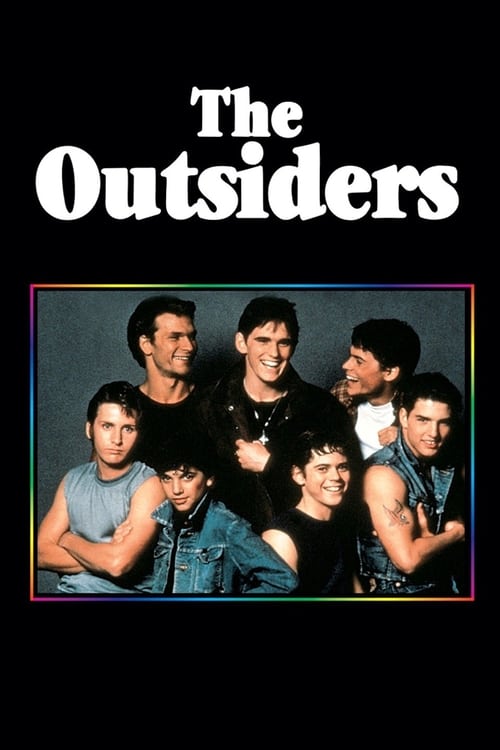
The Outsiders
In 1960s Tulsa, class divisions ignite a violent rivalry between the working-class Greasers and the privileged Socs. When a deadly encounter forces two Greasers, Ponyboy and Johnny, to flee, their struggle for survival and redemption exposes the fragile innocence and enduring bonds of youth on the wrong side of town.
Despite its small-scale budget of $10.0M, The Outsiders became a solid performer, earning $33.7M worldwide—a 237% return. The film's compelling narrative found its audience, proving that strong storytelling can transcend budget limitations.
1 win & 4 nominations


Plot Structure
Story beats plotted across runtime


Narrative Arc
Emotional journey through the story's key moments
Story Circle
Blueprint 15-beat structure
Arcplot Score Breakdown
Weighted: Precision (70%) + Arc (15%) + Theme (15%)
The Outsiders (1983) reveals precise story structure, characteristic of Francis Ford Coppola's storytelling approach. This structural analysis examines how the film's 15-point plot structure maps to proven narrative frameworks across 1 hour and 31 minutes. With an Arcplot score of 7.1, the film balances conventional beats with creative variation.
Structural Analysis
The Status Quo at 1 minutes (1% through the runtime) establishes Ponyboy walks alone from the movies, narrating his life as a Greaser in Tulsa. He's jumped by Socs, establishing the dangerous class divide that defines his world.. Structural examination shows that this early placement immediately immerses viewers in the story world.
The inciting incident occurs at 12 minutes when At the drive-in, Ponyboy and Johnny meet Cherry Valance and Marcia, Soc girls who treat them as equals. This encounter disrupts the rigid class boundaries and plants seeds for the coming tragedy.. At 13% through the film, this Disruption is delayed, allowing extended setup of the story world. This beat shifts the emotional landscape, launching the protagonist into the central conflict.
The First Threshold at 23 minutes marks the transition into Act II, occurring at 25% of the runtime. This illustrates the protagonist's commitment to Johnny kills Bob to save Ponyboy from being drowned. This irreversible act of violence forces both boys to flee, crossing the threshold into a fugitive existence. There's no going back to their old lives., moving from reaction to action.
At 44 minutes, the Midpoint arrives at 48% of the runtime—precisely centered, creating perfect narrative symmetry. The analysis reveals that this crucial beat The church catches fire with children trapped inside. Ponyboy and Johnny rush in to save them. Johnny is critically injured when burning timber falls on him - a false victory that becomes devastating defeat. Their heroism has come at terrible cost., fundamentally raising what's at risk. The emotional intensity shifts, dividing the narrative into clear before-and-after phases.
The Collapse moment at 67 minutes (74% through) represents the emotional nadir. Here, After the Greasers win the rumble, Ponyboy and Dally rush to Johnny's bedside. Johnny dies with his final words: "Stay gold, Ponyboy." His death destroys Dally, who loved Johnny like a brother., shows the protagonist at their lowest point. This beat's placement in the final quarter sets up the climactic reversal.
The Second Threshold at 73 minutes initiates the final act resolution at 80% of the runtime. Ponyboy finds Johnny's copy of "Gone with the Wind" with a letter inside. Johnny explains the meaning of "stay gold" - that Ponyboy should keep his sensitivity and wonder despite the harsh world. This message gives Ponyboy purpose., demonstrating the transformation achieved throughout the journey.
Emotional Journey
The Outsiders's emotional architecture traces a deliberate progression across 15 carefully calibrated beats.
Narrative Framework
This structural analysis employs systematic plot point analysis that identifies crucial turning points. By mapping The Outsiders against these established plot points, we can identify how Francis Ford Coppola utilizes or subverts traditional narrative conventions. The plot point approach reveals not only adherence to structural principles but also creative choices that distinguish The Outsiders within the crime genre.
Francis Ford Coppola's Structural Approach
Among the 16 Francis Ford Coppola films analyzed on Arcplot, the average structural score is 6.5, demonstrating varied approaches to story architecture. The Outsiders represents one of the director's most structurally precise works. For comparative analysis, explore the complete Francis Ford Coppola filmography.
Comparative Analysis
Additional crime films include The Bad Guys, Rustom and The Whole Ten Yards. For more Francis Ford Coppola analyses, see Apocalypse Now, The Conversation and The Godfather Part II.
Plot Points by Act
Act I
SetupStatus Quo
Ponyboy walks alone from the movies, narrating his life as a Greaser in Tulsa. He's jumped by Socs, establishing the dangerous class divide that defines his world.
Theme
Johnny tells Ponyboy about the time the Socs beat him badly, and the gang discusses how things are "rough all over." Cherry later echoes this theme, suggesting that pain and humanity exist on both sides of the class divide.
Worldbuilding
The Curtis brothers' household is established - Darry as strict guardian, Sodapop as mediator. The Greaser gang dynamics, their poverty, and the constant threat from wealthy Socs are revealed. Ponyboy and Johnny's close friendship is shown.
Disruption
At the drive-in, Ponyboy and Johnny meet Cherry Valance and Marcia, Soc girls who treat them as equals. This encounter disrupts the rigid class boundaries and plants seeds for the coming tragedy.
Resistance
Ponyboy connects with Cherry, who explains that Socs have their own problems. Tensions escalate when Bob and Randy confront them. Darry and Ponyboy fight, leading Ponyboy to run away with Johnny, setting up their fateful encounter.
Act II
ConfrontationFirst Threshold
Johnny kills Bob to save Ponyboy from being drowned. This irreversible act of violence forces both boys to flee, crossing the threshold into a fugitive existence. There's no going back to their old lives.
Mirror World
Ponyboy and Johnny hide in the abandoned church in Windrixville. Away from gang life, they read "Gone with the Wind," watch sunsets, and recite Robert Frost's "Nothing Gold Can Stay." Their friendship deepens in this isolated sanctuary.
Premise
Life in hiding at the church. The boys dye their hair, survive on baloney, and bond over literature and sunsets. Dally visits with news from home. Johnny decides they should turn themselves in, showing his moral growth.
Midpoint
The church catches fire with children trapped inside. Ponyboy and Johnny rush in to save them. Johnny is critically injured when burning timber falls on him - a false victory that becomes devastating defeat. Their heroism has come at terrible cost.
Opposition
Johnny lies dying in the hospital. The rumble between Greasers and Socs approaches. Ponyboy struggles with guilt and grief. Cherry helps as a spy. The gang prepares for the big fight while Johnny's condition worsens.
Collapse
After the Greasers win the rumble, Ponyboy and Dally rush to Johnny's bedside. Johnny dies with his final words: "Stay gold, Ponyboy." His death destroys Dally, who loved Johnny like a brother.
Crisis
Dally, broken by Johnny's death, robs a store and is gunned down by police in what amounts to suicide by cop. Ponyboy collapses, physically and emotionally. He's lost two friends in one night.
Act III
ResolutionSecond Threshold
Ponyboy finds Johnny's copy of "Gone with the Wind" with a letter inside. Johnny explains the meaning of "stay gold" - that Ponyboy should keep his sensitivity and wonder despite the harsh world. This message gives Ponyboy purpose.
Synthesis
Ponyboy recovers and returns to school. He must write a semester theme for English class. The court hearing clears him of wrongdoing. He reconciles with Darry, understanding his brother's love. He decides to tell his story.
Transformation
Ponyboy sits down to write his theme, beginning with the film's opening line: "When I stepped out into the bright sunlight from the darkness of the movie house..." He transforms tragedy into art, honoring Johnny's wish to "stay gold" by sharing their story with the world.