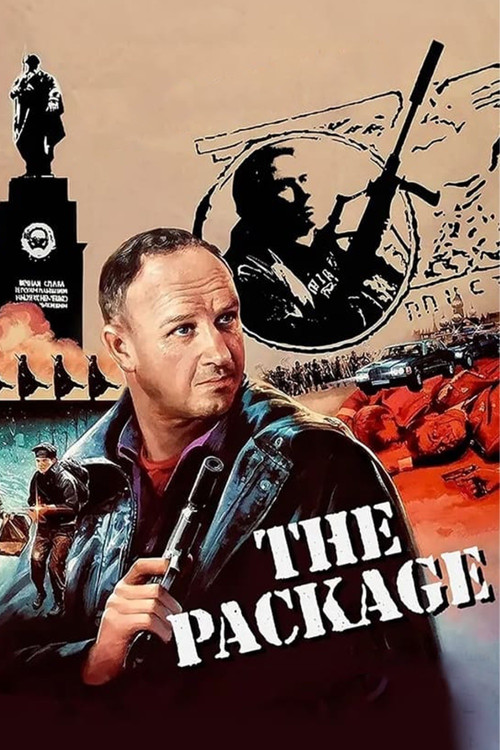
The Package
Experienced Green Beret sergeant Johnny Gallagher is escorting a prisoner, Airborne Ranger Thomas Boyette, back to the US, but Boyette escapes and Gallagher must risk life and limb to catch him.
The film disappointed at the box office against its respectable budget of $16.0M, earning $10.6M globally (-33% loss). While initial box office returns were modest, the film has gained appreciation for its unique voice within the crime genre.


Plot Structure
Story beats plotted across runtime


Narrative Arc
Emotional journey through the story's key moments
Story Circle
Blueprint 15-beat structure
Arcplot Score Breakdown
Weighted: Precision (70%) + Arc (15%) + Theme (15%)
The Package (1989) reveals carefully calibrated narrative design, characteristic of Andrew Davis's storytelling approach. This structural analysis examines how the film's 15-point plot structure maps to proven narrative frameworks across 1 hour and 48 minutes. With an Arcplot score of 6.8, the film balances conventional beats with creative variation.
Structural Analysis
The Status Quo at 1 minutes (1% through the runtime) establishes Sergeant Johnny Gallagher oversees security for US-Soviet arms negotiations in West Berlin, establishing him as a competent military professional operating within Cold War tensions.. The analysis reveals that this early placement immediately immerses viewers in the story world.
The inciting incident occurs at 13 minutes when An assassination attempt disrupts the negotiations, and Gallagher is blamed for a security breach. He's assigned to escort a military prisoner named Thomas Boyette back to the States as punishment duty.. At 12% through the film, this Disruption aligns precisely with traditional story structure. This beat shifts the emotional landscape, launching the protagonist into the central conflict.
The First Threshold at 27 minutes marks the transition into Act II, occurring at 25% of the runtime. This illustrates the protagonist's commitment to Boyette escapes during the transport to Washington. Gallagher makes the active choice to pursue him rather than simply report the escape and accept the career-ending consequences., moving from reaction to action.
At 54 minutes, the Midpoint arrives at 50% of the runtime—precisely centered, creating perfect narrative symmetry. Structural examination shows that this crucial beat Gallagher discovers the real Thomas Boyette is dead—the man he was transporting is actually Walter Henke, a professional assassin. The conspiracy is far deeper than a simple prisoner escape., fundamentally raising what's at risk. The emotional intensity shifts, dividing the narrative into clear before-and-after phases.
The Collapse moment at 81 minutes (75% through) represents the emotional nadir. Here, Gallagher's military contacts are killed, and Eileen is captured by the conspirators. He's completely alone, framed, and hunted—with no one in authority willing to believe him about the assassination plot., indicates the protagonist at their lowest point. This beat's placement in the final quarter sets up the climactic reversal.
The Second Threshold at 86 minutes initiates the final act resolution at 80% of the runtime. Gallagher pieces together that the target is the Soviet Premier visiting Chicago. He commits to stopping the assassination himself, finally synthesizing his military skills with his newfound distrust of authority., demonstrating the transformation achieved throughout the journey.
Emotional Journey
The Package's emotional architecture traces a deliberate progression across 15 carefully calibrated beats.
Narrative Framework
This structural analysis employs a 15-point narrative structure framework that maps key story moments. By mapping The Package against these established plot points, we can identify how Andrew Davis utilizes or subverts traditional narrative conventions. The plot point approach reveals not only adherence to structural principles but also creative choices that distinguish The Package within the crime genre.
Andrew Davis's Structural Approach
Among the 9 Andrew Davis films analyzed on Arcplot, the average structural score is 6.9, demonstrating varied approaches to story architecture. The Package takes a more unconventional approach compared to the director's typical style. For comparative analysis, explore the complete Andrew Davis filmography.
Comparative Analysis
Additional crime films include The Bad Guys, Rustom and The Whole Ten Yards. For more Andrew Davis analyses, see Code of Silence, Steal Big Steal Little and Chain Reaction.
Plot Points by Act
Act I
SetupStatus Quo
Sergeant Johnny Gallagher oversees security for US-Soviet arms negotiations in West Berlin, establishing him as a competent military professional operating within Cold War tensions.
Theme
A fellow soldier remarks about how the military brass makes decisions that the men on the ground have to live with, hinting at the theme of institutional corruption versus individual conscience.
Worldbuilding
The world of Cold War military operations is established: Gallagher's security detail in Berlin, the tensions between American and Soviet forces, and the political stakes of the disarmament talks.
Disruption
An assassination attempt disrupts the negotiations, and Gallagher is blamed for a security breach. He's assigned to escort a military prisoner named Thomas Boyette back to the States as punishment duty.
Resistance
Gallagher reluctantly accepts his escort assignment while questioning what really happened. He prepares to transport Boyette, unaware that his prisoner is not who he claims to be.
Act II
ConfrontationFirst Threshold
Boyette escapes during the transport to Washington. Gallagher makes the active choice to pursue him rather than simply report the escape and accept the career-ending consequences.
Mirror World
Gallagher contacts his ex-wife Eileen, who works in military intelligence. Their strained relationship becomes central as she represents both his personal failures and his pathway to uncovering the truth.
Premise
Gallagher investigates in Chicago, discovering Boyette isn't who he seems. Working with Eileen, he uncovers evidence of a conspiracy involving military personnel planning an assassination.
Midpoint
Gallagher discovers the real Thomas Boyette is dead—the man he was transporting is actually Walter Henke, a professional assassin. The conspiracy is far deeper than a simple prisoner escape.
Opposition
The conspirators become aware of Gallagher's investigation and move against him. He's hunted by both the assassins and corrupt military officials while racing to piece together the assassination plot.
Collapse
Gallagher's military contacts are killed, and Eileen is captured by the conspirators. He's completely alone, framed, and hunted—with no one in authority willing to believe him about the assassination plot.
Crisis
Gallagher faces the dark reality that the institutions he's served his entire life are corrupted. He must decide whether to flee or make a final stand alone against overwhelming odds.
Act III
ResolutionSecond Threshold
Gallagher pieces together that the target is the Soviet Premier visiting Chicago. He commits to stopping the assassination himself, finally synthesizing his military skills with his newfound distrust of authority.
Synthesis
Gallagher races to the summit location, confronts Henke and the conspirators in a tense finale. He manages to stop the assassination, rescue Eileen, and expose the conspiracy to legitimate authorities.
Transformation
Gallagher stands vindicated—no longer a blind soldier following orders but a man who trusted his own judgment. His reconciliation with Eileen suggests both personal and professional redemption.