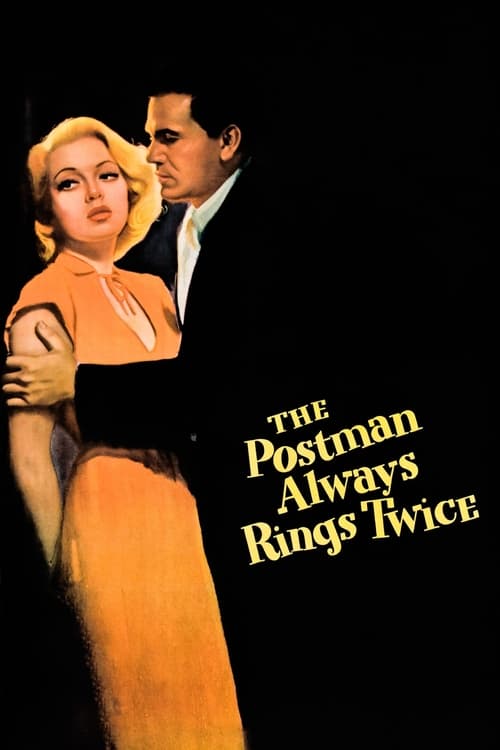
The Postman Always Rings Twice
A married woman and a drifter fall in love, then plot to murder her husband.
Despite its small-scale budget of $1.7M, The Postman Always Rings Twice became a commercial success, earning $5.1M worldwide—a 202% return. The film's bold vision connected with viewers, demonstrating that strong storytelling can transcend budget limitations.


Plot Structure
Story beats plotted across runtime


Narrative Arc
Emotional journey through the story's key moments
Story Circle
Blueprint 15-beat structure
Arcplot Score Breakdown
Weighted: Precision (70%) + Arc (15%) + Theme (15%)
The Postman Always Rings Twice (1946) reveals meticulously timed narrative design, characteristic of Tay Garnett's storytelling approach. This structural analysis examines how the film's 15-point plot structure maps to proven narrative frameworks across 1 hour and 53 minutes. With an Arcplot score of 7.1, the film balances conventional beats with creative variation.
Structural Analysis
The Status Quo at 2 minutes (2% through the runtime) establishes Frank Chambers, a drifter, arrives at Twin Oaks roadside diner. He's rootless, jobless, living day-to-day with no attachments or future.. Notably, this early placement immediately immerses viewers in the story world.
The inciting incident occurs at 13 minutes when Cora and Frank share their first kiss and begin their affair. The forbidden relationship disrupts both their lives and sets the fatal plot in motion.. At 12% through the film, this Disruption aligns precisely with traditional story structure. This beat shifts the emotional landscape, launching the protagonist into the central conflict.
The First Threshold at 29 minutes marks the transition into Act II, occurring at 25% of the runtime. This shows the protagonist's commitment to Frank and Cora commit to a second murder plot. They actively choose to kill Nick, staging it as an accident during a beach trip. This irreversible decision launches them into the criminal world., moving from reaction to action.
At 57 minutes, the Midpoint arrives at 50% of the runtime—precisely centered, creating perfect narrative symmetry. Significantly, this crucial beat False victory: The case is dismissed on a technicality. Frank and Cora have gotten away with murder and can finally be together. They seem to have won everything, but the guilt and mistrust between them begins., fundamentally raising what's at risk. The emotional intensity shifts, dividing the narrative into clear before-and-after phases.
The Collapse moment at 84 minutes (75% through) represents the emotional nadir. Here, Cora dies in a car accident—a genuine accident this time. The literal death completes the whiff of death. Frank loses everything: Cora, their child, their future, all for nothing., demonstrates the protagonist at their lowest point. This beat's placement in the final quarter sets up the climactic reversal.
The Second Threshold at 91 minutes initiates the final act resolution at 81% of the runtime. Frank realizes and accepts that he deserves his fate. He understands the price of their choices and finds a kind of peace in the punishment, achieving moral clarity through confession., demonstrating the transformation achieved throughout the journey.
Emotional Journey
The Postman Always Rings Twice's emotional architecture traces a deliberate progression across 15 carefully calibrated beats.
Narrative Framework
This structural analysis employs structural analysis methodology used to understand storytelling architecture. By mapping The Postman Always Rings Twice against these established plot points, we can identify how Tay Garnett utilizes or subverts traditional narrative conventions. The plot point approach reveals not only adherence to structural principles but also creative choices that distinguish The Postman Always Rings Twice within the drama genre.
Tay Garnett's Structural Approach
Among the 2 Tay Garnett films analyzed on Arcplot, the average structural score is 7.3, reflecting strong command of classical structure. The Postman Always Rings Twice takes a more unconventional approach compared to the director's typical style. For comparative analysis, explore the complete Tay Garnett filmography.
Comparative Analysis
Additional drama films include After Thomas, South Pacific and Dirty Dancing: Havana Nights. For more Tay Garnett analyses, see The Valley of Decision.
Plot Points by Act
Act I
SetupStatus Quo
Frank Chambers, a drifter, arrives at Twin Oaks roadside diner. He's rootless, jobless, living day-to-day with no attachments or future.
Theme
Nick talks about how he and Cora have "everything" and are "happy," establishing the theme of destructive desire versus contentment, and how passion can destroy stability.
Worldbuilding
Frank meets Cora, Nick's beautiful young wife. The diner setup is established: Nick is older, trusting, and oblivious. Cora is trapped in a loveless marriage. Sexual tension between Frank and Cora builds immediately.
Disruption
Cora and Frank share their first kiss and begin their affair. The forbidden relationship disrupts both their lives and sets the fatal plot in motion.
Resistance
Frank and Cora debate what to do—run away together or eliminate Nick. Cora refuses to leave without money. They make a first murder attempt that fails when Nick survives. Frank briefly leaves but returns.
Act II
ConfrontationFirst Threshold
Frank and Cora commit to a second murder plot. They actively choose to kill Nick, staging it as an accident during a beach trip. This irreversible decision launches them into the criminal world.
Mirror World
District Attorney Sackett appears, representing the law and justice that will mirror and oppose their criminal passion. He suspects them immediately but lacks proof.
Premise
Frank and Cora execute the murder, staging Nick's death as a car accident. They face police interrogation, manipulative lawyers, and are turned against each other, each signing confessions. The "fun" is their cat-and-mouse with the law and each other.
Midpoint
False victory: The case is dismissed on a technicality. Frank and Cora have gotten away with murder and can finally be together. They seem to have won everything, but the guilt and mistrust between them begins.
Opposition
Their relationship deteriorates. Mutual suspicion and guilt poison their love. Cora becomes pregnant. Sackett continues watching them. Frank is tempted by another woman. Their paradise becomes a prison of paranoia and recrimination.
Collapse
Cora dies in a car accident—a genuine accident this time. The literal death completes the whiff of death. Frank loses everything: Cora, their child, their future, all for nothing.
Crisis
Frank is arrested and charged with Cora's murder. He faces the dark irony: he'll die for a murder he didn't commit, while getting away with one he did. He processes his guilt and the cosmic justice of his fate.
Act III
ResolutionSecond Threshold
Frank realizes and accepts that he deserves his fate. He understands the price of their choices and finds a kind of peace in the punishment, achieving moral clarity through confession.
Synthesis
Frank dictates his confession to the priest, narrating the entire story. He accepts responsibility and faces execution, resolving the moral debt incurred by Nick's murder.
Transformation
Frank, calm and resigned in his cell, awaits death. Transformed from rootless drifter to a man taking responsibility. The "postman" has rung twice—justice delayed but inevitable.