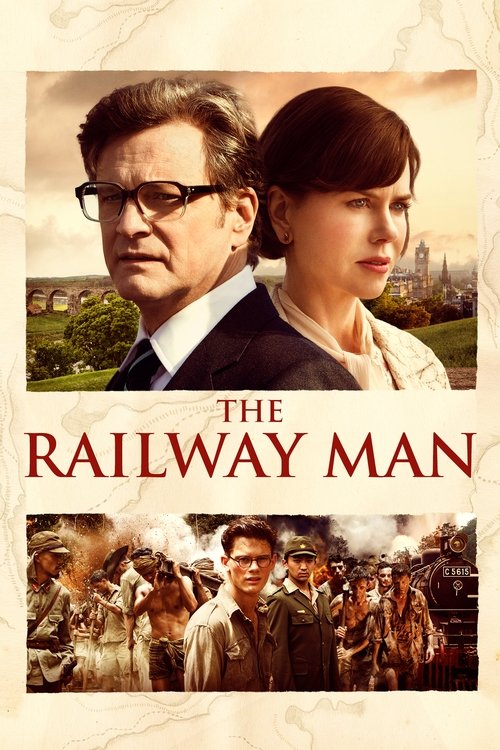
The Railway Man
A victim from World War II's "Death Railway" sets out to find those responsible for his torture. A true story.
Working with a moderate budget of $18.0M, the film achieved a steady performer with $24.2M in global revenue (+34% profit margin).
7 wins & 20 nominations


Plot Structure
Story beats plotted across runtime


Narrative Arc
Emotional journey through the story's key moments
Story Circle
Blueprint 15-beat structure
Arcplot Score Breakdown
Weighted: Precision (70%) + Arc (15%) + Theme (15%)
The Railway Man (2013) reveals meticulously timed dramatic framework, characteristic of Jonathan Teplitzky's storytelling approach. This structural analysis examines how the film's 15-point plot structure maps to proven narrative frameworks across 1 hour and 56 minutes. With an Arcplot score of 7.0, the film balances conventional beats with creative variation.
Structural Analysis
The Status Quo at 1 minutes (1% through the runtime) establishes Eric Lomax, an elderly train enthusiast, meets Patti on a train, establishing his controlled, orderly post-war life built around railway schedules and compartmentalized memories.. Structural examination shows that this early placement immediately immerses viewers in the story world.
The inciting incident occurs at 15 minutes when Patti discovers Eric's hidden scars and breakdown as he relives his torture. His carefully constructed present-day life shatters as his unprocessed trauma erupts, revealing he cannot move forward without confronting his past.. At 13% through the film, this Disruption is delayed, allowing extended setup of the story world. This beat shifts the emotional landscape, launching the protagonist into the central conflict.
The First Threshold at 30 minutes marks the transition into Act II, occurring at 26% of the runtime. This illustrates the protagonist's commitment to Eric decides to travel to Thailand to find Nagase. This active choice commits him to confronting his torturer and the source of his decades-long suffering, leaving the safety of his controlled British life., moving from reaction to action.
At 58 minutes, the Midpoint arrives at 50% of the runtime—precisely centered, creating perfect narrative symmetry. The analysis reveals that this crucial beat Eric confronts Nagase face-to-face at the railway site, revealing his identity. The stakes raise dramatically as the moment Eric has been building toward for forty years arrives, but it brings no satisfaction—only more pain and confusion., fundamentally raising what's at risk. The emotional intensity shifts, dividing the narrative into clear before-and-after phases.
The Collapse moment at 86 minutes (74% through) represents the emotional nadir. Here, Eric prepares to kill Nagase, bringing him to the exact spot of his torture. At his darkest moment, weapon in hand, Eric faces the emptiness of revenge and the death of his hope for peace—violence will not heal him., illustrates the protagonist at their lowest point. This beat's placement in the final quarter sets up the climactic reversal.
The Second Threshold at 93 minutes initiates the final act resolution at 80% of the runtime. Eric realizes Nagase has been tortured by guilt for decades, just as Eric was tortured by hatred. This synthesis—recognizing their shared suffering—allows Eric to see that forgiveness will free them both. He chooses compassion over vengeance., demonstrating the transformation achieved throughout the journey.
Emotional Journey
The Railway Man's emotional architecture traces a deliberate progression across 15 carefully calibrated beats.
Narrative Framework
This structural analysis employs structural analysis methodology used to understand storytelling architecture. By mapping The Railway Man against these established plot points, we can identify how Jonathan Teplitzky utilizes or subverts traditional narrative conventions. The plot point approach reveals not only adherence to structural principles but also creative choices that distinguish The Railway Man within the drama genre.
Comparative Analysis
Additional drama films include After Thomas, South Pacific and Dirty Dancing: Havana Nights.
Plot Points by Act
Act I
SetupStatus Quo
Eric Lomax, an elderly train enthusiast, meets Patti on a train, establishing his controlled, orderly post-war life built around railway schedules and compartmentalized memories.
Theme
Finlay tells Eric about the ex-POW group: "Sometimes the hating has to stop." This introduces the film's central question about whether forgiveness and letting go of hatred is possible after extreme trauma.
Worldbuilding
Eric courts Patti through their shared love of trains, they marry, and he joins the ex-POW support group. Flashbacks reveal his capture during WWII and brutal treatment building the Burma Railway, establishing the dual timeline structure.
Disruption
Patti discovers Eric's hidden scars and breakdown as he relives his torture. His carefully constructed present-day life shatters as his unprocessed trauma erupts, revealing he cannot move forward without confronting his past.
Resistance
Patti and Finlay push Eric to open up about his wartime experiences. Finlay reveals that Takashi Nagase, Eric's torturer, is alive and giving tours at the former camp. Eric resists confronting this information, torn between vengeance and avoidance.
Act II
ConfrontationFirst Threshold
Eric decides to travel to Thailand to find Nagase. This active choice commits him to confronting his torturer and the source of his decades-long suffering, leaving the safety of his controlled British life.
Mirror World
Eric observes Nagase giving tours at the museum built on the former camp site, seeing him perform for tourists. This relationship will force Eric to see his enemy as human and teach him what he truly needs: not revenge, but release.
Premise
Eric stalks Nagase through Thailand while flashbacks detail his wartime torture, the theft of his railway map, and his friendship with fellow POW Finlay. The film explores the promise of its premise: the confrontation between torturer and victim.
Midpoint
Eric confronts Nagase face-to-face at the railway site, revealing his identity. The stakes raise dramatically as the moment Eric has been building toward for forty years arrives, but it brings no satisfaction—only more pain and confusion.
Opposition
Eric's rage intensifies as Nagase attempts reconciliation. Flashbacks show the worst of Eric's torture and his forced false confession. Eric's hatred deepens as he rejects Nagase's apologies, and Patti struggles to reach him from England.
Collapse
Eric prepares to kill Nagase, bringing him to the exact spot of his torture. At his darkest moment, weapon in hand, Eric faces the emptiness of revenge and the death of his hope for peace—violence will not heal him.
Crisis
Eric cannot kill Nagase but remains consumed by hatred. He reads Nagase's autobiography and letters, processing the weight of carrying rage for forty years while Nagase waits in anguish, having dedicated his life to atonement.
Act III
ResolutionSecond Threshold
Eric realizes Nagase has been tortured by guilt for decades, just as Eric was tortured by hatred. This synthesis—recognizing their shared suffering—allows Eric to see that forgiveness will free them both. He chooses compassion over vengeance.
Synthesis
Eric returns to Nagase and grants him forgiveness, releasing both men from their decades of torment. He returns to Patti transformed, finally able to embrace love and connection. The war's grip on him is broken.
Transformation
Eric and Patti embrace at the train station where they first met, but now Eric is fully present and free. The closing image mirrors the opening but shows complete transformation: from a man hiding from his past to one at peace with it.