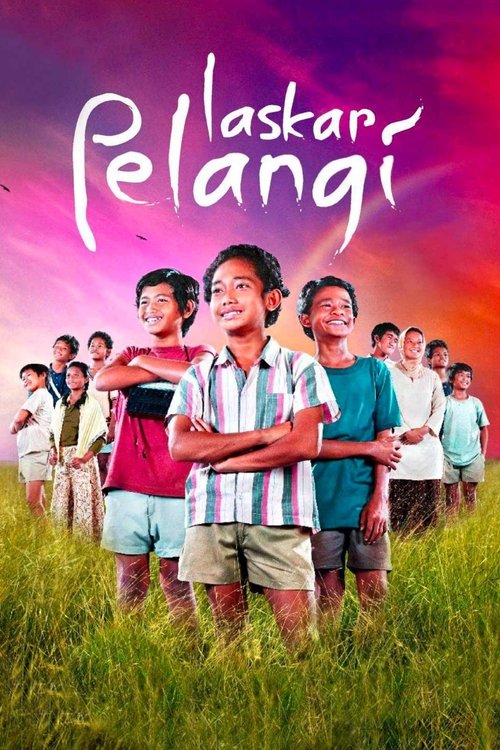
The Rainbow Troops
A group of 10 students struggles with poverty and develop hopes for the future in Gantong Village on the farming and tin mining island of Belitung.
Despite its microbudget of $800K, The Rainbow Troops became a box office phenomenon, earning $9.0M worldwide—a remarkable 1025% return. The film's bold vision connected with viewers, showing that strong storytelling can transcend budget limitations.
Plot Structure
Story beats plotted across runtime


Narrative Arc
Emotional journey through the story's key moments
Story Circle
Blueprint 15-beat structure
Arcplot Score Breakdown
Weighted: Precision (70%) + Arc (15%) + Theme (15%)
The Rainbow Troops (2008) reveals carefully calibrated plot construction, characteristic of Riri Riza's storytelling approach. This structural analysis examines how the film's 15-point plot structure maps to proven narrative frameworks across 2 hours. With an Arcplot score of 7.7, the film showcases strong structural fundamentals.
Structural Analysis
The Status Quo at 2 minutes (2% through the runtime) establishes Opening images of Belitung Island's impoverished tin-mining village. Children play in poverty, establishing the struggling community where education is a rare privilege. The dilapidated Muhammadiyah elementary school stands as a beacon of hope.. Notably, this early placement immediately immerses viewers in the story world.
The inciting incident occurs at 14 minutes when The school supervisor arrives to shut down Muhammadiyah school for failing to meet the ten-student minimum enrollment. The school and its mission face immediate extinction, threatening the children's only path to education.. At 12% through the film, this Disruption aligns precisely with traditional story structure. This beat shifts the emotional landscape, launching the protagonist into the central conflict.
The First Threshold at 29 minutes marks the transition into Act II, occurring at 24% of the runtime. This illustrates the protagonist's commitment to Lintang arrives as the tenth student just as the supervisor is about to close the school permanently. The Rainbow Troops (Laskar Pelangi) is officially formed. The children choose to commit to their education despite poverty and societal barriers., moving from reaction to action.
At 60 minutes, the Midpoint arrives at 50% of the runtime—precisely centered, creating perfect narrative symmetry. Of particular interest, this crucial beat The Rainbow Troops wins the academic quiz competition against the wealthy PN Timah school, proving that poverty doesn't determine worth or capability. This is a false victory—they've proven themselves, but the systemic barriers remain unchanged and will intensify., fundamentally raising what's at risk. The emotional intensity shifts, dividing the narrative into clear before-and-after phases.
The Collapse moment at 88 minutes (73% through) represents the emotional nadir. Here, Lintang's father dies at sea. As the family's sole provider, Lintang must abandon his education forever to support his mother and siblings. The brightest student, the symbol of education's transformative power, is forced to give up his dreams. Hope dies., reveals the protagonist at their lowest point. This beat's placement in the final quarter sets up the climactic reversal.
The Second Threshold at 95 minutes initiates the final act resolution at 79% of the runtime. The remaining students realize that Lintang's sacrifice makes their education more precious, not less. They understand that continuing their education honors those who cannot. Bu Mus's earlier theme crystallizes: they must succeed to break the cycle for the next generation., demonstrating the transformation achieved throughout the journey.
Emotional Journey
The Rainbow Troops's emotional architecture traces a deliberate progression across 15 carefully calibrated beats.
Narrative Framework
This structural analysis employs systematic plot point analysis that identifies crucial turning points. By mapping The Rainbow Troops against these established plot points, we can identify how Riri Riza utilizes or subverts traditional narrative conventions. The plot point approach reveals not only adherence to structural principles but also creative choices that distinguish The Rainbow Troops within the drama genre.
Comparative Analysis
Additional drama films include Eye for an Eye, South Pacific and Kiss of the Spider Woman.
Plot Points by Act
Act I
SetupStatus Quo
Opening images of Belitung Island's impoverished tin-mining village. Children play in poverty, establishing the struggling community where education is a rare privilege. The dilapidated Muhammadiyah elementary school stands as a beacon of hope.
Theme
Bu Mus (the teacher) states the film's theme: "Education is the only way to break the cycle of poverty. Knowledge makes us free." This establishes that the story is about the transformative power of education and perseverance against systemic inequality.
Worldbuilding
Introduction to the ten students who will form the Rainbow Troops, including protagonist Ikal. We meet their families, see the stark contrast between the poor Malay community and the wealthy PN Timah mining company school. Establishes the school's struggle to meet minimum enrollment requirements.
Disruption
The school supervisor arrives to shut down Muhammadiyah school for failing to meet the ten-student minimum enrollment. The school and its mission face immediate extinction, threatening the children's only path to education.
Resistance
Bu Mus and Pak Harfan desperately search for a tenth student. Lintang, a brilliant poor boy who lives far away, is discovered. His father debates whether to allow him to attend. The teachers convince the community that education is worth fighting for despite overwhelming obstacles.
Act II
ConfrontationFirst Threshold
Lintang arrives as the tenth student just as the supervisor is about to close the school permanently. The Rainbow Troops (Laskar Pelangi) is officially formed. The children choose to commit to their education despite poverty and societal barriers.
Mirror World
Introduction of A Ling, the Chinese-Indonesian girl who becomes Ikal's love interest and represents the cultural diversity and beauty that transcends economic divisions. She embodies the theme that worth comes from character and dreams, not wealth.
Premise
The students' adventures and education under Bu Mus's guidance. Lintang's genius emerges despite cycling 80km daily. The group competes in academic competitions, bonds through challenges, and discovers their individual talents. The promise of education transforming lives plays out.
Midpoint
The Rainbow Troops wins the academic quiz competition against the wealthy PN Timah school, proving that poverty doesn't determine worth or capability. This is a false victory—they've proven themselves, but the systemic barriers remain unchanged and will intensify.
Opposition
Reality closes in. Students face increasing pressure to abandon school for work in the mines. Families struggle with survival. The school's physical structure deteriorates dangerously. Bu Mus falls ill. The tension between dreams and survival intensifies for each student.
Collapse
Lintang's father dies at sea. As the family's sole provider, Lintang must abandon his education forever to support his mother and siblings. The brightest student, the symbol of education's transformative power, is forced to give up his dreams. Hope dies.
Crisis
The students and teachers grieve Lintang's departure. They question whether fighting for education in the face of poverty is futile. Ikal processes the loss and contemplates what their struggle means. The dark night of doubt before resolution.
Act III
ResolutionSecond Threshold
The remaining students realize that Lintang's sacrifice makes their education more precious, not less. They understand that continuing their education honors those who cannot. Bu Mus's earlier theme crystallizes: they must succeed to break the cycle for the next generation.
Synthesis
The students complete their education at Muhammadiyah school. They pursue their individual dreams: Ikal continues studying, inspired to become a writer to tell their story. The group graduates and moves forward, carrying their education as a tool for change.
Transformation
Adult Ikal, now a writer in Paris, completes the manuscript of "Laskar Pelangi," ensuring their story will inspire others. The closing image mirrors the opening but shows transformation: education did break the cycle, and their struggle was not in vain.