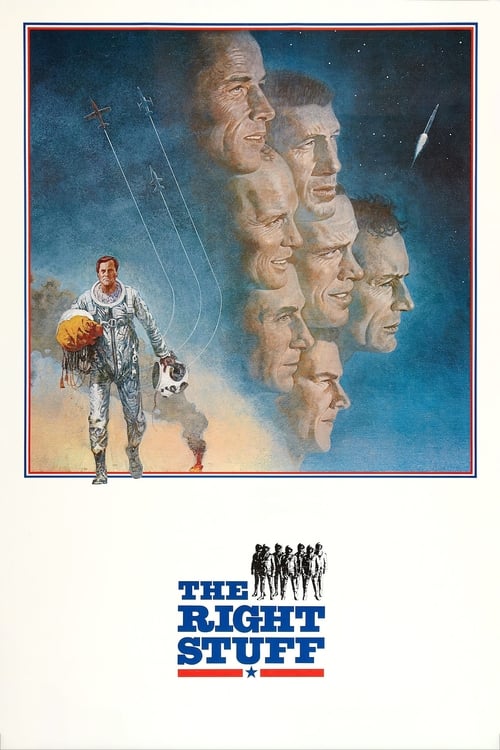
The Right Stuff
At the dawn of the Space Race, seven test pilots set out to become the first American astronauts to enter space. However, the road to making history brings momentous challenges.
The film struggled financially against its respectable budget of $27.0M, earning $21.5M globally (-20% loss).
4 Oscars. 12 wins & 16 nominations


Plot Structure
Story beats plotted across runtime


Narrative Arc
Emotional journey through the story's key moments
Story Circle
Blueprint 15-beat structure
Arcplot Score Breakdown
Weighted: Precision (70%) + Arc (15%) + Theme (15%)
The Right Stuff (1983) exemplifies precise dramatic framework, characteristic of Philip Kaufman's storytelling approach. This structural analysis examines how the film's 15-point plot structure maps to proven narrative frameworks across 3 hours and 13 minutes. With an Arcplot score of 7.1, the film balances conventional beats with creative variation.
Structural Analysis
The Status Quo at 2 minutes (1% through the runtime) establishes The Mojave Desert in 1947. Test pilots push experimental aircraft to their limits at Muroc Army Air Field (later Edwards Air Force Base). The world of fearless men testing the boundaries of flight is established.. Notably, this early placement immediately immerses viewers in the story world.
The inciting incident occurs at 24 minutes when Chuck Yeager breaks the sound barrier in the Bell X-1, achieving what many thought impossible. This triumph establishes the standard for "the right stuff" and sets the stage for the space race to come.. At 12% through the film, this Disruption aligns precisely with traditional story structure. This beat shifts the emotional landscape, launching the protagonist into the central conflict.
The First Threshold at 47 minutes marks the transition into Act II, occurring at 25% of the runtime. This shows the protagonist's commitment to The Mercury Seven are selected and introduced to the press. These pilots - Shepard, Glenn, Grissom, Cooper, Schirra, Carpenter, Slayton - commit to becoming astronauts, entering a new world of celebrity, politics, and space exploration., moving from reaction to action.
At 97 minutes, the Midpoint arrives at 50% of the runtime—precisely centered, creating perfect narrative symmetry. Significantly, this crucial beat Alan Shepard becomes the first American in space (May 1961). A triumph, but the Soviets were first with Gagarin. The stakes are raised - America must catch up. The astronauts are now truly in the game, and there's no turning back., fundamentally raising what's at risk. The emotional intensity shifts, dividing the narrative into clear before-and-after phases.
The Collapse moment at 144 minutes (75% through) represents the emotional nadir. Here, Chuck Yeager, attempting to break another altitude record in an NF-104, loses control and crashes. He ejects at the last second, badly burned. The ultimate test pilot nearly dies, showing that even those with "the right stuff" are mortal., shows the protagonist at their lowest point. This beat's placement in the final quarter sets up the climactic reversal.
The Second Threshold at 155 minutes initiates the final act resolution at 80% of the runtime. Gordon Cooper prepares for the final Mercury mission, the longest yet. Despite technical problems and NASA's doubts, Cooper embodies the synthesis of test pilot skill and astronaut celebrity. The understanding: both paths represent "the right stuff."., demonstrating the transformation achieved throughout the journey.
Emotional Journey
The Right Stuff's emotional architecture traces a deliberate progression across 15 carefully calibrated beats.
Narrative Framework
This structural analysis employs structural analysis methodology used to understand storytelling architecture. By mapping The Right Stuff against these established plot points, we can identify how Philip Kaufman utilizes or subverts traditional narrative conventions. The plot point approach reveals not only adherence to structural principles but also creative choices that distinguish The Right Stuff within the drama genre.
Philip Kaufman's Structural Approach
Among the 8 Philip Kaufman films analyzed on Arcplot, the average structural score is 7.0, demonstrating varied approaches to story architecture. The Right Stuff represents one of the director's most structurally precise works. For comparative analysis, explore the complete Philip Kaufman filmography.
Comparative Analysis
Additional drama films include After Thomas, South Pacific and Dirty Dancing: Havana Nights. For more Philip Kaufman analyses, see Quills, The Wanderers and Henry & June.
Plot Points by Act
Act I
SetupStatus Quo
The Mojave Desert in 1947. Test pilots push experimental aircraft to their limits at Muroc Army Air Field (later Edwards Air Force Base). The world of fearless men testing the boundaries of flight is established.
Theme
Discussion among pilots about what separates those who have "the right stuff" from those who don't. The ineffable quality of courage, skill, and grace under pressure that defines the best pilots is articulated.
Worldbuilding
Establishment of the test pilot culture at Muroc/Edwards. Introduction of Chuck Yeager and the dangerous world of experimental aviation. The hierarchy of pilots, their wives' constant fear, and the unspoken code of bravery.
Disruption
Chuck Yeager breaks the sound barrier in the Bell X-1, achieving what many thought impossible. This triumph establishes the standard for "the right stuff" and sets the stage for the space race to come.
Resistance
Time jump to late 1950s. The Soviets launch Sputnik, creating national panic. Introduction of the Mercury program to select America's first astronauts. The test pilots debate whether to volunteer - is this "spam in a can" or the next frontier?
Act II
ConfrontationFirst Threshold
The Mercury Seven are selected and introduced to the press. These pilots - Shepard, Glenn, Grissom, Cooper, Schirra, Carpenter, Slayton - commit to becoming astronauts, entering a new world of celebrity, politics, and space exploration.
Mirror World
The astronauts' wives, particularly Trudy Cooper and Annie Glenn, become prominent. They represent the human cost and emotional reality behind the heroic narrative, embodying the theme of sacrifice and authenticity versus public image.
Premise
The Mercury Seven undergo training, medical tests, and transformation into American heroes. Parallel story: Yeager continues test flying, remaining the independent pilot. The contrast between celebrity astronauts and pure test pilots deepens.
Midpoint
Alan Shepard becomes the first American in space (May 1961). A triumph, but the Soviets were first with Gagarin. The stakes are raised - America must catch up. The astronauts are now truly in the game, and there's no turning back.
Opposition
The Mercury missions continue with increasing difficulty. Gus Grissom's capsule sinks and he faces questions about his courage. John Glenn's orbital flight is endangered by a faulty heat shield. Pressure mounts from politics, media, and the Soviets.
Collapse
Chuck Yeager, attempting to break another altitude record in an NF-104, loses control and crashes. He ejects at the last second, badly burned. The ultimate test pilot nearly dies, showing that even those with "the right stuff" are mortal.
Crisis
Yeager recovers in the hospital. The Mercury program faces its own mortality and limitations. The realization that courage and skill can't overcome everything. A moment of reflection on sacrifice and what has been achieved versus what has been lost.
Act III
ResolutionSecond Threshold
Gordon Cooper prepares for the final Mercury mission, the longest yet. Despite technical problems and NASA's doubts, Cooper embodies the synthesis of test pilot skill and astronaut celebrity. The understanding: both paths represent "the right stuff."
Synthesis
Cooper's Mercury-Atlas 9 mission faces multiple system failures. He must fly manually, using his test pilot skills to land the spacecraft. He succeeds brilliantly, vindicating the idea that astronauts are pilots, not just passengers. The Mercury program concludes triumphantly.
Transformation
Chuck Yeager, recovered, flies again in the desert. The astronauts receive accolades. Both paths - the lone test pilot and the celebrated astronaut - are validated. The right stuff exists in many forms: individual excellence and collective achievement.