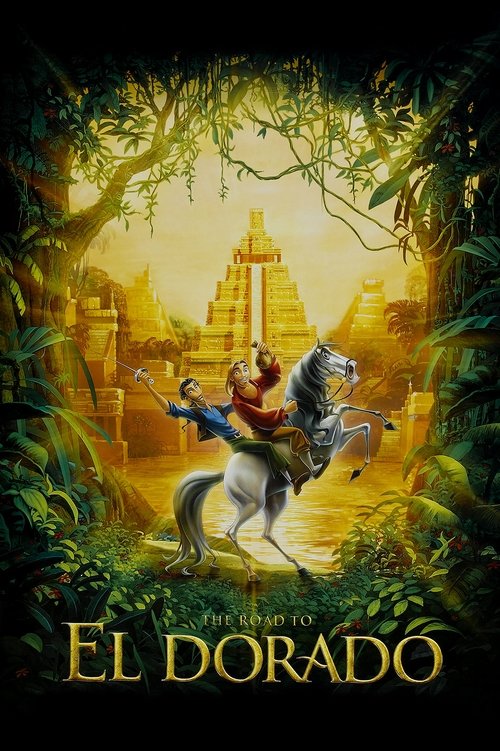
The Road to El Dorado
Stowing away after a failed con, a pair of swindlers end up on El Dorado, the fabled "city of gold", where they quickly get in over their heads when they are mistaken as gods by the inhabitants.
The film disappointed at the box office against its significant budget of $95.0M, earning $76.4M globally (-20% loss).
1 win & 12 nominations


Plot Structure
Story beats plotted across runtime


Narrative Arc
Emotional journey through the story's key moments
Story Circle
Blueprint 15-beat structure
Arcplot Score Breakdown
Weighted: Precision (70%) + Arc (15%) + Theme (15%)
The Road to El Dorado (2000) exemplifies meticulously timed dramatic framework, characteristic of Bibo Bergeron's storytelling approach. This structural analysis examines how the film's 15-point plot structure maps to proven narrative frameworks across 1 hour and 29 minutes. With an Arcplot score of 7.4, the film balances conventional beats with creative variation.
Structural Analysis
The Status Quo at 1 minutes (1% through the runtime) establishes Tulio and Miguel are con artists in 16th century Spain, cheating at dice in a crowded tavern. They are charming rogues living by their wits, always one step ahead of trouble, perfectly in sync as partners in crime.. Of particular interest, this early placement immediately immerses viewers in the story world.
The inciting incident occurs at 10 minutes when Discovered as stowaways on Cortes' ship, Tulio and Miguel are sentenced to be flogged and put in the stocks. Their carefree con artist lifestyle is violently disrupted. They must escape or face severe punishment from the ruthless conquistador.. At 12% through the film, this Disruption aligns precisely with traditional story structure. This beat shifts the emotional landscape, launching the protagonist into the central conflict.
The First Threshold at 19 minutes marks the transition into Act II, occurring at 21% of the runtime. This reveals the protagonist's commitment to Tulio and Miguel wash ashore and discover markers matching their map. They make the active choice to follow the map into the jungle to find El Dorado. They cross from the known world (Spain, the ship) into the unknown (the New World and mythical city)., moving from reaction to action.
At 44 minutes, the Midpoint arrives at 49% of the runtime—precisely centered, creating perfect narrative symmetry. Of particular interest, this crucial beat Miguel declares he wants to stay in El Dorado while Tulio insists on leaving with the gold. Their friendship fractures for the first time. The stakes raise: the partnership that defined them is breaking apart. This is a false defeat - their conflict seems insurmountable., fundamentally raising what's at risk. The emotional intensity shifts, dividing the narrative into clear before-and-after phases.
The Collapse moment at 65 minutes (73% through) represents the emotional nadir. Here, The giant stone jaguar (summoned by Tzekel-Kan) nearly kills Miguel during battle. Tulio saves him but their friendship seems dead - Miguel discovers Tulio's plan to leave with the gold and feels utterly betrayed. Their partnership, the core of who they are, appears destroyed., reveals the protagonist at their lowest point. This beat's placement in the final quarter sets up the climactic reversal.
The Second Threshold at 70 minutes initiates the final act resolution at 79% of the runtime. Tulio chooses friendship over gold. He reconciles with Miguel and they reunite to save El Dorado from Cortes. The synthesis: they combine their con artist skills (Act 1) with what they learned about true value (Mirror World/Chel). They have the plan and the partnership restored., demonstrating the transformation achieved throughout the journey.
Emotional Journey
The Road to El Dorado's emotional architecture traces a deliberate progression across 15 carefully calibrated beats.
Narrative Framework
This structural analysis employs structural analysis methodology used to understand storytelling architecture. By mapping The Road to El Dorado against these established plot points, we can identify how Bibo Bergeron utilizes or subverts traditional narrative conventions. The plot point approach reveals not only adherence to structural principles but also creative choices that distinguish The Road to El Dorado within the family genre.
Bibo Bergeron's Structural Approach
Among the 2 Bibo Bergeron films analyzed on Arcplot, the average structural score is 7.4, reflecting strong command of classical structure. The Road to El Dorado exemplifies the director's characteristic narrative technique. For comparative analysis, explore the complete Bibo Bergeron filmography.
Comparative Analysis
Additional family films include The Black Stallion, The Bad Guys and Ella Enchanted. For more Bibo Bergeron analyses, see Shark Tale.
Plot Points by Act
Act I
SetupStatus Quo
Tulio and Miguel are con artists in 16th century Spain, cheating at dice in a crowded tavern. They are charming rogues living by their wits, always one step ahead of trouble, perfectly in sync as partners in crime.
Theme
After winning the map to El Dorado, Miguel exclaims "The map to El Dorado! We're going to be rich!" while Tulio responds more cautiously. The theme of friendship vs. gold is planted: what matters more, the partnership or the treasure?
Worldbuilding
We see Tulio and Miguel's world: Renaissance Spain, their street-smart hustling, their perfect partnership dynamic, and their narrow escape from guards. They are captured and loaded onto Cortes' ship bound for the New World. Their roguish chemistry and complementary skills are established.
Disruption
Discovered as stowaways on Cortes' ship, Tulio and Miguel are sentenced to be flogged and put in the stocks. Their carefree con artist lifestyle is violently disrupted. They must escape or face severe punishment from the ruthless conquistador.
Resistance
Tulio and Miguel escape Cortes' ship on a rowboat with their horse Altivo, debating whether to try to reach shore or search for El Dorado. They argue about the map's validity and their chances of survival. Miguel is idealistic about the adventure; Tulio is skeptical but goes along.
Act II
ConfrontationFirst Threshold
Tulio and Miguel wash ashore and discover markers matching their map. They make the active choice to follow the map into the jungle to find El Dorado. They cross from the known world (Spain, the ship) into the unknown (the New World and mythical city).
Mirror World
Chel is introduced as a clever native woman who helps Tulio and Miguel be accepted as gods by the people of El Dorado. She represents authenticity and freedom, contrasting with their deception. She also sees through their act immediately, establishing the relationship that will challenge their values.
Premise
The "fun and games" of pretending to be gods in El Dorado. Tulio and Miguel enjoy lavish treatment, perform fake miracles, play the ball game, and scheme to load a boat with gold to escape. This is the premise the audience came for: two con men fooling an entire civilization.
Midpoint
Miguel declares he wants to stay in El Dorado while Tulio insists on leaving with the gold. Their friendship fractures for the first time. The stakes raise: the partnership that defined them is breaking apart. This is a false defeat - their conflict seems insurmountable.
Opposition
Tzekel-Kan discovers Tulio and Miguel are not gods and allies with Cortes to destroy them. Miguel grows closer to the people of El Dorado while Tulio focuses obsessively on the gold. Chel confronts Tulio about his greed. The friends drift further apart as external and internal pressure mounts.
Collapse
The giant stone jaguar (summoned by Tzekel-Kan) nearly kills Miguel during battle. Tulio saves him but their friendship seems dead - Miguel discovers Tulio's plan to leave with the gold and feels utterly betrayed. Their partnership, the core of who they are, appears destroyed.
Crisis
Tulio faces his dark night of the soul, realizing he has lost his best friend for gold. Miguel prepares to stay in El Dorado alone. Both are miserable apart. Chel helps Tulio see what truly matters. The emotional low point before redemption.
Act III
ResolutionSecond Threshold
Tulio chooses friendship over gold. He reconciles with Miguel and they reunite to save El Dorado from Cortes. The synthesis: they combine their con artist skills (Act 1) with what they learned about true value (Mirror World/Chel). They have the plan and the partnership restored.
Synthesis
The finale: Tulio and Miguel execute their plan to seal El Dorado from Cortes by collapsing the entrance pillars, using all the gold they schemed to steal. They sacrifice the treasure to save the city and protect the people. They escape with Chel but leave the gold behind.
Transformation
Tulio, Miguel, and Chel sail away together with Altivo - no gold, but friendship intact and a new partner in Chel. Miguel says "Well, you can't win them all." They're still rogues, but transformed: they value friendship and freedom over riches. The partnership is stronger than ever.