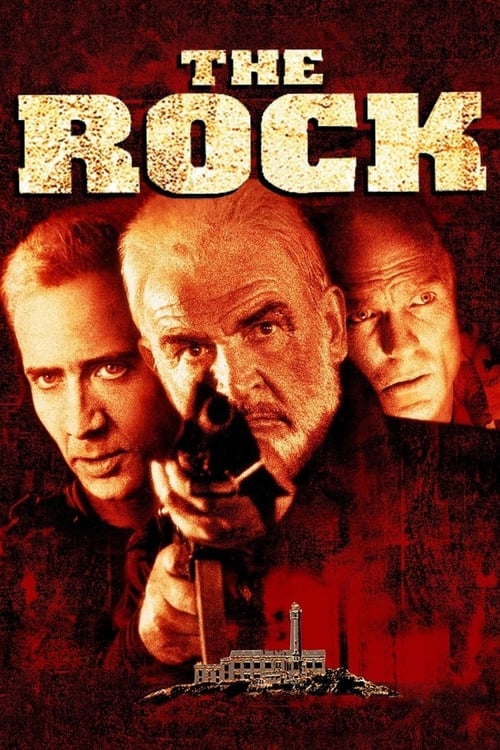
The Rock
When vengeful General Francis X. Hummel seizes control of Alcatraz Island and threatens to launch missiles loaded with deadly chemical weapons into San Francisco, only a young FBI chemical weapons expert and notorious Federal prisoner have the skills to penetrate the impregnable island fortress and take him down.
Despite a substantial budget of $75.0M, The Rock became a commercial success, earning $335.1M worldwide—a 347% return.
Nominated for 1 Oscar. 9 wins & 10 nominations


Plot Structure
Story beats plotted across runtime


Narrative Arc
Emotional journey through the story's key moments
Story Circle
Blueprint 15-beat structure
Arcplot Score Breakdown
Weighted: Precision (70%) + Arc (15%) + Theme (15%)
The Rock (1996) showcases strategically placed narrative design, characteristic of Michael Bay's storytelling approach. This structural analysis examines how the film's 15-point plot structure maps to proven narrative frameworks across 2 hours and 17 minutes. With an Arcplot score of 7.0, the film balances conventional beats with creative variation.
Structural Analysis
The Status Quo at 1 minutes (1% through the runtime) establishes General Hummel stands in the rain at his wife's grave, mourning her loss while reflecting on the soldiers who died under his command whose sacrifices were never acknowledged by their country.. Structural examination shows that this early placement immediately immerses viewers in the story world.
The inciting incident occurs at 16 minutes when General Hummel and his rogue Marines seize Alcatraz Island, taking 81 tourists hostage, and threaten to launch VX gas rockets at San Francisco unless the government pays $100 million to the families of his fallen soldiers.. At 12% through the film, this Disruption aligns precisely with traditional story structure. This beat shifts the emotional landscape, launching the protagonist into the central conflict.
The First Threshold at 34 minutes marks the transition into Act II, occurring at 25% of the runtime. This indicates the protagonist's commitment to Mason agrees to lead the infiltration team into Alcatraz through the underground tunnels he used to escape decades ago. Stanley commits to the mission despite his fears, leaving behind his pregnant girlfriend Carla., moving from reaction to action.
At 69 minutes, the Midpoint arrives at 50% of the runtime—precisely centered, creating perfect narrative symmetry. Of particular interest, this crucial beat The SEAL team is ambushed in the shower room. In a devastating firefight, Commander Anderson and the entire Navy SEAL team are killed, leaving only Mason and Goodspeed alive. The professional soldiers are gone; two unlikely heroes must complete the mission alone., fundamentally raising what's at risk. The emotional intensity shifts, dividing the narrative into clear before-and-after phases.
The Collapse moment at 103 minutes (75% through) represents the emotional nadir. Here, General Hummel is killed by his own men, Captains Frye and Darrow, when he refuses to actually launch the rockets at civilians. The moderate villain is dead; now true sociopaths control the weapons and intend to fire them. The thermite airstrike is inbound., illustrates the protagonist at their lowest point. This beat's placement in the final quarter sets up the climactic reversal.
The Second Threshold at 110 minutes initiates the final act resolution at 80% of the runtime. Mason returns to save Stanley instead of escaping, fully committing to the mission and to his unlikely partnership. Stanley realizes he must become the hero - combining Mason's combat lessons with his own chemical expertise to stop the final rocket., demonstrating the transformation achieved throughout the journey.
Emotional Journey
The Rock's emotional architecture traces a deliberate progression across 15 carefully calibrated beats.
Narrative Framework
This structural analysis employs systematic plot point analysis that identifies crucial turning points. By mapping The Rock against these established plot points, we can identify how Michael Bay utilizes or subverts traditional narrative conventions. The plot point approach reveals not only adherence to structural principles but also creative choices that distinguish The Rock within the action genre.
Michael Bay's Structural Approach
Among the 14 Michael Bay films analyzed on Arcplot, the average structural score is 6.8, demonstrating varied approaches to story architecture. The Rock represents one of the director's most structurally precise works. For comparative analysis, explore the complete Michael Bay filmography.
Comparative Analysis
Additional action films include The Bad Guys, Puss in Boots and Venom: The Last Dance. For more Michael Bay analyses, see Armageddon, Transformers: Dark of the Moon and Bad Boys.
Plot Points by Act
Act I
SetupStatus Quo
General Hummel stands in the rain at his wife's grave, mourning her loss while reflecting on the soldiers who died under his command whose sacrifices were never acknowledged by their country.
Theme
Hummel declares to his men that the government has forgotten their fallen brothers and that "someone has to make them pay" - establishing the film's theme of honor, sacrifice, and how far one will go for a righteous cause.
Worldbuilding
We meet Stanley Goodspeed, an FBI chemical weapons expert who defuses a deadly nerve gas bomb in his lab, establishing his expertise but also his inexperience in field operations. Meanwhile, Hummel and his men steal VX gas rockets from a naval weapons depot.
Disruption
General Hummel and his rogue Marines seize Alcatraz Island, taking 81 tourists hostage, and threaten to launch VX gas rockets at San Francisco unless the government pays $100 million to the families of his fallen soldiers.
Resistance
FBI Director Womack recruits Stanley for the mission and reveals their secret asset: John Mason, a former British SAS operative and the only man to ever escape Alcatraz. Stanley is reluctant, unprepared for combat, and must convince Mason to help despite Mason's distrust of the government.
Act II
ConfrontationFirst Threshold
Mason agrees to lead the infiltration team into Alcatraz through the underground tunnels he used to escape decades ago. Stanley commits to the mission despite his fears, leaving behind his pregnant girlfriend Carla.
Mirror World
Mason and Goodspeed begin to bond during their infiltration, with Mason becoming a reluctant mentor. Mason reveals his own past betrayals by the government, mirroring Hummel's grievances but choosing a different path - teaching Stanley that honor isn't about revenge but about protecting the innocent.
Premise
The SEAL team infiltrates Alcatraz through the tunnels and furnace room in a tense sequence. Stanley struggles to keep up with the trained soldiers while Mason proves his expertise. The promise of the premise delivers: chemical weapons specialist meets old-school spy in a race against time.
Midpoint
The SEAL team is ambushed in the shower room. In a devastating firefight, Commander Anderson and the entire Navy SEAL team are killed, leaving only Mason and Goodspeed alive. The professional soldiers are gone; two unlikely heroes must complete the mission alone.
Opposition
Mason and Goodspeed work to disable the rockets while evading Hummel's Marines. Tensions rise as Hummel's men grow impatient and the government prepares an airstrike that would kill everyone including the hostages. Stanley begins to find his courage while Mason confronts his past.
Collapse
General Hummel is killed by his own men, Captains Frye and Darrow, when he refuses to actually launch the rockets at civilians. The moderate villain is dead; now true sociopaths control the weapons and intend to fire them. The thermite airstrike is inbound.
Crisis
With Hummel dead and rogue Marines in control, all hope seems lost. Stanley is captured and beaten. The F-18s are minutes away from destroying the island. Mason must decide whether to escape or risk everything to save Stanley and stop the launch.
Act III
ResolutionSecond Threshold
Mason returns to save Stanley instead of escaping, fully committing to the mission and to his unlikely partnership. Stanley realizes he must become the hero - combining Mason's combat lessons with his own chemical expertise to stop the final rocket.
Synthesis
In the climactic finale, Mason and Goodspeed battle Frye and Darrow across Alcatraz. Stanley kills Captain Darrow and reaches the last rocket just as it launches. He disarms it mid-flight using his chemical expertise. Stanley signals the jets with green flares, calling off the airstrike at the last second.
Transformation
Stanley tells the FBI that Mason died in the battle, granting him freedom after 30 years of unjust imprisonment. Stanley visits Mason's secret church location to retrieve the microfilm, now transformed from a nervous lab tech into a confident man of action ready to marry Carla and start his family.