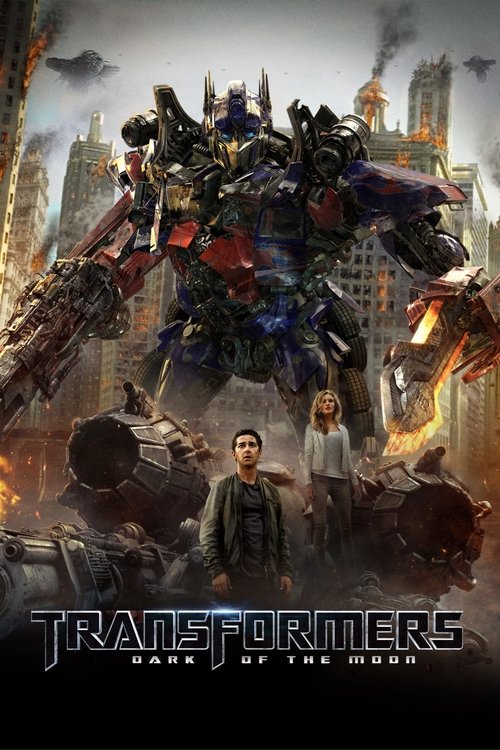
Transformers: Dark of the Moon
The Autobots learn of a Cybertronian spacecraft hidden on the moon, and race against the Decepticons to reach it and to learn its secrets.
Despite a enormous budget of $195.0M, Transformers: Dark of the Moon became a box office success, earning $1123.8M worldwide—a 476% return. This commercial performance validated the ambitious narrative scope, demonstrating that audiences embrace unconventional structure even at blockbuster scale.
Nominated for 3 Oscars. 11 wins & 42 nominations


Plot Structure
Story beats plotted across runtime


Narrative Arc
Emotional journey through the story's key moments
Story Circle
Blueprint 15-beat structure
Characters
Cast & narrative archetypes

Sam Witwicky
Optimus Prime
Carly Spencer
Sentinel Prime
Megatron
Robert Epps
Bumblebee
Charlotte Mearing
Dylan Gould
Main Cast & Characters
Sam Witwicky
Played by Shia LaBeouf
Young man caught between normal life and his role as ally to the Autobots in their war against the Decepticons.
Optimus Prime
Played by Peter Cullen
Noble leader of the Autobots who fights to protect Earth and humanity from Decepticon threats.
Carly Spencer
Played by Rosie Huntington-Whiteley
Sam's girlfriend who becomes entangled in the conflict and shows resourcefulness under pressure.
Sentinel Prime
Played by Leonard Nimoy
Ancient Autobot leader and Optimus's mentor who harbors a dark secret that threatens Earth.
Megatron
Played by Hugo Weaving
Ruthless leader of the Decepticons bent on conquering Earth and destroying the Autobots.
Robert Epps
Played by Tyrese Gibson
Former USAF officer and experienced ally to the Autobots in combat operations.
Bumblebee
Played by Mark Ryan
Sam's loyal Autobot guardian who cannot speak but communicates through radio clips.
Charlotte Mearing
Played by Frances McDormand
Director of National Intelligence who oversees government response to Transformer threats.
Dylan Gould
Played by Patrick Dempsey
Wealthy businessman who secretly collaborates with the Decepticons.
Structural Analysis
The Status Quo at 2 minutes (1% through the runtime) establishes The 1961 crash of the Ark on the moon during the Cybertronian war establishes the hidden history that will drive the plot, while the space race montage shows humanity's unwitting first contact with Transformers technology.. Significantly, this early placement immediately immerses viewers in the story world.
The inciting incident occurs at 19 minutes when A Decepticon attack at Chernobyl reveals a hidden fuel cell from the Ark, exposing that the government has known about the crashed Autobot ship on the moon for decades and kept it secret from Optimus Prime.. At 12% through the film, this Disruption aligns precisely with traditional story structure. This beat shifts the emotional landscape, launching the protagonist into the central conflict.
The First Threshold at 38 minutes marks the transition into Act II, occurring at 25% of the runtime. This indicates the protagonist's commitment to Sam commits to investigating the conspiracy despite being shut out by the government, choosing to pursue the truth about the Decepticon plan through his own contacts and the help of Simmons., moving from reaction to action.
At 76 minutes, the Midpoint arrives at 50% of the runtime—precisely centered, creating perfect narrative symmetry. Of particular interest, this crucial beat Sentinel Prime reveals his betrayal, killing Ironhide and announcing his alliance with Megatron. He made a deal to save Cybertron by enslaving humanity—the Autobots' greatest hero becomes their deadliest enemy., fundamentally raising what's at risk. The emotional intensity shifts, dividing the narrative into clear before-and-after phases.
The Collapse moment at 115 minutes (74% through) represents the emotional nadir. Here, The Autobot ship explodes with all aboard, seemingly killing Optimus, Bumblebee, and every Autobot. Chicago falls to the Decepticons. Sam has lost everything—his alien allies are dead, Carly is captive, and humanity faces extinction., demonstrates the protagonist at their lowest point. This beat's placement in the final quarter sets up the climactic reversal.
The Second Threshold at 122 minutes initiates the final act resolution at 79% of the runtime. The Autobots reveal they survived by hiding in a booster rocket. Sam joins NEST forces in a desperate assault on Chicago, finally fighting alongside the Autobots as an equal partner rather than a bystander needing protection., demonstrating the transformation achieved throughout the journey.
Emotional Journey
Transformers: Dark of the Moon's emotional architecture traces a deliberate progression across 15 carefully calibrated beats.
Narrative Framework
This structural analysis employs a 15-point narrative structure framework that maps key story moments. By mapping Transformers: Dark of the Moon against these established plot points, we can identify how Michael Bay utilizes or subverts traditional narrative conventions. The plot point approach reveals not only adherence to structural principles but also creative choices that distinguish Transformers: Dark of the Moon within the action genre.
Michael Bay's Structural Approach
Among the 14 Michael Bay films analyzed on Arcplot, the average structural score is 6.8, demonstrating varied approaches to story architecture. Transformers: Dark of the Moon exemplifies the director's characteristic narrative technique. For comparative analysis, explore the complete Michael Bay filmography.
Comparative Analysis
Additional action films include The Bad Guys, Puss in Boots and Venom: The Last Dance. For more Michael Bay analyses, see Armageddon, The Rock and Bad Boys.
Plot Points by Act
Act I
SetupStatus Quo
The 1961 crash of the Ark on the moon during the Cybertronian war establishes the hidden history that will drive the plot, while the space race montage shows humanity's unwitting first contact with Transformers technology.
Theme
Sam's parents tell him he needs to matter on his own merits, not riding on past glory—establishing the theme that true heroism comes from personal choice and sacrifice, not from association with greatness.
Worldbuilding
Sam struggles to find meaningful work post-college despite saving the world twice. He lives with new girlfriend Carly, feels emasculated by her wealthy boss Dylan, and is disconnected from the Autobots who now work covertly with the military.
Disruption
A Decepticon attack at Chernobyl reveals a hidden fuel cell from the Ark, exposing that the government has known about the crashed Autobot ship on the moon for decades and kept it secret from Optimus Prime.
Resistance
Optimus travels to the moon and retrieves Sentinel Prime and the space bridge pillars. Sam is recruited by conspiracy theorist Jerry Wang who warns him about the Decepticons' true plan before being killed. Sam tries to warn Mearing but is dismissed.
Act II
ConfrontationFirst Threshold
Sam commits to investigating the conspiracy despite being shut out by the government, choosing to pursue the truth about the Decepticon plan through his own contacts and the help of Simmons.
Mirror World
Sam reconnects with former Agent Simmons, now wealthy from his tell-all book. Their partnership represents Sam finding purpose through human ingenuity and determination rather than Autobot firepower—the path to proving his own worth.
Premise
Sam and Simmons investigate the conspiracy, discovering cosmonauts were killed to hide the truth. Sentinel Prime is revived and demonstrates the space bridge technology. The Autobots prepare to use the pillars while Sam grows closer to uncovering the Decepticon plot.
Midpoint
Sentinel Prime reveals his betrayal, killing Ironhide and announcing his alliance with Megatron. He made a deal to save Cybertron by enslaving humanity—the Autobots' greatest hero becomes their deadliest enemy.
Opposition
The Decepticons launch their invasion. Sentinel activates the space bridge to bring Cybertron to Earth. Dylan reveals himself as a Decepticon collaborator and takes Carly hostage. The Autobots are exiled and apparently destroyed when their ship is shot down.
Collapse
The Autobot ship explodes with all aboard, seemingly killing Optimus, Bumblebee, and every Autobot. Chicago falls to the Decepticons. Sam has lost everything—his alien allies are dead, Carly is captive, and humanity faces extinction.
Crisis
Sam witnesses Chicago's devastation and human survivors being executed. He must accept that he alone—without Autobot help—must rescue Carly and somehow stop the invasion, embracing his role as a hero on his own terms.
Act III
ResolutionSecond Threshold
The Autobots reveal they survived by hiding in a booster rocket. Sam joins NEST forces in a desperate assault on Chicago, finally fighting alongside the Autobots as an equal partner rather than a bystander needing protection.
Synthesis
The battle for Chicago rages as Sam infiltrates Dylan's position to destroy the control pillar. Optimus defeats Sentinel's guards and confronts his former mentor. Sam kills Dylan and destroys the pillar. Carly manipulates Megatron against Sentinel. Optimus executes both Sentinel and Megatron, ending the war.
Transformation
Sam and Carly embrace amid Chicago's ruins as Optimus reflects on their sacrifice. Sam has proven himself a hero through his own courage—no longer needing validation, having earned his place as a true warrior alongside the Autobots.