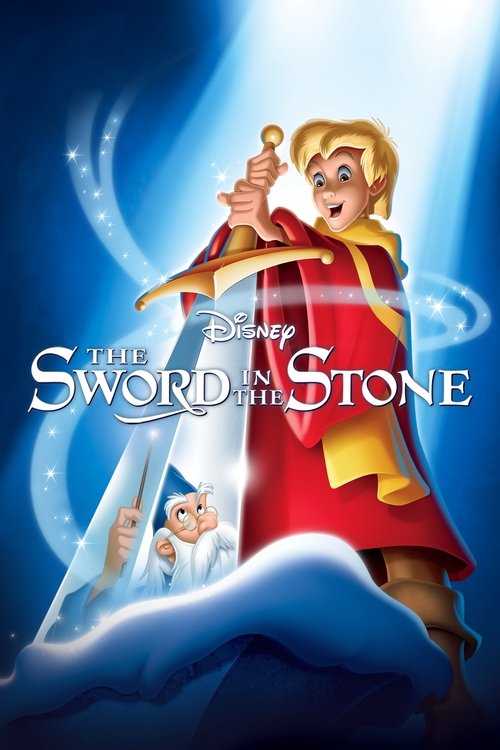
The Sword in the Stone
Wart is a young boy who aspires to be a knight's squire. On a hunting trip he falls in on Merlin, a powerful but amnesiac wizard who has plans for him beyond mere squiredom. He starts by trying to give him an education, believing that once one has an education, one can go anywhere. Needless to say, it doesn't quite work out that way.
Despite its limited budget of $3.0M, The Sword in the Stone became a runaway success, earning $22.2M worldwide—a remarkable 640% return. The film's innovative storytelling engaged audiences, showing that strong storytelling can transcend budget limitations.
Nominated for 1 Oscar. 1 win & 1 nomination


Plot Structure
Story beats plotted across runtime


Narrative Arc
Emotional journey through the story's key moments
Story Circle
Blueprint 15-beat structure
Arcplot Score Breakdown
Weighted: Precision (70%) + Arc (15%) + Theme (15%)
The Sword in the Stone (1963) exhibits strategically placed plot construction, characteristic of Wolfgang Reitherman's storytelling approach. This structural analysis examines how the film's 15-point plot structure maps to proven narrative frameworks across 1 hour and 19 minutes. With an Arcplot score of 7.4, the film balances conventional beats with creative variation.
Characters
Cast & narrative archetypes

Arthur "Wart"
Merlin
Archimedes
Madam Mim
Sir Ector
Kay
Main Cast & Characters
Arthur "Wart"
Played by Rickie Sorensen
A humble orphan boy who dreams of becoming a squire, unaware he is destined to be King of England.
Merlin
Played by Karl Swenson
An eccentric, time-traveling wizard who becomes Wart's tutor and teaches him through magical transformations.
Archimedes
Played by Junius Matthews
Merlin's educated and skeptical pet owl who reluctantly helps with Wart's education.
Madam Mim
Played by Martha Wentworth
A wicked, shapeshifting witch who challenges Merlin to a wizard's duel and believes in the power of evil.
Sir Ector
Played by Sebastian Cabot
Wart's foster father, a gruff but good-hearted knight who runs his castle with traditional values.
Kay
Played by Norman Alden
Sir Ector's biological son and Wart's foster brother, an arrogant bully training to be a knight.
Structural Analysis
The Status Quo at 1 minutes (1% through the runtime) establishes Young Arthur (Wart) is a scrawny orphan squire serving his foster brother Kay, living in a medieval castle where he is treated as a servant with no prospects for greatness.. The analysis reveals that this early placement immediately immerses viewers in the story world.
The inciting incident occurs at 9 minutes when Merlin announces he will become Wart's tutor, disrupting the boy's expected life path. Sir Ector reluctantly agrees to let Merlin educate Wart, opening the door to transformation.. At 12% through the film, this Disruption aligns precisely with traditional story structure. This beat shifts the emotional landscape, launching the protagonist into the central conflict.
The First Threshold at 19 minutes marks the transition into Act II, occurring at 24% of the runtime. This indicates the protagonist's commitment to Wart actively chooses to embrace Merlin's teaching when he agrees to be transformed into a fish. He commits to the magical educational journey, leaving behind his ordinary existence., moving from reaction to action.
At 40 minutes, the Midpoint arrives at 51% of the runtime—precisely centered, creating perfect narrative symmetry. Notably, this crucial beat The Wizard's Duel between Merlin and Madam Mim. False victory: Merlin wins by using brains (becoming a germ), but immediately after, Sir Ector fires Merlin, ending Wart's education prematurely., fundamentally raising what's at risk. The emotional intensity shifts, dividing the narrative into clear before-and-after phases.
The Collapse moment at 59 minutes (75% through) represents the emotional nadir. Here, At the tournament, Wart forgets Kay's sword at the inn. Alone and desperate, he faces failure as a squire—the "death" of his hope to be anything more than a servant., demonstrates the protagonist at their lowest point. This beat's placement in the final quarter sets up the climactic reversal.
The Second Threshold at 64 minutes initiates the final act resolution at 81% of the runtime. Wart pulls the sword from the stone without effort. This synthesis moment combines his humble character (doing his duty) with Merlin's lessons (worth comes from within). He discovers his true identity., demonstrating the transformation achieved throughout the journey.
Emotional Journey
The Sword in the Stone's emotional architecture traces a deliberate progression across 15 carefully calibrated beats.
Narrative Framework
This structural analysis employs systematic plot point analysis that identifies crucial turning points. By mapping The Sword in the Stone against these established plot points, we can identify how Wolfgang Reitherman utilizes or subverts traditional narrative conventions. The plot point approach reveals not only adherence to structural principles but also creative choices that distinguish The Sword in the Stone within the animation genre.
Wolfgang Reitherman's Structural Approach
Among the 5 Wolfgang Reitherman films analyzed on Arcplot, the average structural score is 6.8, demonstrating varied approaches to story architecture. The Sword in the Stone represents one of the director's most structurally precise works. For comparative analysis, explore the complete Wolfgang Reitherman filmography.
Comparative Analysis
Additional animation films include The Bad Guys, Puss in Boots and Violet Evergarden: Eternity and the Auto Memory Doll. For more Wolfgang Reitherman analyses, see Robin Hood, The Rescuers and The Aristocats.
Plot Points by Act
Act I
SetupStatus Quo
Young Arthur (Wart) is a scrawny orphan squire serving his foster brother Kay, living in a medieval castle where he is treated as a servant with no prospects for greatness.
Theme
Merlin states the theme: "Education is the key to greatness" and "Brains triumph over brawn." He hints that knowledge and wisdom, not physical strength, will determine the future.
Worldbuilding
Establishing Wart's lowly position in Sir Ector's household, his duties as Kay's squire, and the medieval world where might makes right. Merlin appears mysteriously, knowing Wart's future.
Disruption
Merlin announces he will become Wart's tutor, disrupting the boy's expected life path. Sir Ector reluctantly agrees to let Merlin educate Wart, opening the door to transformation.
Resistance
Merlin prepares Wart for lessons, debating with Sir Ector about the value of education vs. martial training. Wart is uncertain about this new path but curious about magic.
Act II
ConfrontationFirst Threshold
Wart actively chooses to embrace Merlin's teaching when he agrees to be transformed into a fish. He commits to the magical educational journey, leaving behind his ordinary existence.
Mirror World
As a fish, Wart encounters the pike and learns his first lesson about using brains over brawn. This aquatic adventure introduces the thematic pattern of transformation-as-education.
Premise
The "fun and games" of magical education: Wart becomes a squirrel (learning about love), faces Madam Mim, and experiences various transformations that teach him different life lessons.
Midpoint
The Wizard's Duel between Merlin and Madam Mim. False victory: Merlin wins by using brains (becoming a germ), but immediately after, Sir Ector fires Merlin, ending Wart's education prematurely.
Opposition
Wart returns to his servant life. Kay is chosen to compete for the crown in London. Wart's dreams seem crushed as he must serve Kay, and his lessons appear to have been for nothing.
Collapse
At the tournament, Wart forgets Kay's sword at the inn. Alone and desperate, he faces failure as a squire—the "death" of his hope to be anything more than a servant.
Crisis
Wart wanders London alone, trying to find a sword. He stumbles upon the sword in the stone in the churchyard, not recognizing its significance.
Act III
ResolutionSecond Threshold
Wart pulls the sword from the stone without effort. This synthesis moment combines his humble character (doing his duty) with Merlin's lessons (worth comes from within). He discovers his true identity.
Synthesis
Wart is proclaimed King Arthur. He struggles with his new identity, feeling unprepared, but Merlin returns to reassure him. Arthur accepts his destiny, understanding that his education has prepared him.
Transformation
Final image: Arthur sits on the throne, transformed from scrawny "Wart" to King Arthur. He now understands that brains, compassion, and wisdom—not brawn—make a true leader.