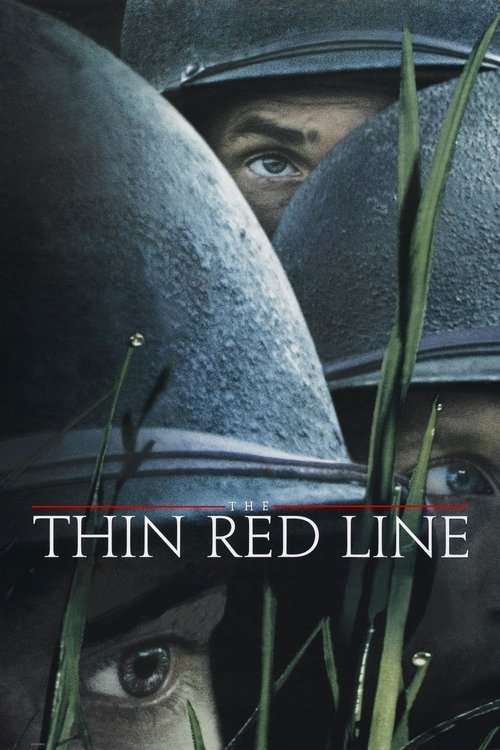
The Thin Red Line
The story of a group of men, an Army Rifle company called C-for-Charlie, who change, suffer, and ultimately make essential discoveries about themselves during the fierce World War II battle of Guadalcanal. It follows their journey, from the surprise of an unopposed landing, through the bloody and exhausting battles that follow, to the ultimate departure of those who survived.
Working with a mid-range budget of $52.0M, the film achieved a steady performer with $98.1M in global revenue (+89% profit margin).
Nominated for 7 Oscars. 23 wins & 47 nominations


Plot Structure
Story beats plotted across runtime


Narrative Arc
Emotional journey through the story's key moments
Story Circle
Blueprint 15-beat structure
Arcplot Score Breakdown
Weighted: Precision (70%) + Arc (15%) + Theme (15%)
The Thin Red Line (1998) showcases deliberately positioned dramatic framework, characteristic of Terrence Malick's storytelling approach. This structural analysis examines how the film's 15-point plot structure maps to proven narrative frameworks across 2 hours and 51 minutes. With an Arcplot score of 7.2, the film balances conventional beats with creative variation.
Characters
Cast & narrative archetypes

Private Witt
First Sergeant Welsh
Lieutenant Colonel Tall
Captain Staros
Private Bell
Captain Bosche
Brigadier General Quintard
Private Doll
Corporal Fife
Main Cast & Characters
Private Witt
Played by Jim Caviezel
A contemplative AWOL soldier who finds peace in nature and questions the violence of war. Returns to his unit for the Guadalcanal invasion.
First Sergeant Welsh
Played by Sean Penn
A cynical, hardened NCO who believes in survival over idealism. Shares a complex relationship with Witt despite their opposing worldviews.
Lieutenant Colonel Tall
Played by Nick Nolte
An ambitious officer desperate for glory to salvage his stalled career. Pushes his men into dangerous assaults regardless of casualties.
Captain Staros
Played by Elias Koteas
A compassionate company commander who refuses to sacrifice his men for Tall's ambitions. Values human life over military objectives.
Private Bell
Played by Ben Chaplin
A soldier haunted by memories of his wife and their love. Struggles between his domestic past and the brutal present of combat.
Captain Bosche
Played by George Clooney
A tough, pragmatic officer who replaces Staros. Represents the military's willingness to follow orders without moral hesitation.
Brigadier General Quintard
Played by John Travolta
Tall's superior officer who denies him further advancement despite battlefield success. Represents the indifferent military hierarchy.
Private Doll
Played by Dash Mihok
A sensitive young soldier who experiences the dehumanizing effects of combat. Discovers his capacity for violence and struggles with it.
Corporal Fife
Played by Adrien Brody
A clerk thrust into combat who wrestles with cowardice and fear. Represents the ordinary man confronting extraordinary violence.
Structural Analysis
The Status Quo at 3 minutes (2% through the runtime) establishes Private Witt lives in paradise among Melanesian villagers, swimming in crystal waters. Images of innocence, children playing, natural beauty. This "before" state establishes the grace and harmony that war will shatter.. Structural examination shows that this early placement immediately immerses viewers in the story world.
The inciting incident occurs at 18 minutes when C Company arrives at Guadalcanal. Boats hit the beach, soldiers disembark into the war zone. The transition from sea voyage to combat island marks the disruption of any remaining safety. The idyll is definitively over.. At 11% through the film, this Disruption aligns precisely with traditional story structure. This beat shifts the emotional landscape, launching the protagonist into the central conflict.
The First Threshold at 36 minutes marks the transition into Act II, occurring at 21% of the runtime. This indicates the protagonist's commitment to C Company begins the advance toward Hill 210 (the Japanese-held position). Staros gives the order to move forward. This is the irreversible choice to enter combat - the mission has begun, and there is no turning back from what's ahead., moving from reaction to action.
At 90 minutes, the Midpoint arrives at 52% of the runtime—precisely centered, creating perfect narrative symmetry. Structural examination shows that this crucial beat Hill 210 captured, but it's a false victory. Tall relieves Staros of command for his "failure" to be aggressive enough. The victory is hollow - good men punished, the moral center removed, the cost too high. Stakes raised: the human cost of ambition revealed. The second half will deal with aftermath and trauma., fundamentally raising what's at risk. The emotional intensity shifts, dividing the narrative into clear before-and-after phases.
The Collapse moment at 132 minutes (77% through) represents the emotional nadir. Here, Bell burns the photographs of his wife. The death of love, the death of the dream that sustained him. This moment contains the "whiff of death" - the destruction of the emotional and spiritual anchor. Combined with the accumulated trauma, this is the all-is-lost moment for the soul of the company., reveals the protagonist at their lowest point. This beat's placement in the final quarter sets up the climactic reversal.
The Second Threshold at 140 minutes initiates the final act resolution at 82% of the runtime. Witt volunteers for a dangerous reconnaissance mission. Having grappled with death throughout, he makes peace with it. He synthesizes his philosophy: acceptance of both grace and evil, willingness to sacrifice for others. This is his conscious choice to act according to his beliefs, regardless of outcome., demonstrating the transformation achieved throughout the journey.
Emotional Journey
The Thin Red Line's emotional architecture traces a deliberate progression across 15 carefully calibrated beats.
Narrative Framework
This structural analysis employs a 15-point narrative structure framework that maps key story moments. By mapping The Thin Red Line against these established plot points, we can identify how Terrence Malick utilizes or subverts traditional narrative conventions. The plot point approach reveals not only adherence to structural principles but also creative choices that distinguish The Thin Red Line within the drama genre.
Terrence Malick's Structural Approach
Among the 4 Terrence Malick films analyzed on Arcplot, the average structural score is 7.0, demonstrating varied approaches to story architecture. The Thin Red Line represents one of the director's most structurally precise works. For comparative analysis, explore the complete Terrence Malick filmography.
Comparative Analysis
Additional drama films include After Thomas, South Pacific and Dirty Dancing: Havana Nights. For more Terrence Malick analyses, see The Tree of Life, The New World and A Hidden Life.
Plot Points by Act
Act I
SetupStatus Quo
Private Witt lives in paradise among Melanesian villagers, swimming in crystal waters. Images of innocence, children playing, natural beauty. This "before" state establishes the grace and harmony that war will shatter.
Theme
Witt's voiceover (though he is the spiritual protagonist): "What's this war in the heart of nature? Why does nature vie with itself?" Establishes the film's central thematic question about the coexistence of grace and evil in the world.
Worldbuilding
Introduction of ensemble cast: Welsh discovers Witt AWOL and has him arrested; C Company aboard transport ships; introduction of Lt. Col. Tall, Captain Staros, Private Bell (remembering his wife Marty); the contrast between paradise and military machinery; soldiers' various philosophies and fears about upcoming combat.
Disruption
C Company arrives at Guadalcanal. Boats hit the beach, soldiers disembark into the war zone. The transition from sea voyage to combat island marks the disruption of any remaining safety. The idyll is definitively over.
Resistance
Company moves inland through dense jungle; discovery of abandoned Japanese camp with evidence of atrocities; soldiers grapple with fear and anticipation; Tall pressures Staros to advance quickly; Staros resists, wanting to protect his men; philosophical voiceovers about death, nature, and purpose; the debate between duty and humanity.
Act II
ConfrontationFirst Threshold
C Company begins the advance toward Hill 210 (the Japanese-held position). Staros gives the order to move forward. This is the irreversible choice to enter combat - the mission has begun, and there is no turning back from what's ahead.
Mirror World
Bell's extended reverie of his wife Marty - memories of their love, intimacy, and connection. This subplot represents the world of love, grace, and meaning that stands in opposition to the violence of war. The relationship embodies what the men are fighting for and what war destroys.
Premise
The promise of a war film delivered: C Company pinned down in tall grass facing Hill 210; intense combat sequences; soldiers experiencing terror, chaos, and death; Tall demands frontal assault; Staros refuses, protecting his men; flanking maneuver initiated; brutal firefights; Japanese positions overrun; the visceral reality of warfare explored through Malick's poetic lens.
Midpoint
Hill 210 captured, but it's a false victory. Tall relieves Staros of command for his "failure" to be aggressive enough. The victory is hollow - good men punished, the moral center removed, the cost too high. Stakes raised: the human cost of ambition revealed. The second half will deal with aftermath and trauma.
Opposition
C Company occupies captured positions; soldiers process trauma; Witt encounters dying Japanese soldier, contemplates shared humanity; Bell receives letter from wife asking for divorce - his Mirror World collapses; men struggle with PTSD, guilt, and loss of meaning; nature indifferent to suffering; characters' philosophies tested and found wanting; darkness closes in psychologically and spiritually.
Collapse
Bell burns the photographs of his wife. The death of love, the death of the dream that sustained him. This moment contains the "whiff of death" - the destruction of the emotional and spiritual anchor. Combined with the accumulated trauma, this is the all-is-lost moment for the soul of the company.
Crisis
Soldiers in dark night of the soul: Welsh's cynicism hardens; Bell mourns his lost love; Witt contemplates mortality and meaning; the company spiritually adrift; meditation on whether grace can exist in a world of such violence; the question of whether love and beauty matter if they can be so easily destroyed.
Act III
ResolutionSecond Threshold
Witt volunteers for a dangerous reconnaissance mission. Having grappled with death throughout, he makes peace with it. He synthesizes his philosophy: acceptance of both grace and evil, willingness to sacrifice for others. This is his conscious choice to act according to his beliefs, regardless of outcome.
Synthesis
Witt and small team on patrol through jungle; surrounded by Japanese soldiers; Witt provides covering fire for his comrades to escape; he runs, briefly considers killing, then chooses to surrender; shot down by Japanese soldiers; his sacrifice saves others; his body discovered and buried; company prepares to leave Guadalcanal; departure from the island.
Transformation
Closing images mirror the opening: ships departing, soldiers leaving the island, a coconut sprouting on the beach. Nature continues, life persists. Welsh reflects on Witt's death with newfound respect. The transformation: grace and evil coexist, but grace - embodied by Witt's sacrifice - leaves something behind. The cycle continues.