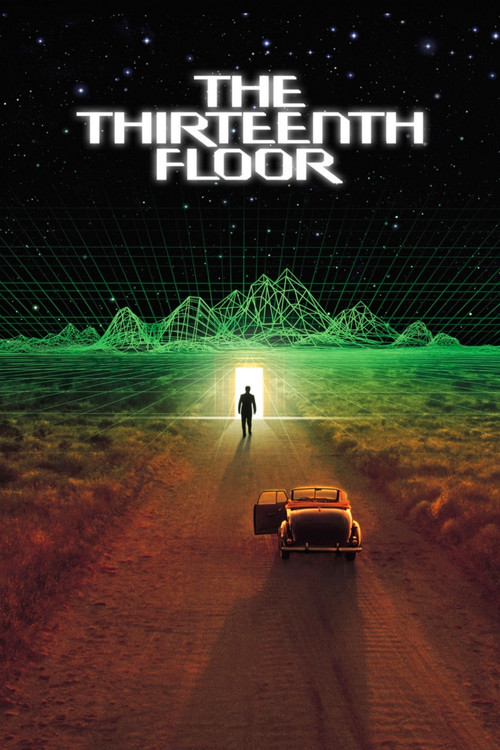
The Thirteenth Floor
In Los Angeles, a wealthy man, known as Mr. Fuller, discovers a shocking secret about the world he lives in. Fearing for his life, he leaves a desperate message for a friend of his in the most unexpected place.
Working with a moderate budget of $16.0M, the film achieved a steady performer with $18.6M in global revenue (+16% profit margin).


Plot Structure
Story beats plotted across runtime


Narrative Arc
Emotional journey through the story's key moments
Story Circle
Blueprint 15-beat structure
Arcplot Score Breakdown
Weighted: Precision (70%) + Arc (15%) + Theme (15%)
The Thirteenth Floor (1999) showcases carefully calibrated story structure, characteristic of Josef Rusnak's storytelling approach. This structural analysis examines how the film's 15-point plot structure maps to proven narrative frameworks across 1 hour and 40 minutes. With an Arcplot score of 6.8, the film balances conventional beats with creative variation.
Characters
Cast & narrative archetypes

Douglas Hall
Jane Fuller
Hannon Fuller
Jason Whitney
Detective Larry McBain
Ashton
David
Main Cast & Characters
Douglas Hall
Played by Craig Bierko
Computer scientist who discovers his reality may be a simulation after his mentor's murder.
Jane Fuller
Played by Gretchen Mol
Mysterious woman claiming to be the daughter of Hall's murdered mentor, holding secrets about reality.
Hannon Fuller
Played by Armin Mueller-Stahl
Brilliant creator of the 1937 simulation who is murdered after discovering a devastating truth.
Jason Whitney
Played by Vincent D'Onofrio
Hall's business partner and friend who becomes a suspect in the investigation.
Detective Larry McBain
Played by Dennis Haysbert
Hard-nosed detective investigating Hannon Fuller's murder with Hall as the prime suspect.
Ashton
Played by Vincent D'Onofrio
Bartender in the 1937 simulation who becomes aware he is not real.
David
Played by Craig Bierko
Jane's husband from the upper reality layer who has been illegally entering the simulation.
Structural Analysis
The Status Quo at 1 minutes (1% through the runtime) establishes 1937 Los Angeles: Hannon Fuller leaves a cryptic letter at a hotel bar before returning to the present, establishing the simulated world within a world and Fuller's discovery of a terrible truth.. Significantly, this early placement immediately immerses viewers in the story world.
The inciting incident occurs at 12 minutes when Douglas discovers Hannon Fuller has been brutally murdered. Detective McBain suspects Douglas, and bloody clothing found in his home suggests he may have committed the crime during a blackout - his world shatters as he becomes the prime suspect.. At 12% through the film, this Disruption aligns precisely with traditional story structure. This beat shifts the emotional landscape, launching the protagonist into the central conflict.
The First Threshold at 25 minutes marks the transition into Act II, occurring at 25% of the runtime. This reveals the protagonist's commitment to Douglas makes the choice to jack into the 1937 simulation to find Fuller's letter and discover what his mentor knew. He takes on the identity of John Ferguson, the bank teller, committing to uncovering the truth regardless of the consequences., moving from reaction to action.
At 50 minutes, the Midpoint arrives at 50% of the runtime—precisely centered, creating perfect narrative symmetry. Structural examination shows that this crucial beat Jerry Ashton drives to the edge of the 1937 simulation and discovers the horrifying truth: his world ends at the city limits, revealing it's all a simulation. This false defeat parallels the revelation awaiting Douglas about his own reality., fundamentally raising what's at risk. The emotional intensity shifts, dividing the narrative into clear before-and-after phases.
The Collapse moment at 75 minutes (75% through) represents the emotional nadir. Here, Douglas discovers the ultimate truth: he himself is a simulation. His entire reality - 1999 Los Angeles - is just another layer of simulation created by someone in an even higher reality. Everything he believed about his existence is a lie., reveals the protagonist at their lowest point. This beat's placement in the final quarter sets up the climactic reversal.
The Second Threshold at 80 minutes initiates the final act resolution at 80% of the runtime. Douglas chooses to fight for his existence and his love for Jane despite being "just" a simulation. He realizes that his consciousness, emotions, and choices are real regardless of the substrate. He decides to confront David and save both himself and Jane., demonstrating the transformation achieved throughout the journey.
Emotional Journey
The Thirteenth Floor's emotional architecture traces a deliberate progression across 15 carefully calibrated beats.
Narrative Framework
This structural analysis employs proven narrative structure principles that track dramatic progression. By mapping The Thirteenth Floor against these established plot points, we can identify how Josef Rusnak utilizes or subverts traditional narrative conventions. The plot point approach reveals not only adherence to structural principles but also creative choices that distinguish The Thirteenth Floor within the thriller genre.
Comparative Analysis
Additional thriller films include The Warriors, Thunderball and Rustom.
Plot Points by Act
Act I
SetupStatus Quo
1937 Los Angeles: Hannon Fuller leaves a cryptic letter at a hotel bar before returning to the present, establishing the simulated world within a world and Fuller's discovery of a terrible truth.
Theme
Fuller's note to Douglas references Descartes: "I think, therefore I am" - questioning the nature of existence and reality, foreshadowing the revelation that their world may not be what it seems.
Worldbuilding
Douglas Hall's world is established: a successful computer scientist who helped Fuller create a virtual 1937 Los Angeles simulation. We meet his colleague Whitney, see the high-tech simulation facility, and learn the routine of jacking into the simulated world.
Disruption
Douglas discovers Hannon Fuller has been brutally murdered. Detective McBain suspects Douglas, and bloody clothing found in his home suggests he may have committed the crime during a blackout - his world shatters as he becomes the prime suspect.
Resistance
Douglas struggles with the murder investigation while mysterious Jane Fuller appears claiming to be Hannon's daughter - though no record of her exists. Douglas debates whether to enter the 1937 simulation to retrieve Fuller's final message, uncertain if he can trust his own memories.
Act II
ConfrontationFirst Threshold
Douglas makes the choice to jack into the 1937 simulation to find Fuller's letter and discover what his mentor knew. He takes on the identity of John Ferguson, the bank teller, committing to uncovering the truth regardless of the consequences.
Mirror World
Douglas encounters Jane again, and their connection deepens. She represents both the mystery and the emotional truth he seeks. Their developing relationship will ultimately reveal the nature of his reality and provide his reason for existence.
Premise
Douglas investigates within the 1937 simulation, tracking Fuller's movements through the noir-styled Los Angeles. He encounters Ashton, Fuller's simulation counterpart, and the bartender Jerry who holds the letter. The mystery deepens as Douglas experiences disorienting blackouts.
Midpoint
Jerry Ashton drives to the edge of the 1937 simulation and discovers the horrifying truth: his world ends at the city limits, revealing it's all a simulation. This false defeat parallels the revelation awaiting Douglas about his own reality.
Opposition
The walls close in on Douglas. Detective McBain intensifies his investigation. Whitney becomes increasingly suspicious and unstable. Jane reveals partial truths but withholds the complete picture. Douglas discovers evidence that he may have killed Fuller while possessed by his simulation counterpart.
Collapse
Douglas discovers the ultimate truth: he himself is a simulation. His entire reality - 1999 Los Angeles - is just another layer of simulation created by someone in an even higher reality. Everything he believed about his existence is a lie.
Crisis
Douglas reels from the existential revelation. Jane confirms the truth: she's from the "real" world above, and her husband David has been using Douglas's body to commit crimes, including murdering Fuller. Douglas must confront what it means to be a simulated being who has developed genuine consciousness and love.
Act III
ResolutionSecond Threshold
Douglas chooses to fight for his existence and his love for Jane despite being "just" a simulation. He realizes that his consciousness, emotions, and choices are real regardless of the substrate. He decides to confront David and save both himself and Jane.
Synthesis
The finale unfolds as David downloads into the simulation to kill Douglas and reclaim Jane. Whitney sacrifices himself. In the climactic confrontation, Douglas is shot but his consciousness is uploaded to the real world into David's body as David is killed. Douglas emerges in the true reality with Jane.
Transformation
Douglas awakens in the real world - 2024 - in David's body but with his own consciousness intact. He and Jane are reunited on a balcony overlooking a futuristic Los Angeles. A simulated being has transcended his programming to become truly real through love and choice.