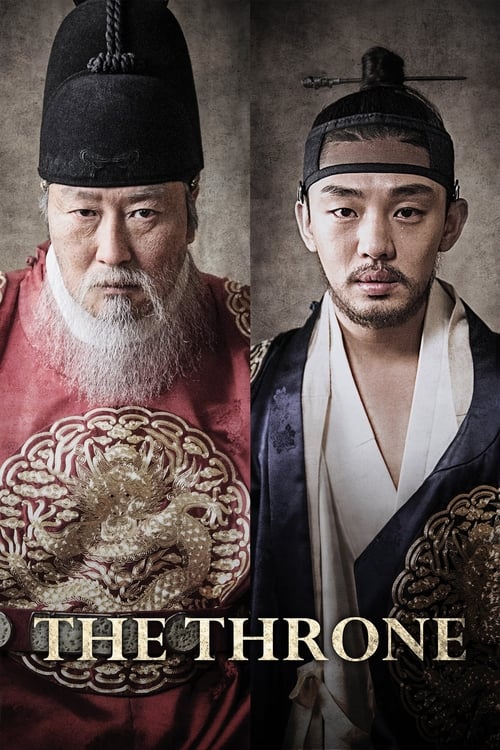
The Throne
Ancient Korea, July 4, 1762. The Crown Prince Hyojang, posthumously named Sado, son of King Yeongjo of Joseon, is accused of treason. Thus, the king asks him to commit suicide, but his closest vassals prevent it, so the king orders the prince to get inside a wooden rice chest, where he suffers deprivation of food and water.
The film earned $42.2M at the global box office.


Plot Structure
Story beats plotted across runtime


Narrative Arc
Emotional journey through the story's key moments
Story Circle
Blueprint 15-beat structure
Arcplot Score Breakdown
Weighted: Precision (70%) + Arc (15%) + Theme (15%)
The Throne (2015) exemplifies carefully calibrated dramatic framework, characteristic of Lee Joon-ik's storytelling approach. This structural analysis examines how the film's 15-point plot structure maps to proven narrative frameworks across 2 hours and 6 minutes. With an Arcplot score of 7.1, the film balances conventional beats with creative variation.
Characters
Cast & narrative archetypes

Crown Prince Sado
King Yeongjo
Lady Hyegyeong
Court Lady Mun
Hong Bong-han
Prince Yi San
Main Cast & Characters
Crown Prince Sado
Played by Yoo Ah-in
The troubled crown prince whose mental instability and rebellion against his father leads to tragic consequences.
King Yeongjo
Played by Song Kang-ho
The rigid, perfectionist king torn between duty to his kingdom and love for his son.
Lady Hyegyeong
Played by Moon Geun-young
Crown Princess and Sado's wife, who witnesses and documents the tragic events while trying to protect her family.
Court Lady Mun
Played by Kim Hae-sook
Sado's devoted mother figure who supports him despite his increasingly erratic behavior.
Hong Bong-han
Played by Jeon Hye-jin
Lady Hyegyeong's father and a court official who navigates the dangerous political landscape.
Prince Yi San
Played by So Ji-sub
Sado's young son, the future King Jeongjo, caught in the tragedy between grandfather and father.
Structural Analysis
The Status Quo at 1 minutes (1% through the runtime) establishes The film opens on the fateful day in 1762 as Crown Prince Sado is brought before King Yeongjo. The palace atmosphere is suffocating with tension, establishing the broken relationship between father and son that will be explored through flashbacks.. Of particular interest, this early placement immediately immerses viewers in the story world.
The inciting incident occurs at 15 minutes when Young Sado fails a critical examination before his father, freezing under the king's withering gaze. This public humiliation marks the first irreparable crack in their relationship, setting Sado on his tragic path as Yeongjo begins to view his son as fundamentally flawed.. At 12% through the film, this Disruption aligns precisely with traditional story structure. This beat shifts the emotional landscape, launching the protagonist into the central conflict.
The First Threshold at 32 minutes marks the transition into Act II, occurring at 25% of the runtime. This illustrates the protagonist's commitment to Sado makes the fateful choice to pursue his own interests—art, literature, and martial arts—rather than conform entirely to his father's scholarly expectations. This decision to embrace his authentic self, though noble, seals his fate as it widens the rift with Yeongjo., moving from reaction to action.
At 63 minutes, the Midpoint arrives at 50% of the runtime—precisely centered, creating perfect narrative symmetry. Significantly, this crucial beat A violent incident reveals the depth of Sado's psychological breakdown. The court witnesses behavior they cannot ignore, and Yeongjo must publicly acknowledge his son's instability. This false defeat marks the point of no return—both men realize reconciliation may be impossible., fundamentally raising what's at risk. The emotional intensity shifts, dividing the narrative into clear before-and-after phases.
The Collapse moment at 95 minutes (75% through) represents the emotional nadir. Here, King Yeongjo orders the rice chest brought forth. In a devastating scene, he commands his own son to enter the wooden container, choosing the throne over his child. Sado, in a moment of terrible clarity, accepts his fate and steps inside—the ultimate whiff of death made literal., reveals the protagonist at their lowest point. This beat's placement in the final quarter sets up the climactic reversal.
The Second Threshold at 101 minutes initiates the final act resolution at 80% of the runtime. After eight days, Sado dies in the rice chest. Yeongjo finally approaches and opens it, confronting the full weight of his choice. In this moment, he must reckon with having killed his own son—a threshold into grief and legacy that cannot be uncrossed., demonstrating the transformation achieved throughout the journey.
Emotional Journey
The Throne's emotional architecture traces a deliberate progression across 15 carefully calibrated beats.
Narrative Framework
This structural analysis employs proven narrative structure principles that track dramatic progression. By mapping The Throne against these established plot points, we can identify how Lee Joon-ik utilizes or subverts traditional narrative conventions. The plot point approach reveals not only adherence to structural principles but also creative choices that distinguish The Throne within the drama genre.
Comparative Analysis
Additional drama films include After Thomas, South Pacific and Dirty Dancing: Havana Nights.
Plot Points by Act
Act I
SetupStatus Quo
The film opens on the fateful day in 1762 as Crown Prince Sado is brought before King Yeongjo. The palace atmosphere is suffocating with tension, establishing the broken relationship between father and son that will be explored through flashbacks.
Theme
A court official remarks on the impossible burden of being both a perfect son and a worthy heir: "A crown prince must satisfy both heaven and his father, yet sometimes these demands are irreconcilable." This encapsulates the film's exploration of filial duty versus personal identity.
Worldbuilding
The rigid hierarchy of the Joseon royal court is established through flashbacks showing young Sado's childhood. King Yeongjo's impossibly high standards, the political factions vying for power, and Sado's early signs of artistic temperament conflicting with royal expectations are introduced.
Disruption
Young Sado fails a critical examination before his father, freezing under the king's withering gaze. This public humiliation marks the first irreparable crack in their relationship, setting Sado on his tragic path as Yeongjo begins to view his son as fundamentally flawed.
Resistance
Sado struggles between his desire to please his father and his own nature. Court officials and his mother offer conflicting guidance. The political machinations of the Noron faction begin targeting Sado, while he debates whether to suppress his true self or assert his independence.
Act II
ConfrontationFirst Threshold
Sado makes the fateful choice to pursue his own interests—art, literature, and martial arts—rather than conform entirely to his father's scholarly expectations. This decision to embrace his authentic self, though noble, seals his fate as it widens the rift with Yeongjo.
Mirror World
Lady Hyegyeong, Sado's wife, emerges as his emotional anchor. Their tender moments reveal Sado's capacity for love and normalcy, contrasting sharply with his tortured relationship with his father. She represents the life and connection he could have had.
Premise
The film explores the tragic dance between father and son through parallel timelines. Sado's mental state deteriorates as Yeongjo's criticism intensifies. We witness both tender moments of potential reconciliation and devastating confrontations, building the emotional stakes of their doomed relationship.
Midpoint
A violent incident reveals the depth of Sado's psychological breakdown. The court witnesses behavior they cannot ignore, and Yeongjo must publicly acknowledge his son's instability. This false defeat marks the point of no return—both men realize reconciliation may be impossible.
Opposition
Political enemies exploit Sado's vulnerability. The Noron faction pressures Yeongjo to act against his son. Sado's episodes become more frequent and severe. The king faces an impossible choice between his love for his son and his duty to the kingdom, with courtiers demanding resolution.
Collapse
King Yeongjo orders the rice chest brought forth. In a devastating scene, he commands his own son to enter the wooden container, choosing the throne over his child. Sado, in a moment of terrible clarity, accepts his fate and steps inside—the ultimate whiff of death made literal.
Crisis
The court watches in horror as Sado is sealed in the chest. Lady Hyegyeong pleads desperately. Yeongjo wavers but cannot reverse his decree without losing face. The agonizing days pass as Sado slowly perishes, with the king tormented by what he has done.
Act III
ResolutionSecond Threshold
After eight days, Sado dies in the rice chest. Yeongjo finally approaches and opens it, confronting the full weight of his choice. In this moment, he must reckon with having killed his own son—a threshold into grief and legacy that cannot be uncrossed.
Synthesis
The aftermath unfolds as Yeongjo attempts to protect Sado's son (the future King Jeongjo) from the taint of his father's disgrace. Lady Hyegyeong ensures the truth survives. The film synthesizes the tragedy: a father who loved too rigidly, a son who couldn't conform, both destroyed by the system.
Transformation
The final image shows Yeongjo alone, the weight of the crown heavier than ever. He has preserved the throne but destroyed his family. The transformation is tragic: a king who began demanding perfection ends having committed the ultimate imperfection—filicide. The cycle of dynastic pain continues.