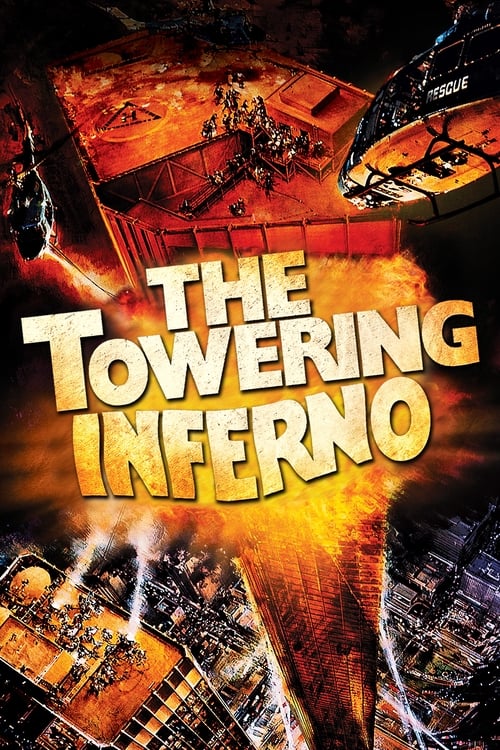
The Towering Inferno
At the opening party of a colossal—but poorly constructed—skyscraper, a massive fire breaks out, threatening to destroy the tower and everyone in it.
Despite its modest budget of $14.0M, The Towering Inferno became a box office phenomenon, earning $116.0M worldwide—a remarkable 729% return. The film's distinctive approach connected with viewers, demonstrating that strong storytelling can transcend budget limitations.
3 Oscars. 13 wins & 14 nominations


Plot Structure
Story beats plotted across runtime


Narrative Arc
Emotional journey through the story's key moments
Story Circle
Blueprint 15-beat structure
Arcplot Score Breakdown
Weighted: Precision (70%) + Arc (15%) + Theme (15%)
The Towering Inferno (1974) reveals deliberately positioned dramatic framework, characteristic of John Guillermin's storytelling approach. This structural analysis examines how the film's 15-point plot structure maps to proven narrative frameworks across 2 hours and 45 minutes. With an Arcplot score of 6.9, the film balances conventional beats with creative variation.
Characters
Cast & narrative archetypes

Doug Roberts
Michael O'Hallorhan
James Duncan
Susan Franklin
Harlee Claiborne
Lisolette Mueller
Roger Simmons
Patty Simmons
Dan Bigelow
Main Cast & Characters
Doug Roberts
Played by Paul Newman
The building's architect who fights to save lives when his skyscraper catches fire due to cost-cutting electrical work.
Michael O'Hallorhan
Played by Steve McQueen
San Francisco Fire Chief who leads the rescue operation and confronts the deadly reality of modern high-rises.
James Duncan
Played by William Holden
The builder and owner of the Glass Tower who prioritized profit over safety, leading to the disaster.
Susan Franklin
Played by Faye Dunaway
Doug Roberts' fiancée, a magazine editor who becomes trapped in the burning building.
Harlee Claiborne
Played by Fred Astaire
Con-man and thief attending the dedication party who proves heroic during the crisis.
Lisolette Mueller
Played by Jennifer Jones
A kind widow who befriends Harlee and shows courage while helping evacuate children.
Roger Simmons
Played by Richard Chamberlain
Duncan's son-in-law and the building's electrical engineer who cut corners, causing the fire.
Patty Simmons
Played by Susan Blakely
Duncan's daughter and Roger's wife who must face her husband's culpability.
Dan Bigelow
Played by Robert Wagner
The building's fire and safety engineer who warned about inadequate safeguards.
Structural Analysis
The Status Quo at 2 minutes (1% through the runtime) establishes Doug Roberts arrives by helicopter to the newly completed Glass Tower, the world's tallest building, for its dedication ceremony. The building stands as a monument to ambition and modern engineering.. The analysis reveals that this early placement immediately immerses viewers in the story world.
The inciting incident occurs at 20 minutes when Fire breaks out on the 81st floor due to faulty wiring in a storage room. What should be a celebration becomes a catastrophe as the building's flawed electrical system ignites.. At 12% through the film, this Disruption aligns precisely with traditional story structure. This beat shifts the emotional landscape, launching the protagonist into the central conflict.
The First Threshold at 40 minutes marks the transition into Act II, occurring at 24% of the runtime. This demonstrates the protagonist's commitment to O'Hallorhan orders full evacuation of the building and calls for all available fire companies. The decision is made: they're committed to fighting an unprecedented high-rise fire. The party ends and the disaster truly begins., moving from reaction to action.
At 83 minutes, the Midpoint arrives at 50% of the runtime—precisely centered, creating perfect narrative symmetry. The analysis reveals that this crucial beat The external elevator rescue attempt ends in disaster when the car explodes, killing everyone inside. False hope turns to devastation. The stakes escalate dramatically—conventional rescue is impossible., fundamentally raising what's at risk. The emotional intensity shifts, dividing the narrative into clear before-and-after phases.
The Collapse moment at 121 minutes (73% through) represents the emotional nadir. Here, Lisolette Mueller, trying to save a cat, falls to her death from the exterior elevator. A senseless, tragic death that embodies the human cost of Duncan's negligence. The "whiff of death" is literal and heartbreaking., shows the protagonist at their lowest point. This beat's placement in the final quarter sets up the climactic reversal.
The Second Threshold at 131 minutes initiates the final act resolution at 79% of the runtime. O'Hallorhan proposes the desperate plan: blow the million-gallon water tanks on the roof to drown the fire. Roberts, using his architect knowledge, calculates it might work. The synthesis of firefighting experience and architectural expertise creates a final hope., demonstrating the transformation achieved throughout the journey.
Emotional Journey
The Towering Inferno's emotional architecture traces a deliberate progression across 15 carefully calibrated beats.
Narrative Framework
This structural analysis employs proven narrative structure principles that track dramatic progression. By mapping The Towering Inferno against these established plot points, we can identify how John Guillermin utilizes or subverts traditional narrative conventions. The plot point approach reveals not only adherence to structural principles but also creative choices that distinguish The Towering Inferno within the action genre.
John Guillermin's Structural Approach
Among the 6 John Guillermin films analyzed on Arcplot, the average structural score is 7.2, reflecting strong command of classical structure. The Towering Inferno takes a more unconventional approach compared to the director's typical style. For comparative analysis, explore the complete John Guillermin filmography.
Comparative Analysis
Additional action films include The Bad Guys, Puss in Boots and Venom: The Last Dance. For more John Guillermin analyses, see Death on the Nile, King Kong and Skyjacked.
Plot Points by Act
Act I
SetupStatus Quo
Doug Roberts arrives by helicopter to the newly completed Glass Tower, the world's tallest building, for its dedication ceremony. The building stands as a monument to ambition and modern engineering.
Theme
Building inspector voices concerns about cutting corners and cost-saving measures: "You know, one of these days, you're gonna kill 10,000 people in one of these firetraps." The theme of greed versus safety is established.
Worldbuilding
Introductions to the ensemble cast: architect Doug Roberts, builder James Duncan, con man Harlee Claiborne, Senator Parker, security chief Jernigan, and others gathering for the dedication party. Doug discovers electrical specifications were changed, creating fire hazards.
Disruption
Fire breaks out on the 81st floor due to faulty wiring in a storage room. What should be a celebration becomes a catastrophe as the building's flawed electrical system ignites.
Resistance
Fire Chief Mike O'Hallorhan arrives and assesses the situation. Duncan resists evacuation, wanting to save the party. O'Hallorhan debates the severity with building management, trying to convince them of the danger while the fire spreads unseen.
Act II
ConfrontationFirst Threshold
O'Hallorhan orders full evacuation of the building and calls for all available fire companies. The decision is made: they're committed to fighting an unprecedented high-rise fire. The party ends and the disaster truly begins.
Mirror World
Doug and Susan's relationship deepens as they work together to save people. The relationship subplot embodies the theme: genuine human connection and responsibility versus Duncan's corporate negligence.
Premise
The promise of the disaster film premise: spectacular rescue attempts, people trapped in elevators, the Scenic Elevator rescue, firefighters battling blazes on multiple floors, and the growing realization that traditional firefighting methods won't work on a building this tall.
Midpoint
The external elevator rescue attempt ends in disaster when the car explodes, killing everyone inside. False hope turns to devastation. The stakes escalate dramatically—conventional rescue is impossible.
Opposition
The fire intensifies and spreads. The Promenade Room is surrounded. Explosions rock the building. Simmons (the corrupt electrical contractor) falls to his death. Water pressure fails. Every attempted solution fails as the building itself becomes the enemy.
Collapse
Lisolette Mueller, trying to save a cat, falls to her death from the exterior elevator. A senseless, tragic death that embodies the human cost of Duncan's negligence. The "whiff of death" is literal and heartbreaking.
Crisis
The dark night: trapped survivors face hopelessness as fire surrounds the Promenade Room. O'Hallorhan and Roberts grimly contemplate the impossible. Duncan confronts his guilt. All seems lost.
Act III
ResolutionSecond Threshold
O'Hallorhan proposes the desperate plan: blow the million-gallon water tanks on the roof to drown the fire. Roberts, using his architect knowledge, calculates it might work. The synthesis of firefighting experience and architectural expertise creates a final hope.
Synthesis
The finale: Roberts and O'Hallorhan ascend to the roof through fire and explosions. They plant charges on the water tanks. The building shudders as millions of gallons cascade down. Survivors are rescued via breeches buoy. The fire is drowned. The building is saved but broken.
Transformation
In the aftermath, O'Hallorhan tells Duncan, "One of these days, you're gonna kill 10,000 in one of these firetraps, and I'm gonna keep eating smoke and carrying out bodies until somebody asks us how to build them." The closing mirrors the opening but everything has changed—the tower stands, but at devastating human cost.