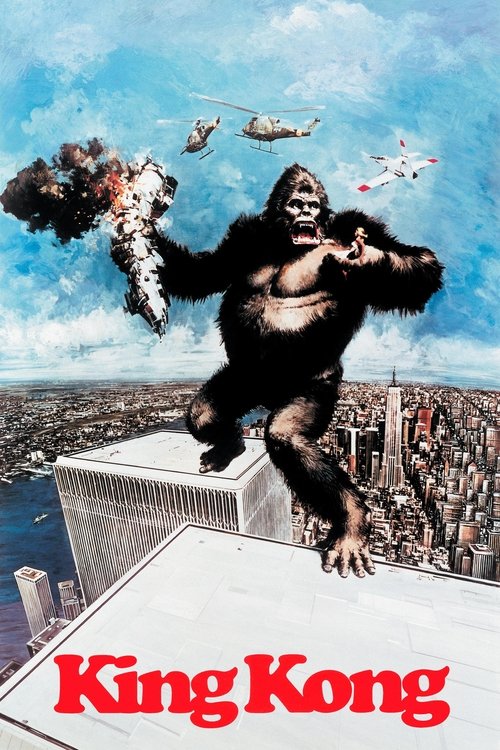
King Kong
An oil company expedition disturbs the peace of a giant ape and brings him back to New York to exploit him.
Despite a respectable budget of $23.0M, King Kong became a financial success, earning $90.6M worldwide—a 294% return.
Nominated for 2 Oscars. 5 wins & 3 nominations


Plot Structure
Story beats plotted across runtime


Narrative Arc
Emotional journey through the story's key moments
Story Circle
Blueprint 15-beat structure
Arcplot Score Breakdown
Weighted: Precision (70%) + Arc (15%) + Theme (15%)
King Kong (1976) reveals strategically placed narrative architecture, characteristic of John Guillermin's storytelling approach. This structural analysis examines how the film's 15-point plot structure maps to proven narrative frameworks across 2 hours and 14 minutes. With an Arcplot score of 6.6, the film balances conventional beats with creative variation.
Characters
Cast & narrative archetypes

Dwan
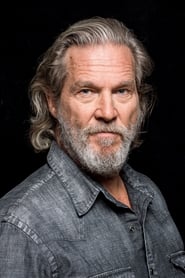
Jack Prescott
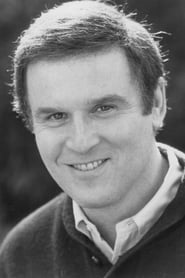
Fred Wilson

King Kong
Main Cast & Characters
Dwan
Played by Jessica Lange
An aspiring actress rescued at sea who becomes Kong's love interest and the key to calming the giant ape.
Jack Prescott
Played by Jeff Bridges
A paleontologist and environmental activist who stows away on the expedition to stop the exploitation of Skull Island.
Fred Wilson
Played by Charles Grodin
The ambitious and greedy oil company executive leading the expedition to Skull Island for commercial gain.
King Kong
Played by Rick Baker
The giant ape who rules Skull Island and develops a protective fascination with Dwan.
Structural Analysis
The Status Quo at 1 minutes (1% through the runtime) establishes The Petrox Explorer oil tanker departs Surabaya harbor at night, loaded with equipment for a secret expedition. Fred Wilson, the ambitious Petrox executive, oversees preparations for what he believes will be a major oil discovery.. Of particular interest, this early placement immediately immerses viewers in the story world.
The inciting incident occurs at 16 minutes when The expedition crew spots the mysterious island emerging from the perpetual fog bank. Wilson's satellite photos prove accurate, and the team prepares to land on an island that native legends say belongs to a god-like creature.. At 12% through the film, this Disruption aligns precisely with traditional story structure. This beat shifts the emotional landscape, launching the protagonist into the central conflict.
The First Threshold at 34 minutes marks the transition into Act II, occurring at 25% of the runtime. This indicates the protagonist's commitment to The natives kidnap Dwan from the ship and offer her as a bride sacrifice to Kong. The massive gates open, she is tied to the altar beyond the wall, and the drums summon the beast. There is no turning back—Kong has claimed her., moving from reaction to action.
At 67 minutes, the Midpoint arrives at 50% of the runtime—precisely centered, creating perfect narrative symmetry. Significantly, this crucial beat Jack rescues Dwan while Kong is distracted. Wilson announces his new plan: capture Kong alive and bring him to America as a Petrox promotional attraction. The false victory—Dwan is saved, and Wilson believes he's found something even more valuable than oil., fundamentally raising what's at risk. The emotional intensity shifts, dividing the narrative into clear before-and-after phases.
The Collapse moment at 101 minutes (75% through) represents the emotional nadir. Here, At the Shea Stadium unveiling, Kong breaks free from his chrome cage when photographers' flashbulbs enrage him while he sees Dwan with Jack. The crowd panics as Kong rampages through the stadium, destroying everything. Wilson's spectacle becomes a catastrophe, and people die in the chaos., demonstrates the protagonist at their lowest point. This beat's placement in the final quarter sets up the climactic reversal.
The Second Threshold at 107 minutes initiates the final act resolution at 80% of the runtime. Kong, carrying Dwan, begins climbing the World Trade Center's South Tower, seeking the highest ground like his island mountain. Jack realizes this is Kong's last stand and races to the towers, hoping to save Dwan before the military's inevitable attack., demonstrating the transformation achieved throughout the journey.
Emotional Journey
King Kong's emotional architecture traces a deliberate progression across 15 carefully calibrated beats.
Narrative Framework
This structural analysis employs structural analysis methodology used to understand storytelling architecture. By mapping King Kong against these established plot points, we can identify how John Guillermin utilizes or subverts traditional narrative conventions. The plot point approach reveals not only adherence to structural principles but also creative choices that distinguish King Kong within the adventure genre.
John Guillermin's Structural Approach
Among the 6 John Guillermin films analyzed on Arcplot, the average structural score is 7.2, reflecting strong command of classical structure. King Kong takes a more unconventional approach compared to the director's typical style. For comparative analysis, explore the complete John Guillermin filmography.
Comparative Analysis
Additional adventure films include The Black Stallion, The Bad Guys and Puss in Boots. For more John Guillermin analyses, see Death on the Nile, The Towering Inferno and Skyjacked.
Plot Points by Act
Act I
SetupStatus Quo
The Petrox Explorer oil tanker departs Surabaya harbor at night, loaded with equipment for a secret expedition. Fred Wilson, the ambitious Petrox executive, oversees preparations for what he believes will be a major oil discovery.
Theme
Jack Prescott, the stowaway paleontologist, warns the crew about the island's legend: "There's a huge beast on that island that no one has ever seen, but everyone has heard." He speaks to man's hubris in pursuing what should remain undiscovered.
Worldbuilding
The expedition's corporate greed is established as Wilson dreams of oil riches. Jack reveals the island's mythology. Dwan is rescued from a life raft after her yacht explodes, introducing the woman who will become Kong's obsession. The fog-shrouded island looms ahead.
Disruption
The expedition crew spots the mysterious island emerging from the perpetual fog bank. Wilson's satellite photos prove accurate, and the team prepares to land on an island that native legends say belongs to a god-like creature.
Resistance
The crew explores the island and discovers the massive wall built by an ancient civilization. They witness the native ceremony where tribal people prepare a sacrifice. Jack warns against interfering, but Wilson sees only opportunity. The natives spot Dwan and become fixated on her golden hair.
Act II
ConfrontationFirst Threshold
The natives kidnap Dwan from the ship and offer her as a bride sacrifice to Kong. The massive gates open, she is tied to the altar beyond the wall, and the drums summon the beast. There is no turning back—Kong has claimed her.
Mirror World
Kong gently carries Dwan through the jungle, and a strange bond begins to form. Despite her terror, she recognizes something almost tender in the giant ape's behavior. This beauty-and-beast relationship becomes the film's emotional core, mirroring Jack's developing love for her.
Premise
Kong protects Dwan from a giant snake and other jungle dangers, showing his capacity for gentleness amid violence. Jack leads a rescue party through treacherous terrain. Wilson discovers the oil deposit is worthless but realizes Kong himself could be the ultimate prize—a spectacular attraction worth millions.
Midpoint
Jack rescues Dwan while Kong is distracted. Wilson announces his new plan: capture Kong alive and bring him to America as a Petrox promotional attraction. The false victory—Dwan is saved, and Wilson believes he's found something even more valuable than oil.
Opposition
Kong is lured into a pit trap using Dwan as bait and gassed into unconsciousness. He's loaded into the ship's hold and transported to New York. Wilson orchestrates a massive media spectacle for Kong's unveiling. Jack grows increasingly disturbed by the exploitation while his relationship with Dwan deepens.
Collapse
At the Shea Stadium unveiling, Kong breaks free from his chrome cage when photographers' flashbulbs enrage him while he sees Dwan with Jack. The crowd panics as Kong rampages through the stadium, destroying everything. Wilson's spectacle becomes a catastrophe, and people die in the chaos.
Crisis
Kong tears through New York City searching for Dwan. He destroys an elevated train, causes citywide panic, and finds Dwan hiding in a bar. Jack must watch helplessly as Kong reclaims her. The military mobilizes while Jack desperately tries to find a way to save both Dwan and the creature he's come to pity.
Act III
ResolutionSecond Threshold
Kong, carrying Dwan, begins climbing the World Trade Center's South Tower, seeking the highest ground like his island mountain. Jack realizes this is Kong's last stand and races to the towers, hoping to save Dwan before the military's inevitable attack.
Synthesis
Kong leaps between the Twin Towers with Dwan, making his final stand atop the South Tower. Military helicopters close in. Jack reaches the roof and pleads for Dwan's release. Kong gently sets her down as the helicopters open fire, riddling him with bullets in a prolonged, agonizing assault.
Transformation
Kong, mortally wounded, reaches out tenderly toward Dwan one last time before falling from the tower to his death. Crowds gather around his broken body. Dwan weeps as Jack holds her. A reporter declares, "It was beauty killed the beast," but the true culprit was man's greed and exploitation.