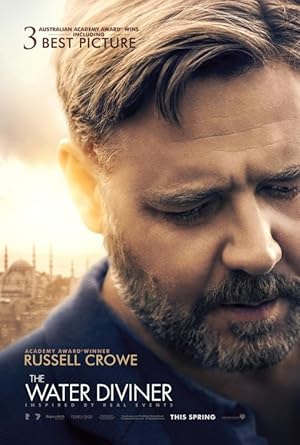
The Water Diviner
An Australian man travels to Turkey after the Battle of Gallipoli to try and locate his three missing sons reported missing in action, where he forges a relationship with the beautiful Turkish woman who owns the hotel in which he stays. Holding onto hope, he must travel across the war-torn landscape with the help of a Turkish Officer, himself a veteran of the battles.
The film disappointed at the box office against its moderate budget of $22.5M, earning $15.5M globally (-31% loss). While initial box office returns were modest, the film has gained appreciation for its unique voice within the drama genre.
14 wins & 15 nominations


Plot Structure
Story beats plotted across runtime


Narrative Arc
Emotional journey through the story's key moments
Story Circle
Blueprint 15-beat structure
Arcplot Score Breakdown
Weighted: Precision (70%) + Arc (15%) + Theme (15%)
The Water Diviner (2014) reveals strategically placed plot construction, characteristic of Russell Crowe's storytelling approach. This structural analysis examines how the film's 15-point plot structure maps to proven narrative frameworks across 1 hour and 52 minutes. With an Arcplot score of 6.8, the film balances conventional beats with creative variation.
Characters
Cast & narrative archetypes

Joshua Connor
Ayshe
Major Hasan
Lieutenant Colonel Cyril Hughes
Father Dave
Arthur Connor
Eliza Connor
Main Cast & Characters
Joshua Connor
Played by Russell Crowe
An Australian farmer and water diviner who travels to Turkey to find his three sons missing after the Battle of Gallipoli.
Ayshe
Played by Olga Kurylenko
A Turkish widow running a hotel in Istanbul who develops a connection with Joshua while mourning her own losses.
Major Hasan
Played by Yılmaz Erdoğan
A Turkish military officer tasked with war graves registration who becomes an unlikely ally to Joshua.
Lieutenant Colonel Cyril Hughes
Played by Jai Courtney
A British officer in charge of coordinating Allied war graves who initially opposes Joshua's search.
Father Dave
Played by Damon Herriman
An Australian military chaplain who assists Joshua and provides moral support during his search.
Arthur Connor
Played by Ryan Corr
Joshua's eldest son who served and went missing at Gallipoli.
Eliza Connor
Played by Jacqueline McKenzie
Joshua's wife who dies by suicide after losing all three sons and being unable to cope with the grief.
Structural Analysis
The Status Quo at 1 minutes (1% through the runtime) establishes Joshua Connor divines for water in the Australian outback, a broken man haunted by the loss of his three sons at Gallipoli and his wife's subsequent suicide.. Notably, this early placement immediately immerses viewers in the story world.
The inciting incident occurs at 13 minutes when Following Eliza's suicide at the graves of their sons, Joshua makes an impossible promise to bring their bodies home from Turkey, setting him on an unprecedented journey.. At 12% through the film, this Disruption aligns precisely with traditional story structure. This beat shifts the emotional landscape, launching the protagonist into the central conflict.
The First Threshold at 28 minutes marks the transition into Act II, occurring at 25% of the runtime. This illustrates the protagonist's commitment to Joshua arrives in Constantinople and boldly makes his way to Gallipoli despite official prohibitions, choosing to cross into the former battlefield to find his sons., moving from reaction to action.
At 56 minutes, the Midpoint arrives at 50% of the runtime—precisely centered, creating perfect narrative symmetry. Significantly, this crucial beat Joshua discovers the bodies of Art and Henry, but finds evidence suggesting his youngest son Edward may have survived the battle - a false victory that transforms his mission from burial to rescue., fundamentally raising what's at risk. The emotional intensity shifts, dividing the narrative into clear before-and-after phases.
The Collapse moment at 84 minutes (75% through) represents the emotional nadir. Here, Joshua is captured and nearly killed during the ongoing conflict. He faces the devastating possibility that Edward is truly lost, and that his entire journey has been in vain - a whiff of death that mirrors his sons' fate., reveals the protagonist at their lowest point. This beat's placement in the final quarter sets up the climactic reversal.
The Second Threshold at 90 minutes initiates the final act resolution at 80% of the runtime. Major Hasan, honoring the bond formed between former enemies, helps Joshua escape and reveals where Edward can be found - among Turkish forces fighting the Greeks., demonstrating the transformation achieved throughout the journey.
Emotional Journey
The Water Diviner's emotional architecture traces a deliberate progression across 15 carefully calibrated beats.
Narrative Framework
This structural analysis employs structural analysis methodology used to understand storytelling architecture. By mapping The Water Diviner against these established plot points, we can identify how Russell Crowe utilizes or subverts traditional narrative conventions. The plot point approach reveals not only adherence to structural principles but also creative choices that distinguish The Water Diviner within the drama genre.
Comparative Analysis
Additional drama films include After Thomas, South Pacific and Dirty Dancing: Havana Nights.
Plot Points by Act
Act I
SetupStatus Quo
Joshua Connor divines for water in the Australian outback, a broken man haunted by the loss of his three sons at Gallipoli and his wife's subsequent suicide.
Theme
Joshua's wife Eliza, consumed by grief, tells him he must bring their boys home - establishing the theme that the living must find peace with the dead to move forward.
Worldbuilding
The devastating aftermath of WWI is established: Joshua's farm life, his gift for finding water, the community's grief, and the weight of losing all three sons - Art, Henry, and Edward - at Gallipoli. His wife's suicide deepens his despair.
Disruption
Following Eliza's suicide at the graves of their sons, Joshua makes an impossible promise to bring their bodies home from Turkey, setting him on an unprecedented journey.
Resistance
Joshua debates the impossible task ahead. He prepares for his journey, faces skepticism from authorities who say civilians cannot travel to Gallipoli, and struggles with whether a father can truly find his sons among thousands of dead.
Act II
ConfrontationFirst Threshold
Joshua arrives in Constantinople and boldly makes his way to Gallipoli despite official prohibitions, choosing to cross into the former battlefield to find his sons.
Mirror World
Joshua meets Ayshe, the Turkish widow who runs the hotel, and her son Orhan. Their developing connection represents the possibility of healing through human bonds that transcend the divisions of war.
Premise
Joshua works alongside British and Turkish officers excavating the Gallipoli battlefields. Using his divining gift to locate remains, he forms an unlikely alliance with Major Hasan, a Turkish officer who fought against his sons.
Midpoint
Joshua discovers the bodies of Art and Henry, but finds evidence suggesting his youngest son Edward may have survived the battle - a false victory that transforms his mission from burial to rescue.
Opposition
Joshua's search for Edward intensifies as he navigates the dangerous political landscape of post-war Turkey during the Greco-Turkish War. British authorities obstruct him, Ayshe's brother-in-law threatens their growing bond, and the trail to Edward grows cold.
Collapse
Joshua is captured and nearly killed during the ongoing conflict. He faces the devastating possibility that Edward is truly lost, and that his entire journey has been in vain - a whiff of death that mirrors his sons' fate.
Crisis
In captivity, Joshua confronts his darkest hour. He must reckon with the possibility of joining his sons in death, processing all he has lost and whether any redemption is possible.
Act III
ResolutionSecond Threshold
Major Hasan, honoring the bond formed between former enemies, helps Joshua escape and reveals where Edward can be found - among Turkish forces fighting the Greeks.
Synthesis
Joshua navigates the battlefield to find Edward, who has been living with trauma and guilt as the sole survivor of his brothers. Father and son are reunited, and Joshua returns to Constantinople to say farewell to Ayshe.
Transformation
Joshua, having found Edward and laid Art and Henry to rest, embraces his new life with Ayshe and Orhan. The broken water diviner has found something he wasn't looking for: a new family and the ability to live again.