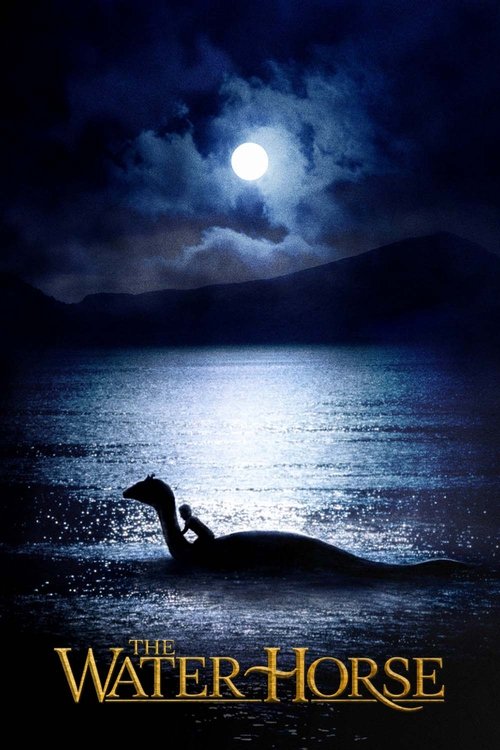
The Water Horse
A lonely boy discovers a mysterious egg that hatches a sea creature of Scottish legend.
Despite a mid-range budget of $40.0M, The Water Horse became a commercial success, earning $104.0M worldwide—a 160% return.


Plot Structure
Story beats plotted across runtime


Narrative Arc
Emotional journey through the story's key moments
Story Circle
Blueprint 15-beat structure
Arcplot Score Breakdown
Weighted: Precision (70%) + Arc (15%) + Theme (15%)
The Water Horse (2007) reveals precise narrative architecture, characteristic of Jay Russell's storytelling approach. This structural analysis examines how the film's 15-point plot structure maps to proven narrative frameworks across 1 hour and 52 minutes. With an Arcplot score of 7.5, the film showcases strong structural fundamentals.
Characters
Cast & narrative archetypes

Angus MacMorrow
Lewis Mowbray
Anne MacMorrow
Kirstie MacMorrow
Captain Hamilton
Crusoe (Water Horse)
Main Cast & Characters
Angus MacMorrow
Played by Alex Etel
A lonely young boy who discovers and raises a mythical water horse creature during WWII Scotland.
Lewis Mowbray
Played by Ben Chaplin
A mysterious handyman who arrives at the MacMorrow estate and becomes a mentor figure to Angus.
Anne MacMorrow
Played by Emily Watson
Angus's protective mother managing the estate and family while her husband is away at war.
Kirstie MacMorrow
Played by Priyanka Xi
Angus's practical older sister who often clashes with her brother but cares for him.
Captain Hamilton
Played by David Morrissey
A strict British Army officer who commandeers the MacMorrow estate for military purposes.
Crusoe (Water Horse)
Played by N/A
The magical water horse creature that grows from a small hatchling to an enormous sea monster.
Structural Analysis
The Status Quo at 1 minutes (1% through the runtime) establishes Young Angus MacMorrow lives a quiet life in wartime Scotland at Loch Ness, withdrawn and lonely since his father went missing in WWII. He scours the beach alone, collecting shells and treasures, unable to speak about his grief.. Structural examination shows that this early placement immediately immerses viewers in the story world.
The inciting incident occurs at 13 minutes when The egg hatches in Angus's workshop, revealing a strange aquatic creature. This magical disruption transforms Angus's ordinary grief-stricken world into one of wonder and responsibility.. At 12% through the film, this Disruption aligns precisely with traditional story structure. This beat shifts the emotional landscape, launching the protagonist into the central conflict.
The First Threshold at 27 minutes marks the transition into Act II, occurring at 24% of the runtime. This indicates the protagonist's commitment to Angus makes the active choice to move Crusoe to the loch, despite his paralyzing fear of water. He commits to protecting his friend no matter the cost, entering a new world of adventure and responsibility., moving from reaction to action.
At 55 minutes, the Midpoint arrives at 49% of the runtime—precisely centered, creating perfect narrative symmetry. Significantly, this crucial beat Captain Hamilton orders depth charges to be placed in the loch and shoots at what he believes is a monster. The military threat becomes real, raising the stakes. The fun is over—Crusoe is now hunted., fundamentally raising what's at risk. The emotional intensity shifts, dividing the narrative into clear before-and-after phases.
The Collapse moment at 82 minutes (73% through) represents the emotional nadir. Here, Crusoe is trapped behind the anti-submarine net at the mouth of the loch with Angus on his back. They're caught between the metal barrier and the soldiers' weapons. Death seems certain for both boy and creature., shows the protagonist at their lowest point. This beat's placement in the final quarter sets up the climactic reversal.
The Second Threshold at 88 minutes initiates the final act resolution at 79% of the runtime. Angus realizes Crusoe must jump the net to reach the open sea. He synthesizes his newfound courage with the lesson of letting go, urging Crusoe to leap to freedom even though it means goodbye forever., demonstrating the transformation achieved throughout the journey.
Emotional Journey
The Water Horse's emotional architecture traces a deliberate progression across 15 carefully calibrated beats.
Narrative Framework
This structural analysis employs systematic plot point analysis that identifies crucial turning points. By mapping The Water Horse against these established plot points, we can identify how Jay Russell utilizes or subverts traditional narrative conventions. The plot point approach reveals not only adherence to structural principles but also creative choices that distinguish The Water Horse within the family genre.
Jay Russell's Structural Approach
Among the 4 Jay Russell films analyzed on Arcplot, the average structural score is 7.0, reflecting strong command of classical structure. The Water Horse represents one of the director's most structurally precise works. For comparative analysis, explore the complete Jay Russell filmography.
Comparative Analysis
Additional family films include The Black Stallion, The Bad Guys and Ella Enchanted. For more Jay Russell analyses, see Ladder 49, My Dog Skip and Tuck Everlasting.
Plot Points by Act
Act I
SetupStatus Quo
Young Angus MacMorrow lives a quiet life in wartime Scotland at Loch Ness, withdrawn and lonely since his father went missing in WWII. He scours the beach alone, collecting shells and treasures, unable to speak about his grief.
Theme
Lewis Mowbray, the handyman, tells Angus: "Sometimes the things we think are lost are just waiting to be found." This establishes the theme of hope, letting go, and finding courage through unexpected friendship.
Worldbuilding
We see Angus's world: his mother running the estate, sister Kirstie, the arrival of British soldiers billeting at their home, and Angus's inability to swim despite living by the loch. He finds a mysterious egg on the beach.
Disruption
The egg hatches in Angus's workshop, revealing a strange aquatic creature. This magical disruption transforms Angus's ordinary grief-stricken world into one of wonder and responsibility.
Resistance
Angus debates what to do with the rapidly growing creature he names Crusoe. Lewis discovers the secret and warns Angus of the danger. The creature grows too large to hide, and the soldiers become a threat.
Act II
ConfrontationFirst Threshold
Angus makes the active choice to move Crusoe to the loch, despite his paralyzing fear of water. He commits to protecting his friend no matter the cost, entering a new world of adventure and responsibility.
Mirror World
Angus's relationship with Crusoe deepens as they play in the loch together. The creature becomes a mirror for Angus's journey—both are vulnerable beings learning to trust and find courage in a dangerous world.
Premise
The promise of the premise: a boy and his magical water horse. Angus overcomes his fear of water, learns to swim, and rides Crusoe through the loch. Their bond grows as Crusoe becomes massive and magnificent.
Midpoint
Captain Hamilton orders depth charges to be placed in the loch and shoots at what he believes is a monster. The military threat becomes real, raising the stakes. The fun is over—Crusoe is now hunted.
Opposition
The soldiers intensify their hunt for the "monster." Angus must hide Crusoe while the military closes in. His mother discovers the truth. The danger escalates as Crusoe becomes increasingly visible and vulnerable.
Collapse
Crusoe is trapped behind the anti-submarine net at the mouth of the loch with Angus on his back. They're caught between the metal barrier and the soldiers' weapons. Death seems certain for both boy and creature.
Crisis
Underwater, facing death, Angus must confront his deepest fear and his grief over his father. He realizes he must let Crusoe go to save them both, accepting that love means releasing what you cannot keep.
Act III
ResolutionSecond Threshold
Angus realizes Crusoe must jump the net to reach the open sea. He synthesizes his newfound courage with the lesson of letting go, urging Crusoe to leap to freedom even though it means goodbye forever.
Synthesis
Crusoe successfully jumps the net in a spectacular leap. Angus surfaces safely. The soldiers stand down. Angus reunites with his family, having found closure about his father and courage within himself.
Transformation
The elderly narrator reveals he is Angus, now able to tell his story. We see young Angus smiling at the loch, transformed from a silent, fearful boy into someone who has found his voice and accepted loss with grace.