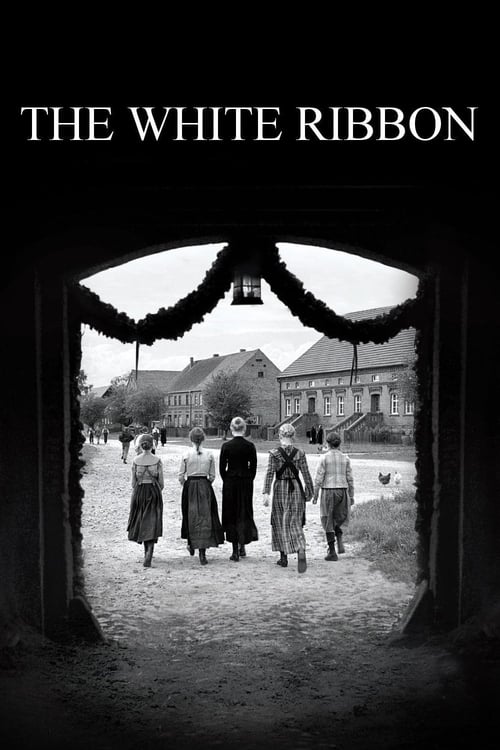
The White Ribbon
An aged tailor recalls his life as the schoolteacher of a small village in Northern Germany that was struck by a series of strange events in the year leading up to WWI.
The film disappointed at the box office against its moderate budget of $21.6M, earning $11.7M globally (-46% loss). While initial box office returns were modest, the film has gained appreciation for its innovative storytelling within the drama genre.
Nominated for 2 Oscars. 62 wins & 49 nominations


Plot Structure
Story beats plotted across runtime


Narrative Arc
Emotional journey through the story's key moments
Story Circle
Blueprint 15-beat structure
Arcplot Score Breakdown
Weighted: Precision (70%) + Arc (15%) + Theme (15%)
The White Ribbon (2009) exhibits deliberately positioned dramatic framework, characteristic of Michael Haneke's storytelling approach. This structural analysis examines how the film's 15-point plot structure maps to proven narrative frameworks across 2 hours and 24 minutes. With an Arcplot score of 7.1, the film balances conventional beats with creative variation.
Characters
Cast & narrative archetypes

The Teacher
The Pastor
The Doctor
The Baron
Martin
Klara
Eva
The Steward
Main Cast & Characters
The Teacher
Played by Christian Friedel
Village schoolteacher and narrator who observes the strange events and falls in love with Eva, the nanny
The Pastor
Played by Burghart Klaußner
Strict, authoritarian Protestant minister who rules his family with harsh discipline and moral rigidity
The Doctor
Played by Rainer Bock
Village physician who maintains an abusive relationship with the midwife and whose own moral corruption is revealed
The Baron
Played by Ulrich Tukur
Wealthy landowner of the estate who represents the aristocratic authority in the village
Martin
Played by Leonard Proxauf
The pastor's eldest son, intelligent and morally conflicted, symbolizing the next generation
Klara
Played by Maria-Victoria Dragus
The pastor's eldest daughter, wears the white ribbon of innocence but may harbor dark secrets
Eva
Played by Leonie Benesch
Young nanny at the Baron's estate who becomes the teacher's love interest, represents innocence
The Steward
Played by Josef Bierbichler
The Baron's estate manager whose son is involved in the mysterious incidents
Structural Analysis
The Status Quo at 2 minutes (1% through the runtime) establishes The schoolteacher's narration establishes the repressive German village in 1913-14, introducing the rigid social hierarchy, the Baron's estate, the pastor's severe household, and the doctor's mysterious authority over the community.. Notably, this early placement immediately immerses viewers in the story world.
The inciting incident occurs at 18 minutes when The doctor's horse trips on a wire stretched between trees, throwing him violently and causing severe injuries. This is the first deliberate act of violence—someone in the village has intentionally harmed the doctor, shattering the surface calm and beginning a series of mysterious attacks.. At 12% through the film, this Disruption aligns precisely with traditional story structure. This beat shifts the emotional landscape, launching the protagonist into the central conflict.
The First Threshold at 36 minutes marks the transition into Act II, occurring at 25% of the runtime. This shows the protagonist's commitment to The schoolteacher actively decides to investigate the incidents, beginning to question the children and observe suspicious behaviors. He crosses from passive witness to active investigator, entering a world where he must confront the darkness within his own community., moving from reaction to action.
At 72 minutes, the Midpoint arrives at 50% of the runtime—precisely centered, creating perfect narrative symmetry. Notably, this crucial beat The Baroness takes the children away from the village, declaring she can no longer raise them in such an environment of fear and evil. This public acknowledgment that something is fundamentally wrong shifts the dynamic—the attacks are no longer isolated mysteries but symptoms of systemic corruption., fundamentally raising what's at risk. The emotional intensity shifts, dividing the narrative into clear before-and-after phases.
The Collapse moment at 109 minutes (76% through) represents the emotional nadir. Here, The handicapped son of the midwife is found brutally beaten and blinded, left in the woods. This is the most horrific attack yet—a defenseless child tortured—representing the complete death of innocence and the triumph of cruelty. The village's moral collapse is absolute., indicates the protagonist at their lowest point. This beat's placement in the final quarter sets up the climactic reversal.
The Second Threshold at 116 minutes initiates the final act resolution at 80% of the runtime. The schoolteacher confronts the pastor with his suspicions about the children, attempting to break through the cycle of violence by exposing the truth. He synthesizes his observations into an accusation, taking the risk of speaking truth to power despite knowing the likely consequences., demonstrating the transformation achieved throughout the journey.
Emotional Journey
The White Ribbon's emotional architecture traces a deliberate progression across 15 carefully calibrated beats.
Narrative Framework
This structural analysis employs a 15-point narrative structure framework that maps key story moments. By mapping The White Ribbon against these established plot points, we can identify how Michael Haneke utilizes or subverts traditional narrative conventions. The plot point approach reveals not only adherence to structural principles but also creative choices that distinguish The White Ribbon within the drama genre.
Michael Haneke's Structural Approach
Among the 4 Michael Haneke films analyzed on Arcplot, the average structural score is 6.9, demonstrating varied approaches to story architecture. The White Ribbon represents one of the director's most structurally precise works. For comparative analysis, explore the complete Michael Haneke filmography.
Comparative Analysis
Additional drama films include After Thomas, South Pacific and Dirty Dancing: Havana Nights. For more Michael Haneke analyses, see Amour, The Piano Teacher and Funny Games.
Plot Points by Act
Act I
SetupStatus Quo
The schoolteacher's narration establishes the repressive German village in 1913-14, introducing the rigid social hierarchy, the Baron's estate, the pastor's severe household, and the doctor's mysterious authority over the community.
Theme
The pastor binds white ribbons on his children as symbols of purity and innocence after punishing them, stating they must wear them until they prove themselves worthy of removal—establishing the theme of imposed innocence masking cruelty and the cycle of violence.
Worldbuilding
Introduction of the village's key families and power structures: the Baron and his estate workers, the pastor's harsh discipline of his children, the doctor's cold dominance, the midwife's suffering, and the schoolteacher's quiet observations. The rigidity and repression permeating every relationship is established.
Disruption
The doctor's horse trips on a wire stretched between trees, throwing him violently and causing severe injuries. This is the first deliberate act of violence—someone in the village has intentionally harmed the doctor, shattering the surface calm and beginning a series of mysterious attacks.
Resistance
The community reacts to the doctor's accident with suspicion and fear. The schoolteacher begins observing more carefully. The Baron's son is found tortured and hanging in the mill. The community struggles with who could be responsible, while daily life continues under the weight of authoritarian control and growing dread.
Act II
ConfrontationFirst Threshold
The schoolteacher actively decides to investigate the incidents, beginning to question the children and observe suspicious behaviors. He crosses from passive witness to active investigator, entering a world where he must confront the darkness within his own community.
Mirror World
The schoolteacher's courtship of Eva, the young nanny, represents the possibility of innocence, genuine affection, and escape from the village's corruption. Their relationship embodies hope and natural human connection in contrast to the diseased relationships surrounding them.
Premise
More incidents unfold: a barn fire at the Baron's estate, the steward's son's death, the midwife's handicapped son threatened at the pond. The schoolteacher investigates while the village's facade of piety and order crumbles, revealing the systematic abuse and cruelty beneath, particularly within the pastor's and doctor's families.
Midpoint
The Baroness takes the children away from the village, declaring she can no longer raise them in such an environment of fear and evil. This public acknowledgment that something is fundamentally wrong shifts the dynamic—the attacks are no longer isolated mysteries but symptoms of systemic corruption.
Opposition
The schoolteacher's suspicions focus on the pastor's children and their circle, but he faces resistance from the power structure. War is declared. The pastor's eldest son confesses his sinful thoughts, revealing the psychological torture inflicted by his father. The violence and repression intensify as the community fractures.
Collapse
The handicapped son of the midwife is found brutally beaten and blinded, left in the woods. This is the most horrific attack yet—a defenseless child tortured—representing the complete death of innocence and the triumph of cruelty. The village's moral collapse is absolute.
Crisis
The schoolteacher grapples with his near-certain knowledge that the pastor's children are responsible, but realizes he cannot prove it and that the entire adult generation shares guilt for creating these damaged souls through abuse, repression, and hypocrisy. He faces the darkness of complicity.
Act III
ResolutionSecond Threshold
The schoolteacher confronts the pastor with his suspicions about the children, attempting to break through the cycle of violence by exposing the truth. He synthesizes his observations into an accusation, taking the risk of speaking truth to power despite knowing the likely consequences.
Synthesis
The pastor rejects the schoolteacher's accusations with threats and denials. The village holds a confirmation ceremony where the children, including the likely perpetrators, are blessed as innocent members of the community. The cycle of violence and hypocrisy continues unbroken, with no resolution or justice.
Transformation
The narrator reveals he left the village and never saw them again, noting these children would become the generation that embraced Nazism. The white ribbons of enforced innocence have created monsters. The transformation is complete: innocence destroyed, cruelty normalized, evil perpetuated across generations.