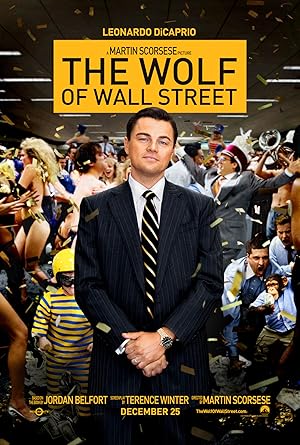
The Wolf of Wall Street
In the early 1990s, Jordan Belfort teamed with his partner Donny Azoff and started brokerage firm Stratton Oakmont. Their company quickly grows from a staff of 20 to a staff of more than 250 and their status in the trading community and Wall Street grows exponentially. So much that companies file their initial public offerings through them. As their status grows, so do the amount of substances they abuse, and so do their lies. They draw attention like no other, throwing lavish parties for their staff when they hit the jackpot on high trades. That ultimately leads to Belfort featured on the cover of Forbes Magazine, being called "The Wolf Of Wall St.". With the FBI onto Belfort's trading schemes, he devises new ways to cover his tracks and watch his fortune grow. Belfort ultimately comes up with a scheme to stash their cash in a European bank. But with the FBI watching him like a hawk, how long will Belfort and Azoff be able to maintain their elaborate wealth and luxurious lifestyles?
Despite a considerable budget of $100.0M, The Wolf of Wall Street became a financial success, earning $407.0M worldwide—a 307% return.
Nominated for 5 Oscars. 38 wins & 180 nominations


Plot Structure
Story beats plotted across runtime


Narrative Arc
Emotional journey through the story's key moments
Story Circle
Blueprint 15-beat structure
Arcplot Score Breakdown
Weighted: Precision (70%) + Arc (15%) + Theme (15%)
The Wolf of Wall Street (2013) exemplifies meticulously timed narrative design, characteristic of Martin Scorsese's storytelling approach. This structural analysis examines how the film's 15-point plot structure maps to proven narrative frameworks across 3 hours. With an Arcplot score of 4.0, the film takes an unconventional approach to traditional narrative frameworks.
Characters
Cast & narrative archetypes

Jordan Belfort
Donnie Azoff
Naomi Lapaglia
Patrick Denham
Mark Hanna
Max Belfort
Main Cast & Characters
Jordan Belfort
Played by Leonardo DiCaprio
A charismatic stockbroker who builds a massive brokerage empire through fraud and excess, eventually facing his downfall.
Donnie Azoff
Played by Jonah Hill
Jordan's impulsive and loyal right-hand man, a former furniture salesman who becomes his partner in crime.
Naomi Lapaglia
Played by Margot Robbie
Jordan's second wife, a former model who enjoys the lavish lifestyle but eventually tires of his reckless behavior.
Patrick Denham
Played by Kyle Chandler
An FBI agent investigating Jordan's illegal activities with patience and determination.
Mark Hanna
Played by Matthew McConaughey
Jordan's mentor at his first Wall Street firm who introduces him to the excessive lifestyle of stockbrokers.
Max Belfort
Played by Rob Reiner
Jordan's father who works as the company accountant and tries to keep his son grounded.
Structural Analysis
The Status Quo at 1 minutes (1% through the runtime) establishes Jordan Belfort directly addresses the camera in a Lamborghini, embodying the excess and wealth he's achieved. This cold open shows the "after" before revealing the "before" - a corruption arc starting at its peak.. Significantly, this early placement immediately immerses viewers in the story world.
The inciting incident occurs at 21 minutes when Black Monday crashes the market. Jordan loses his job at Rothschild, destroying his Wall Street dreams. He's unemployed with a new wife and no prospects in legitimate finance.. At 12% through the film, this Disruption aligns precisely with traditional story structure. This beat shifts the emotional landscape, launching the protagonist into the central conflict.
The First Threshold at 41 minutes marks the transition into Act II, occurring at 23% of the runtime. This illustrates the protagonist's commitment to Jordan makes the active choice to found Stratton Oakmont with Donnie and his crew of misfits. He commits fully to building an empire on fraud, leaving behind any possibility of legitimate brokerage. The "fun and games" of Act 2 begin., moving from reaction to action.
At 82 minutes, the Midpoint arrives at 46% of the runtime—arriving early, accelerating into Act IIb complications. The analysis reveals that this crucial beat False victory: Jordan appears on the cover of Forbes as "The Wolf of Wall Street." He's achieved ultimate recognition and success. However, this publicity catches the attention of FBI Agent Patrick Denham, raising the stakes. The fun and games are over., fundamentally raising what's at risk. The emotional intensity shifts, dividing the narrative into clear before-and-after phases.
The Collapse moment at 121 minutes (67% through) represents the emotional nadir. Here, Jordan, high on Quaaludes, learns the FBI is tapping his phone and that Brad is wearing a wire. In his stupor, he nearly causes Donnie to choke to death. The literal "whiff of death" as his best friend almost dies, combined with the realization his empire is crumbling., demonstrates the protagonist at their lowest point. This beat's placement in the final quarter sets up the climactic reversal.
The Second Threshold at 130 minutes initiates the final act resolution at 72% of the runtime. Jordan decides to cooperate with the FBI, agreeing to wear a wire against his friends and partners. This should be his redemption moment, but it's framed as cowardice and betrayal - consistent with his corruption arc. He chooses self-preservation over loyalty., demonstrating the transformation achieved throughout the journey.
Emotional Journey
The Wolf of Wall Street's emotional architecture traces a deliberate progression across 15 carefully calibrated beats.
Narrative Framework
This structural analysis employs proven narrative structure principles that track dramatic progression. By mapping The Wolf of Wall Street against these established plot points, we can identify how Martin Scorsese utilizes or subverts traditional narrative conventions. The plot point approach reveals not only adherence to structural principles but also creative choices that distinguish The Wolf of Wall Street within the biography genre.
Martin Scorsese's Structural Approach
Among the 18 Martin Scorsese films analyzed on Arcplot, the average structural score is 6.0, showcasing experimental approaches to narrative form. The Wolf of Wall Street takes a more unconventional approach compared to the director's typical style. For comparative analysis, explore the complete Martin Scorsese filmography.
Comparative Analysis
Additional biography films include After Thomas, Taking Woodstock and The Fire Inside. For more Martin Scorsese analyses, see Casino, Killers of the Flower Moon and After Hours.
Plot Points by Act
Act I
SetupStatus Quo
Jordan Belfort directly addresses the camera in a Lamborghini, embodying the excess and wealth he's achieved. This cold open shows the "after" before revealing the "before" - a corruption arc starting at its peak.
Theme
Mark Hanna (Matthew McConaughey) teaches Jordan over lunch: "The name of the game is: you. The client? He's the enemy." This mentor figure states the film's theme about greed, moral corruption, and making money as the only objective.
Worldbuilding
Flashback to 1987: Jordan starts as an eager broker at L.F. Rothschild, marries Teresa, learns the ruthless Wall Street culture from Mark Hanna, and experiences Black Monday which destroys his career before it begins.
Disruption
Black Monday crashes the market. Jordan loses his job at Rothschild, destroying his Wall Street dreams. He's unemployed with a new wife and no prospects in legitimate finance.
Resistance
Jordan takes a job at a penny stock boiler room in a strip mall. He discovers he can make 50% commission on worthless stocks. He debates whether to pursue this ethically questionable path, then realizes his talent for selling and recruits Donnie Azoff.
Act II
ConfrontationFirst Threshold
Jordan makes the active choice to found Stratton Oakmont with Donnie and his crew of misfits. He commits fully to building an empire on fraud, leaving behind any possibility of legitimate brokerage. The "fun and games" of Act 2 begin.
Mirror World
Jordan meets Naomi Lapaglia at a party. She represents the ultimate trophy of his new lifestyle - beautiful, desirable, and attainable only through his ill-gotten wealth. This relationship will embody the hollow nature of his material success.
Premise
The promise of the premise: Stratton Oakmont's rise to power. Outrageous parties, drug-fueled debauchery, IPO manipulations, midget-tossing, prostitutes, Quaaludes, and Jordan's growing empire. He leaves Teresa for Naomi, lives in excess, and the money flows endlessly.
Midpoint
False victory: Jordan appears on the cover of Forbes as "The Wolf of Wall Street." He's achieved ultimate recognition and success. However, this publicity catches the attention of FBI Agent Patrick Denham, raising the stakes. The fun and games are over.
Opposition
FBI Agent Denham investigates Stratton Oakmont. Jordan tries to move money to Switzerland through his wife's aunt. The yacht trip to smuggle cash goes wrong. Brad is arrested. Jordan's father warns him. The walls close in as Jordan's paranoia and drug use intensify.
Collapse
Jordan, high on Quaaludes, learns the FBI is tapping his phone and that Brad is wearing a wire. In his stupor, he nearly causes Donnie to choke to death. The literal "whiff of death" as his best friend almost dies, combined with the realization his empire is crumbling.
Crisis
Jordan processes the collapse of his world. He tries to maintain control but knows the end is near. Naomi demands a divorce. He refuses to accept defeat, oscillating between resignation and defiance in his drug-addled state.
Act III
ResolutionSecond Threshold
Jordan decides to cooperate with the FBI, agreeing to wear a wire against his friends and partners. This should be his redemption moment, but it's framed as cowardice and betrayal - consistent with his corruption arc. He chooses self-preservation over loyalty.
Synthesis
The finale: Jordan wears a wire on his yacht, meeting Donnie to gather evidence. He's arrested, prosecuted, and sentenced to 36 months (reduced from 20+ years for cooperation). He serves minimal time in a "white-collar" resort prison.
Transformation
Jordan, post-prison, is introduced as a motivational speaker in New Zealand teaching sales techniques. The final image mirrors the opening - he's still selling, still performing, still the wolf. No real transformation occurred; the corruption arc is complete. He learned nothing.