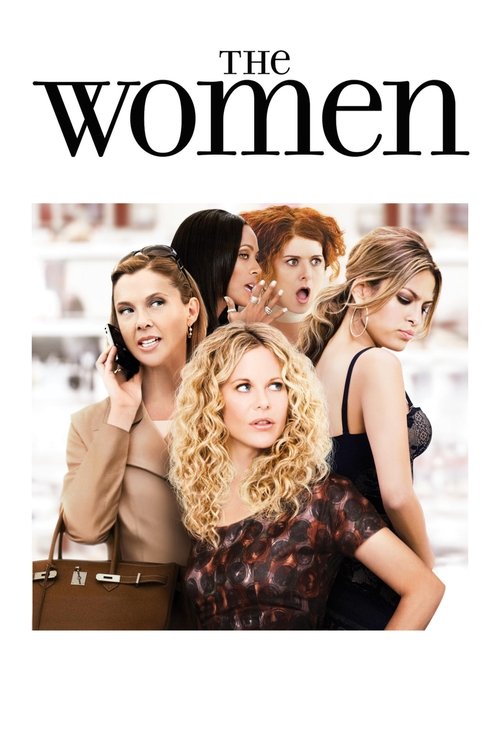
The Women
The story centers on a group of gossipy, high-society women who spend their days at the beauty salon and haunting fashion shows. The sweet, happily-wedded Mary Haines finds her marriage in trouble when shop girl Crystal Allen gets her hooks into Mary's man.
Despite a mid-range budget of $16.0M, The Women became a commercial success, earning $50.0M worldwide—a 213% return.
4 wins & 4 nominations


Plot Structure
Story beats plotted across runtime


Narrative Arc
Emotional journey through the story's key moments
Story Circle
Blueprint 15-beat structure
Arcplot Score Breakdown
Weighted: Precision (70%) + Arc (15%) + Theme (15%)
The Women (2008) exemplifies meticulously timed dramatic framework, characteristic of Diane English's storytelling approach. This structural analysis examines how the film's 15-point plot structure maps to proven narrative frameworks across 1 hour and 54 minutes. With an Arcplot score of 7.5, the film showcases strong structural fundamentals.
Characters
Cast & narrative archetypes

Mary Haines
Sylvia Fowler
Edie Cohen
Alex Fisher
Crystal Allen
Catherine Frazier
Main Cast & Characters
Mary Haines
Played by Meg Ryan
A successful clothing designer who discovers her husband's affair and navigates rebuilding her life and identity.
Sylvia Fowler
Played by Annette Bening
Mary's gossipy best friend who inadvertently reveals the affair while struggling with her own insecurities.
Edie Cohen
Played by Debra Messing
A successful author and Mary's pragmatic friend who offers sardonic wisdom about relationships.
Alex Fisher
Played by Jada Pinkett Smith
A lesbian artist and Mary's friend who provides grounded, honest advice throughout her crisis.
Crystal Allen
Played by Eva Mendes
The ambitious perfume salesgirl who seduces Mary's husband and becomes her antagonist.
Catherine Frazier
Played by Candice Bergen
Mary's wise, elegant mother who provides emotional support and perspective during the crisis.
Structural Analysis
The Status Quo at 1 minutes (1% through the runtime) establishes Mary Haines is introduced in her perfect life: successful designer, loving wife to Stephen, mother to Molly, surrounded by her close group of girlfriends. She appears to have it all - the perfect Manhattan life.. Structural examination shows that this early placement immediately immerses viewers in the story world.
The inciting incident occurs at 13 minutes when Mary discovers through gossip at a salon that her husband Stephen is having an affair with Crystal Allen, a perfume counter girl at Saks Fifth Avenue. The news is devastating and shatters her perfect world.. At 11% through the film, this Disruption aligns precisely with traditional story structure. This beat shifts the emotional landscape, launching the protagonist into the central conflict.
The First Threshold at 28 minutes marks the transition into Act II, occurring at 25% of the runtime. This shows the protagonist's commitment to Mary confronts Stephen about the affair. The confrontation leads to separation and the end of her marriage as she knew it. She chooses to leave rather than pretend nothing is wrong, crossing into a new world without her husband., moving from reaction to action.
At 57 minutes, the Midpoint arrives at 50% of the runtime—precisely centered, creating perfect narrative symmetry. Of particular interest, this crucial beat Mary learns that Stephen is serious about Crystal and may marry her. What seemed like a temporary affair becomes a permanent threat. The stakes are raised - this isn't just about the affair anymore, it's about losing her family entirely. False defeat., fundamentally raising what's at risk. The emotional intensity shifts, dividing the narrative into clear before-and-after phases.
The Collapse moment at 84 minutes (74% through) represents the emotional nadir. Here, Mary hits rock bottom - her marriage is truly over (whiff of death of her old identity), her friendship with Sylvia is broken, and she feels she has lost everything that defined her. She is alone and defeated., indicates the protagonist at their lowest point. This beat's placement in the final quarter sets up the climactic reversal.
The Second Threshold at 90 minutes initiates the final act resolution at 79% of the runtime. Mary has a realization: she doesn't need Stephen to define her, and she has the strength within herself and her female friendships to move forward. She discovers information about Crystal's true nature or has an epiphany about fighting for what she wants on her own terms., demonstrating the transformation achieved throughout the journey.
Emotional Journey
The Women's emotional architecture traces a deliberate progression across 15 carefully calibrated beats.
Narrative Framework
This structural analysis employs structural analysis methodology used to understand storytelling architecture. By mapping The Women against these established plot points, we can identify how Diane English utilizes or subverts traditional narrative conventions. The plot point approach reveals not only adherence to structural principles but also creative choices that distinguish The Women within the drama genre.
Comparative Analysis
Additional drama films include After Thomas, South Pacific and Dirty Dancing: Havana Nights.
Plot Points by Act
Act I
SetupStatus Quo
Mary Haines is introduced in her perfect life: successful designer, loving wife to Stephen, mother to Molly, surrounded by her close group of girlfriends. She appears to have it all - the perfect Manhattan life.
Theme
During conversations with her friends, the theme is stated about women's strength, friendship, and the importance of female bonds. Sylvia or one of the friends mentions how women need to stick together and support each other.
Worldbuilding
Establishment of Mary's world: her fashion design career, her marriage to Stephen, her daughter Molly, and her four best friends - Sylvia, Edie, Alex, and the pregnant Edie. We see the dynamics of their friendships and Mary's seemingly perfect existence.
Disruption
Mary discovers through gossip at a salon that her husband Stephen is having an affair with Crystal Allen, a perfume counter girl at Saks Fifth Avenue. The news is devastating and shatters her perfect world.
Resistance
Mary debates what to do about the affair. Her friends offer conflicting advice - some say confront it, others say ignore it. She struggles with whether to fight for her marriage or confront Stephen. She investigates Crystal and grapples with her options.
Act II
ConfrontationFirst Threshold
Mary confronts Stephen about the affair. The confrontation leads to separation and the end of her marriage as she knew it. She chooses to leave rather than pretend nothing is wrong, crossing into a new world without her husband.
Mirror World
Mary's deepening relationships with her female friends become central. Her daughter Molly also serves as a mirror, reflecting back Mary's need to find her own identity and strength separate from her role as Stephen's wife.
Premise
Mary navigates her new single life. She throws herself into her work, spends time with her friends, and begins to discover who she is outside of her marriage. There are comedic moments at the salon, fashion shows, and female bonding scenes. The promise of female friendship and self-discovery.
Midpoint
Mary learns that Stephen is serious about Crystal and may marry her. What seemed like a temporary affair becomes a permanent threat. The stakes are raised - this isn't just about the affair anymore, it's about losing her family entirely. False defeat.
Opposition
Everything gets worse. Mary's relationship with her daughter suffers. Her friends have their own crises. Sylvia's betrayal is revealed as the one who spread the gossip. Mary's professional life faces challenges. Crystal becomes more embedded in Stephen's life.
Collapse
Mary hits rock bottom - her marriage is truly over (whiff of death of her old identity), her friendship with Sylvia is broken, and she feels she has lost everything that defined her. She is alone and defeated.
Crisis
Mary processes her loss. In her dark night of the soul, she reflects on who she has been and who she wants to become. She sits with the pain of her broken marriage and fractured friendships.
Act III
ResolutionSecond Threshold
Mary has a realization: she doesn't need Stephen to define her, and she has the strength within herself and her female friendships to move forward. She discovers information about Crystal's true nature or has an epiphany about fighting for what she wants on her own terms.
Synthesis
Mary takes action with her newfound strength. She reconciles with her friends, particularly understanding Sylvia's flaws. She stands up to Crystal, exposes her manipulations, and reclaims her power. She succeeds professionally with her fashion line. She shows her daughter what female strength looks like.
Transformation
Final image mirrors the opening but Mary is transformed. She is surrounded by her female friends, stronger and more independent. Whether or not she reconciles with Stephen, she has found herself and her tribe. She is whole on her own terms.